Last Updated: October 13, 2026
Last Updated: October 13, 2026





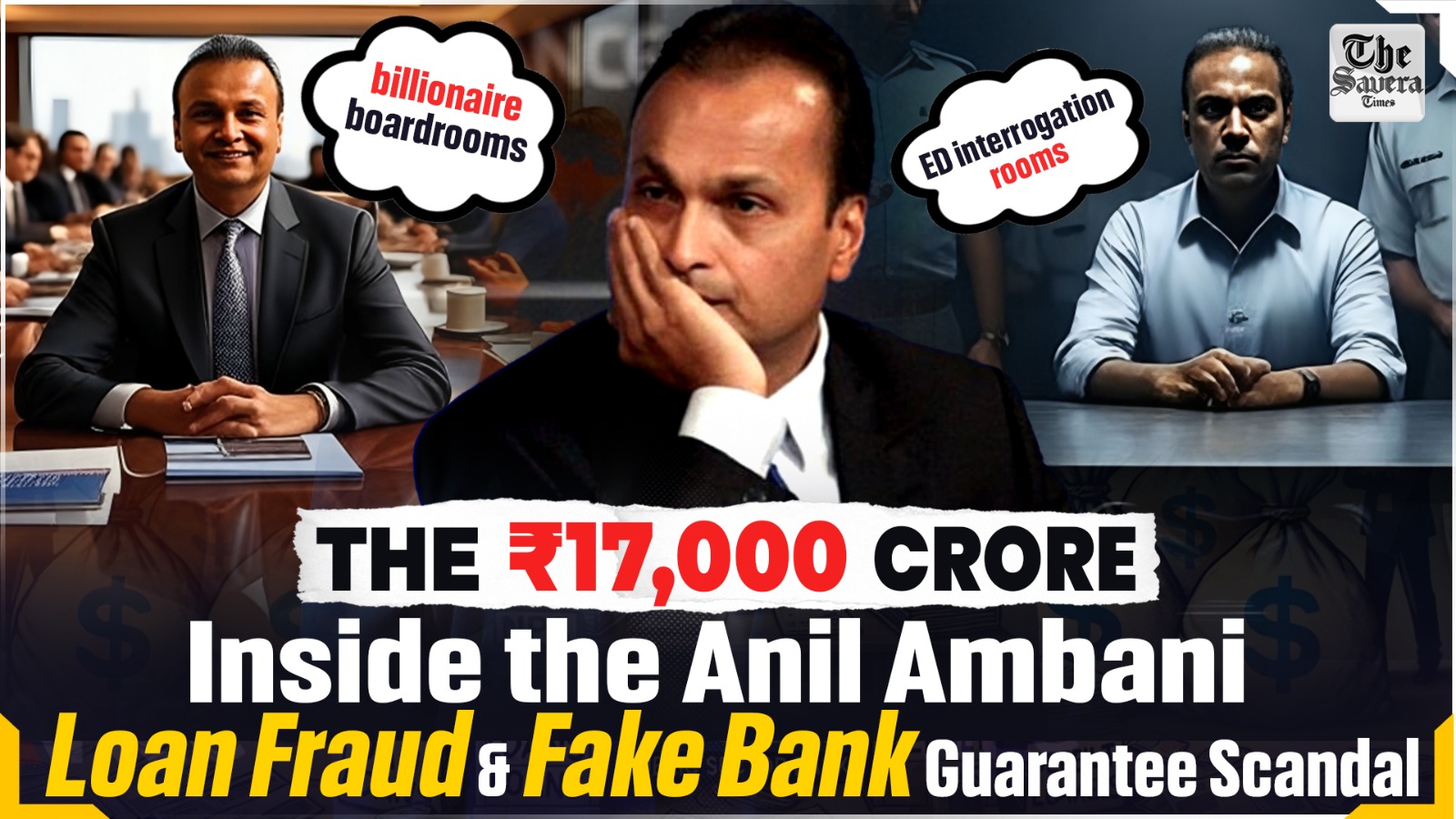
New Delhi: From billionaire boardrooms to ED interrogation rooms—Anil Ambani’s dramatic fall from corporate royalty to financial controversy is a story straight out of a corporate crime thriller.
Once ranked among the world’s richest men, Ambani now finds himself entangled in one of India’s most explosive financial investigations—a tangled mess of fake bank guarantees, shady shell firms, and ₹17,000 crore in unpaid loans.
On August 5, 2025, the industrialist appeared before the Enforcement Directorate (ED), summoned under money laundering laws, as the agency widened its probe into one of the largest alleged loan frauds in Indian banking history.
And this isn’t just a case of defaulted loans—it’s a deepening saga of fake documents, suspicious bank links, and money trails that may stretch far beyond Reliance Group’s glossy façade.
What Is the Anil Ambani Loan Fraud Case All About?
At its core, the case revolves around unpaid loans of nearly ₹17,000 crore taken by multiple Reliance Group companies, including Reliance Home Finance, Reliance Commercial Finance, Reliance Communications, and Reliance Power.
But what started as a case of unpaid loans has now mushroomed into something much bigger—a financial maze involving fake bank guarantees, forged SBI documents, shell firms, and possible bribes to banking officials.
The Fake Guarantee That Triggered It All
A key flashpoint? A bogus bank guarantee worth ₹68.2 crore, allegedly arranged by a little-known company, Biswal Tradelink Pvt Ltd (BTPL), for Reliance Power.
The guarantee, submitted to the Solar Energy Corporation of India (SECI), was backed by forged endorsements from SBI—an audacious move that raised major red flags.
BTPL, incorporated in 2019, is now accused of being a conduit in a larger financial fraud. Despite its modest size, the company ran several undisclosed bank accounts, engaged in transactions far exceeding its reported turnover, and allegedly violated the Companies Act multiple times.
Who are the Key Companies Under the ED’s Lens
Add it up and the total financial exposure climbs to a staggering ₹17,000 crore.
The Yes Bank Connection: Quid Pro Quo?
The ED is also probing Yes Bank, which allegedly disbursed around ₹3,000 crore in loans to Reliance Group firms between 2017 and 2019.
The allegations?
Investigators believe this wasn’t just bad lending—it could have been a full-blown quid pro quo arrangement cloaked in corporate paperwork.
The Key Allegations Against Anil Ambani
Here’s what the Enforcement Directorate is investigating:
“If the numbers don’t lie, then someone definitely did.”
Timeline of Major Events
2017–2019
Yes Bank disburses ₹3,000 crore to Anil Ambani group companies. Suspected misappropriation begins.
November 2020
SBI labels accounts of RCom and Anil Ambani as fraudulent, and files complaints with CBI.
2022
CBI registers two FIRs against Reliance Group companies over alleged loan fraud.
November 2024
Delhi Police’s Economic Offences Wing files FIR in fake guarantee case, triggering ED investigation.
July 24, 2025
ED conducts massive raids across 35 locations, targets over 50 companies, and questions 25+ individuals.
August 1, 2025
Arrest of Partha Sarathi Biswal, MD of BTPL, for issuing fake bank guarantees for Reliance Power.
August 5, 2025
Anil Ambani summoned by ED in Delhi. A lookout circular is issued to prevent him from leaving India.
What Happens Next?
With the arrest of key players and a money trail that appears to stretch across multiple entities, the ED’s investigation is far from over. If the allegations are proven, the case could mark one of India’s biggest corporate fraud busts in recent history.
“This isn’t just a financial scandal. It’s a cautionary tale of unchecked power, opaque finances, and the cost of regulatory silence.”
Final Thought
From boardrooms to ED offices, the Anil Ambani saga is unfolding in real time. The case is a potent reminder that when corporate empires are built on borrowed money and broken rules, the fall can be swift—and very public.
Start your day with The Savera Morning Brief, bringing you the top headlines from India and around the...

A magnitude 6.1 earthquake struck Panama early Tuesday at a depth of 10 kilometres. The tremor followed a...

The Ministry of Rural Development has set a target to train 6.35 lakh rural youth through RSETIs, with...

New Delhi: The Supreme Court registry has flagged 14 procedural defects in a petition filed by Congress leader...

While western countries continue to focus on India’s coal-fired power plants in the debate on climate change, what...

A Sudanese rights group says at least 72 gold miners were killed in an air strike near the...

Aries: The day will be auspicious...