Last Updated: October 21, 2026
Last Updated: October 21, 2026





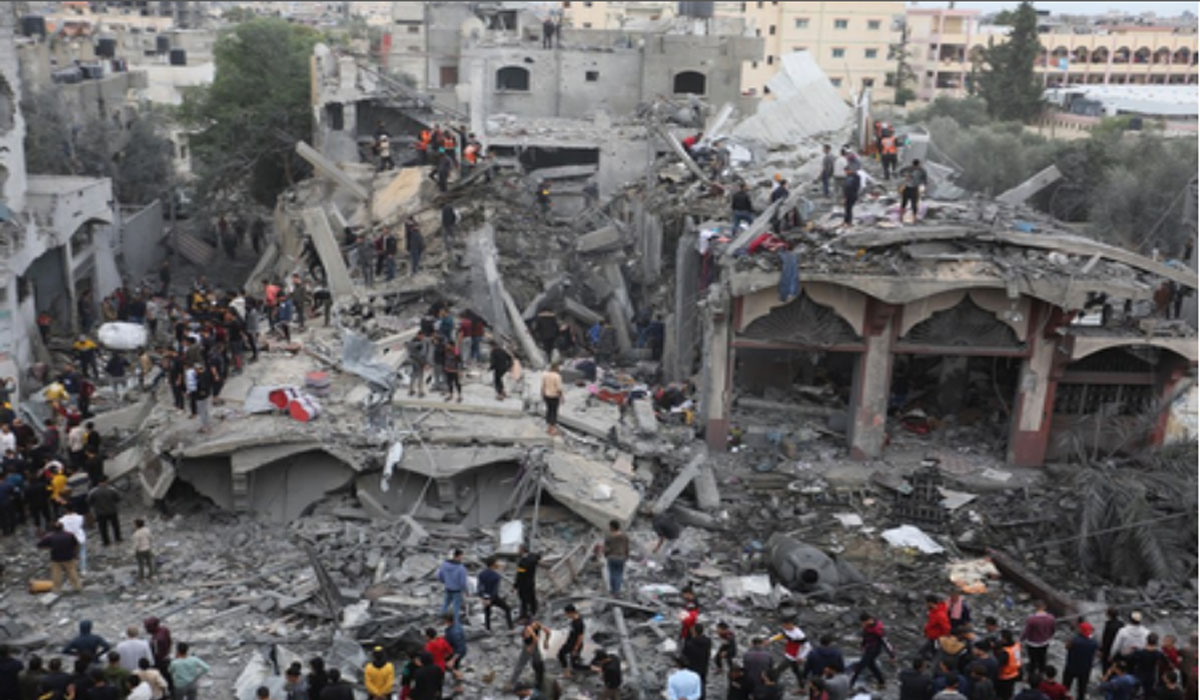
The increasing involvement of the corporate sector in war is an emerging reality. Alongside the well-known wars between Israel and Hamas and the arms race in the RussiaUkraine conflict, many soldiers are now recruited from the private or corporate sector to fight for their countries. This development challenges past assumptions that mercenaries are useless and dangerous, raising questions about the role and impact of corporate and private actors in modern conflicts. These soldiers fight for money without loyalty.
They prefer to flee in times of danger. But now, as wars are becoming more prolonged, the business of private military companies (PMCs) has also begun. Private companies are recruiting unemployed youth and sending them to warring countries. Call it humanitarian aid or an attempt to compensate for the military shortage on their side. Military mercenaries have transformed into corporate structures. The American company Constellis has recruited 12,700 soldiers.
The company’s annual revenue is rs 12,400 crore. The Canadian company GardaWorld also operates in dozens of countries. These companies ostensibly work closely with departments such as legal, contracting, and human resources. When reconstruction opportunities arise after war, these companies often receive contracts. Consider Gaza, where the American UG Solutions was called in to provide security for humanitarian aid.
Russia has relied on the Wagner Group for military operations in Ukraine and Africa. Governments themselves, in the US and Western countries, have become clients of such private armies. Ongoing wars and security needs have given this industry a boost. Now, if there is a pause in the Ukrainian war, these companies will have an opportunity for reconstruction. Many countries have reduced their regular armies. As the number of government forces has dwindled, the responsibility for security in war zones has fallen to PMCs.
These companies recruit former soldiers, many of whom are from the Special Forces. When budgets are finalized, the cost of an American mercenary is seven times lower than that of a regular soldier, and British mercenaries are ten times cheaper than a regular American soldier. Private soldiers recruited from Colombia are even cheaper. This is because these soldiers are contracted only for specific attacks.
A study by Liverpool University shows that between 1980 and 2016, when such militants began receiving contracts and mercenary work, the rate of attacks on civilians decreased. Although groups like Wagner don’t have a very good reputation, private military companies from Western countries are considered trustworthy. Recent events, such as American biker gang soldiers in Gaza and Indian youths conscripted in Russia, illustrate how individuals are drawn into armed conflict through corporate recruitment. These cases highlight how war has shifted from being a state-led activity to a commercial enterprise, questioning the prospects for lasting peace if this corporatization of war continues.
Nearly 100 new cases of dengue have been reported in Pakistan's Khyber Pakhtunkhwa province in the last 24...

Following violent protests and looting in France, the government has decided to impose new curfews in different areas...

North Korea on Tuesday strongly criticized the ongoing joint military exercises between South Korea and the United States,...
US Secretary of State Marco Rubio said on Tuesday that India and the US are very close to...
US Secretary of State Marco Rubio arrived in Mumbai on Tuesday for his second visit to India. During...
Defense Minister Rajnath Singh on Tuesday described terrorism as one of the most serious threats to peace and...
Aries: The day will be auspicious...