Last Updated: October 21, 2026
Last Updated: October 21, 2026





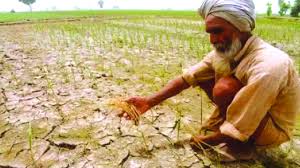
A recent report from the Indian government’s Ministry of Chemicals and Fertilizers has presented another threat to Punjab. The crisis is that while Punjab is the country’s largest agricultural producer and food grain supplier, it now has to fight to save its soil from becoming toxic.
The report indicates that 23 districts of Punjab are among the 100 districts in the country where the consumption of chemical fertilizers is highest, a consequence of the so-called Green Revolution.It’s worth remembering that Punjab was the pioneer of the first Green Revolution. The experiment involved using chemical fertilizers to maximize crop productivity in Punjab. However, the excessive use of chemical fertilizers in every crop led to serious environmental and health problems, and the soil in Punjab became so toxic that its devastating impact on the health of the Malwa region of Punjab is well-known.This latest report further reinforces these concerns.
The report states that Sangrur district has the highest consumption of chemical fertilizers in the entire country. Among these 100 districts, the first and the last districts are also from Punjab. The last district is Barnala, the second is Ludhiana, the fourth is Patiala, and the seventh is Bathinda. Agricultural scientists have warned that if this indiscriminate use of chemical fertilizers is not curbed, the soil in Punjab will become extremely toxic and lose its productivity within the next ten years.
Recognizing this danger, the PM PRANAM scheme was launched, and extensive campaigns were conducted to encourage the adoption of organic farming instead of chemical fertilizers. Farmers across the country are being encouraged to adopt nano-urea, organic fertilizers, and natural farming methods.
Now, alarmed by this report, the agriculture department has instructed the district magistrates to ensure that farmers only adopt new farming practices according to the standards set by Punjab Agricultural University and that they do not blindly pursue increased productivity. It is also true that in recent years, Punjabi farmers had moved away from using organic fertilizers, cow dung manure, compost, and green manure in the name of convenience
We are very proud that at present India is the number one country in the world by surpassing...

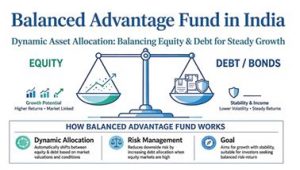
Every investor wants the wealth-creating power of equity and the reassuring stability of debt. Balanced Advantage Funds attempt...
Tourism is a major source of government revenue in our country. There are different types of tourism. Scenic...

Good Evening Viewers! Catch up on the day's biggest stories with The Savera Times Evening Bulletin. Get the...

Congress leaders continued their protest outside the Jaipur Police Commissionerate on Tuesday, demanding the registration of a zero...

On the auspicious occasion of Vijayadashami, Prime Minister Narendra Modi on Tuesday called on the countrymen to unite...

Aries: The day will be auspicious...