Last Updated: October 12, 2026
Last Updated: October 12, 2026





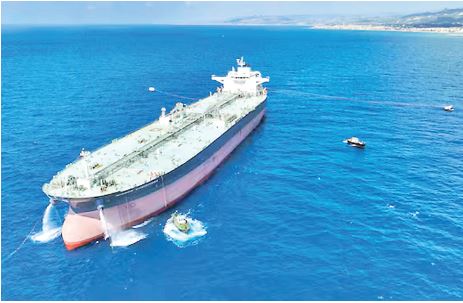
China’s customs data for August exposed a puzzling anomaly: 2.7 million tonnes of crude oil, roughly 630,000 barrels per day, were recorded as imports from Indonesia. The scale of that entry immediately raised eyebrows because it far exceeds Indonesia’s documented capacity to export crude and fits uneasily with the archipelago’s long record as a net oil importer.
Indonesia’s production in 2022 was around 580,000 barrels per day, while domestic demand that year approached 1.7 million barrels per day. For Beijing to show imports from Indonesia at volumes larger than Indonesia’s total output suggests that the cargoes declared as Indonesian were, in reality, sourced elsewhere. Bloomberg first set out the discrepancy and the shipping patterns behind it, and tanker tracking and port records since then have given a clearer, if still opaque, picture of how the flows moved.
A striking feature of the anomaly is the geography of the transfers. The listings point to Kabil, on Batam Island near Singapore, as a recurrent stop. Kabil is not a conventional crude-export terminal and local statistics do not show the outbound crude volumes that would explain China’s customs entries. Vessel-tracking data, however, record tankers calling at Kabil, changing their signals close to Malaysian waters, and ultimately discharging in Chinese ports such as Qingdao, Dalian and Rizhao. At least four vessels, named in tracking data as Aquaris, Yuhan, Pola and Pix, emerge repeatedly in these movements. Their draft readings and discharge records imply the oil they carried was not Indonesian in origin but was rebranded or relabelled en route.
The likely motive for such rebranding is not hard to identify. Since mid-2022 official Chinese customs declare almost no Iranian crude imports. Yet market intelligence and industry observers consistently point to China as the single largest buyer of Iranian oil. For Tehran, uninterrupted sales are a critical source of revenue under sanctions. For Beijing, discounted barrels help underpin energy security strategies in a tense global market. The mechanism that has allowed those flows to continue relies on a series of maritime practices designed to obscure origin: ship-to-ship transfers, temporary signal changes, and the use of staging points in nearby waters.
Malaysia has long featured in that pattern, with tankers often indicating Malaysian origin after meeting other vessels offshore. The recent surge in declared Indonesian-origin shipments coincided with a sharp decline in Chinese imports declared from Malaysia. That timing strengthens the case that Indonesia has been added to the network of conduits, rather than becoming a sudden, large-scale crude exporter. Tankers such as Aquaris and Pola have been observed making repeated voyages that fit a systematic routine: a call at Kabil, a diversion into adjacent waters to receive cargo from another vessel, and then a voyage to a Chinese discharge port.
The shifts also reflect tactical adaptation to mounting scrutiny from Washington. Pressure from US authorities and the risk of sanctions have encouraged operators to refine methods for disguising cargo origin. Restarted production lines, sanctioned vessels, and shadow fleets have all been elements in a shadow economy that seeks to keep sanctioned barrels moving while evading detection.
Public responses to queries have been sparse. Indonesian authorities, port officials at Kabil and state energy players have not offered explanations, and China’s foreign ministry has not responded to questions on the issue. Ship operators named in tracking reports either declined comment or did not reply. That silence leaves customs declarations and open-source vessel tracking as the main public record, though those sources only hint at the operational choreography beneath the headline numbers.
The implications extend beyond a single month’s statistics. The episode shows how maritime trade practices can be repurposed to sustain flows that official tallies do not acknowledge. For Tehran, the persistence of buyers is a financial lifeline. For Beijing, access to discounted crude can be a strategic buffer. For Washington, the episode underscores the limits of sanctions enforcement in a global shipping system that is adaptable and opaque.
Whether Indonesia’s brief appearance as a major crude supplier will become a lasting feature or a temporary reroute remains unclear. What the August data do make plain is that the mechanics of global oil trade now include deliberate, complex tactics for misattribution and rebranding. As authorities and analysts probe the logs and the ships, one question will dominate: can regulatory and diplomatic pressure keep pace with the ingenuity of traders and tanker operators who move energy in the shadows?
A shooting occurred at a school in the French city of Aubagne on Monday.

A Pakistani Army training aircraft crashed near Quetta, the capital of Pakistan's Balochistan province, on Monday.
The Royal Swedish Academy of Sciences on Monday announced the 2026 Nobel Prize in Economics to American economists...

A Sudanese rights group says at least 72 gold miners were killed in an air strike near the...

US President Donald Trump is scheduled to attend the ASEAN summit in Manila on November 16 before travelling...
An Indian national injured in the October 10 attack on Riyadh’s King Khalid International Airport has died, taking...

Aries: The day will be auspicious...