Last Updated: October 21, 2026
Last Updated: October 21, 2026





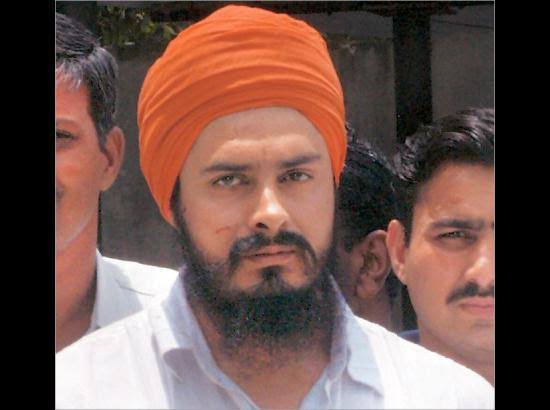
Compassion for an ailing mother is justified. Releasing a convicted terrorist and accomplished jail-breaker is a different matter. Punjab’s politicians have discovered a familiar electoral temptation: when short of public enthusiasm, reach for a potent symbol. The latest is Jagtar Singh Hawara, a senior Babbar Khalsa International figure serving a life sentence for his part in the assassination of Beant Singh, Punjab’s former chief minister. Bhagwant Mann, the state’s chief minister, has asked for Hawara to receive ten days’ parole to meet his gravely ill, 81-year-old mother. Her predicament deserves sympathy. But sympathy is not a security policy. Before turning Hawara into the object of an election-season humanitarian campaign, Punjab should remember why he is in prison—and what happened the last time he got out. On August 31st 1995 Dilawar Singh, a Punjab Police constable recruited as a suicide bomber, entered the Punjab and Haryana civil secretariat with an explosive belt concealed beneath his uniform. The blast killed Beant Singh and 16 others. Hawara was not convicted as a bystander or merely as a member of an unlawful organisation. The courts placed him within the conspiracy that obtained explosives, prepared the bomber, reconnoitred the target and arranged the operation. The plot was chillingly methodical. Its participants procured RDX and remote-control equipment, prepared an explosive belt, modified an Ambassador car to resemble an official vehicle and repeatedly surveyed the secretariat. Jagtar Singh Tara, another conspirator, helped transport the bomber. The operation displayed skills that remain central to terrorism: recruitment, indoctrination, compartmentalisation, explosives and the conversion of a follower into a human weapon. Hawara was eventually confined in Burail Jail in Chandigarh alongside Tara and Paramjit Singh Bheora. Prison did not end their planning. Earlier escape efforts failed, including an alleged scheme to breach a wall with explosives. Then, on the night of January 21st 2004, Hawara, Tara, Bheora and another inmate disappeared through a tunnel dug from their barrack. The tunnel, roughly 100 feet long, was no improvised scrape in the earth. Excavating it required months of work, concealment of soil, tools, timing and the exploitation of extraordinary security failures. Hawara and Bheora were later convicted for the escape conspiracy. It is an inconvenient fact for those now asking the state to trust him outside prison. More instructive is what followed. Hawara did not surrender or use his liberty to pursue an appeal. He remained underground for around 18 months, moving between hideouts and re-establishing contacts. Police accused him of seeking to revive BKI networks, recruit young men and acquire weapons and explosives. When he was captured in 2005, the authorities reported recovering from him and his associates pistols, hundreds of cartridges, a grenade, timers, detonators and about 11kg of RDX. Hawara was subsequently acquitted or discharged in several cases arising from this period, including prosecutions concerning bombs and weapons. Those allegations should not be recycled as convictions. Yet the established sequence is troubling enough: a convicted participant in a suicideassassination conspiracy escaped from a high-security jail, remained underground and was apprehended among associates in circumstances that prompted fresh terrorism investigations. The other escapees hardly inspire confidence. Tara, now about 51, evaded arrest for 11 years before being captured in Thailand in 2015. His ability to live abroad under the radar indicated access to international contacts and logistical assistance. Bheora, later rearrested in Delhi, was described by police as an important BKI operational figure. These were not ageing political pamphleteers. They belonged to an experienced network that combined ideology with clandestine organisation. In 2007 a Chandigarh court sentenced Hawara to death. Three years later the Punjab and Haryana High Court commuted the punishment to life imprisonment while leaving his conviction intact. Commutation did not exonerate him; it spared him the gallows. Hawara is now 55—old enough to possess authority and experience, but hardly too old to recruit, motivate or direct others. That distinction matters because contemporary terrorism does not require a veteran to carry a bomb himself. A figure such as Hawara can confer legitimacy on younger radicals, connect factions, inspire recruits and restore dormant relationships. In 2015 a controversial gathering styled as a Sarbat Khalsa proclaimed him Jathedar of the Akal Takht, though the SGPC rejected the appointment. His political and religious symbolism may now exceed his operational importance. That can make him more useful to extremists, not less. The legal position is also being muddled. Hawara is entitled to have his application considered according to law; he is not automatically entitled to be released. Before the High Court, the Chandigarh administration argued that the Delhi Prison Rules exclude prisoners involved in terrorism and escape bids from parole. The court did not order his release. It directed the relevant authorities to process his application and take a time-bound decision. Parole is a temporary suspension of imprisonment, not a reward earned merely through the passage of time. Security agencies may consider the nature of the offence, the prisoner’s escape record, the likelihood of mobilisation and the danger to public order. On every such measure Hawara is exceptional. There is an obvious humane alternative. If the purpose is to let him see his mother, the authorities can arrange an escorted meeting at a hospital, prison or other secure location. Custody parole, tightly supervised transport or an extended private meeting would answer the humanitarian need without enabling political receptions and unrestricted contact with supporters. No reliable public record yet establishes that such an arrangement was formally offered and rejected by Hawara. That claim should not be made without documentary evidence. But the government should make the offer now. If Hawara refuses a secure meeting and insists instead on several days of ordinary parole, the authorities would be entitled to ask whether meeting his mother is the sole purpose. Punjab is approaching another election amid attempts by radical formations to turn militant pedigrees into political capital. Mainstream parties must resist the resulting auction in symbolism. Once they begin competing to honour convicted terrorists, the boundary between compassion and glorification quickly disappears. Punjab paid too high a price for political leaders to develop selective amnesia. Hawara’s mother should be treated humanely. Hawara should be treated lawfully. Neither obligation requires the state to forget the suicide bombing, the tunnel or the 18 months underground.
Four more people, including two women, have been arrested in the Tiger Shroff firing case. Delhi Police are...
We are very proud that at present India is the number one country in the world by surpassing...
Every investor wants the wealth-creating power of equity and the reassuring stability of debt. Balanced Advantage Funds attempt...

Tourism is a major source of government revenue in our country. There are different types of tourism. Scenic...
Good Evening Viewers! Catch up on the day's biggest stories with The Savera Times Evening Bulletin. Get the...

Congress leaders continued their protest outside the Jaipur Police Commissionerate on Tuesday, demanding the registration of a zero...
Aries: The day will be auspicious...