Last Updated: October 15, 2026
Last Updated: October 15, 2026





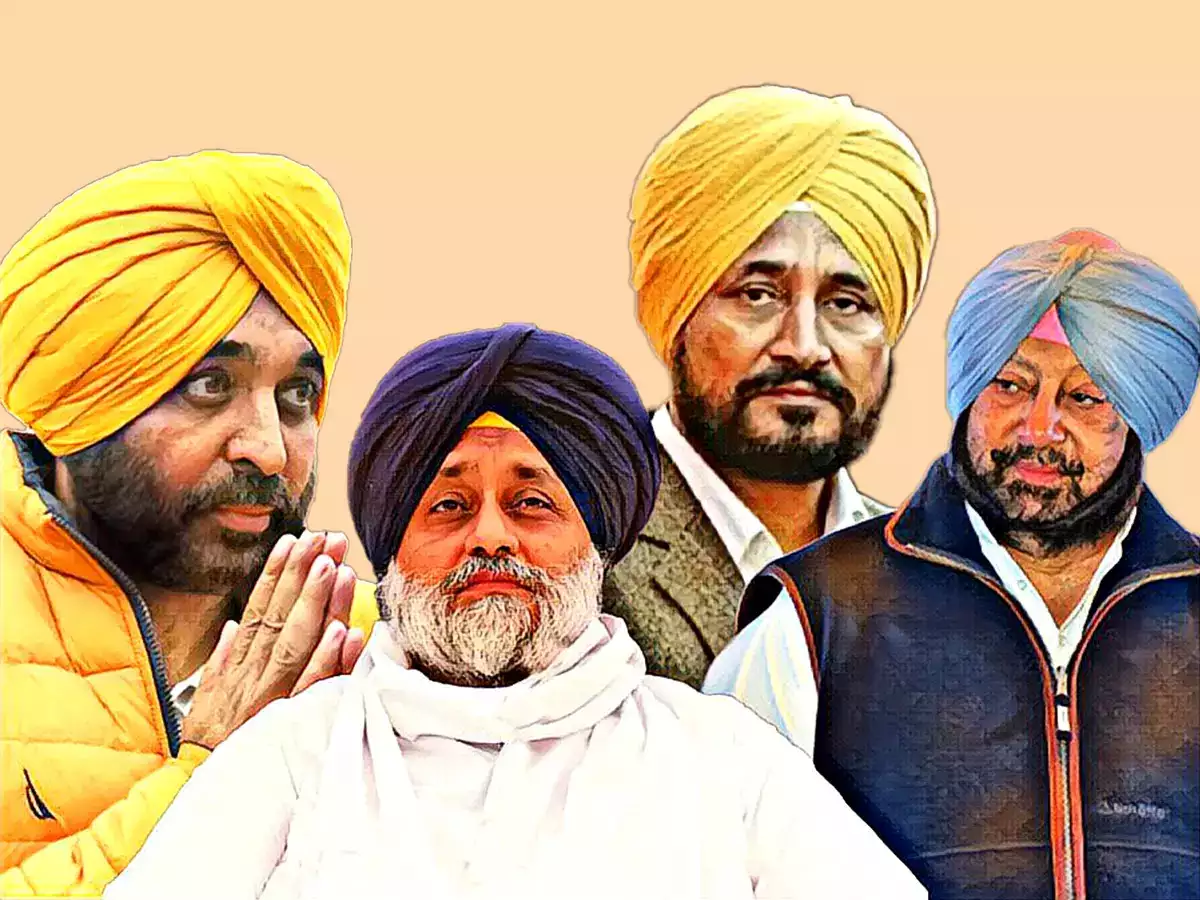
The current political is a matter of concern and serious reflection. In any democratic system, the power to enact laws rests solely with legislators and Members of Parliament. The bureaucracy and the judiciary are responsible for implementing these laws and ensuring compliance. However, when lawmakers themselves become entangled in controversies, allegations, and personal animosity, both the dignity of democracy and public trust begin to erode.
Recent incidents—such as allegations against a former minister for securing the release of a detainee from a police station, and the exchange of accusations between a former associate turned political rival— exemplify the declining standard of politics. Several legislators and ministers have ended up in jail facing charges of corruption, criminal offenses, and the misuse of the state machinery. Those expected to provide direction to society from the legislative assemblies and Parliament are today using language against one another that not only diminishes the dignity of their office but also damages the prestige of democratic institutions. In social media and news outlets, personal allegations and mudslinging regarding families are grabbing headlines instead of substantive political discourse.
Even individuals holding public offices—positions meant to symbolize hope, justice, and accountability— sometimes turn politics into a source of entertainment rather than a platform for serious public service. This situation is particularly worrying for a state like Punjab, which holds immense historical and spiritual significance.
The land of Punjab is revered as the land of Gurus, Pirs, Fakirs, and Saints. It was in this region of the “Sapt- Sindhu” (Land of Seven Rivers) that the Vedas were composed, Maharshi Valmiki’s “Ramayana”: originated, and The Declining Standard of Politics in Punjab the divine message of the “Sri Guru Granth Sahib” emerged.
The Guru Sahibs did not limit religion to mere sermons; they embodied it in their own lives. Presenting a remarkable blend of truth and valor, they established the tradition of the “Sant-Sipahi” (Saint-Soldier). It was these Saint-Soldiers whose valor shook the very foundations of the Mughal Empire. Rulers like King Porus and Maharaja Ranjit Singh set examples of just and ideal governance.
When the people of this land—steeped in such high ideals—came under British rule, they gradually began to drift away from their core principles. It was easier for the British to govern a divided society. Adopting a “divide and rule” policy, they attempted to split the Punjabi community—which had lived in harmony for centuries— into Hindu and Sikh factions; the repercussions of this are visible even today.
It is often said that a fish begins to rot from the head. Immediately after the country gained independence, leaders in power began to renege on many of their promises. Furthermore, a dispute regarding the Punjabi and Hindi languages was instigated. Many leaders who had once fought side-by-side for freedom and their faith abandoned their old principles, lured by the temptations of power and office. Many joined the Congress party, turning their backs on the interests of Punjab and the Punjabi language, and became adversaries to their former comrades.
The Congress also empowered individuals who had not supported the freedom movement. Consequently, a sense of discontent and mistrust grew in Punjab. It is difficult to fully quantify the loss of life and property during that period.
Yet, despite political differences, public discourse and conduct generally remained dignified. The 1980s marked the most tragic phase in Punjab’s history. Violent and radical messages began to emanate even from religious shrines. Punjab was drenched in bloodshed, and even today, a sense of complete security has not been fully restored in the minds of the people.
Many elements associated with murder and violence reinvented themselves as political leaders, hiding behind the masks of religion and politics. Individuals involved in provocative incidents at temples and gurdwaras also eventually surfaced on political platforms in new avatars. During that time, real power was concentrated more in the hands of the bureaucracy and the security apparatus than with elected representatives. The 1992 Assembly and Lok Sabha elections—boycotted by a significant section of the population—marked a crucial turning point in Punjab’s politics. During this period, individuals associated with certain government agencies also entered the political arena. While the government machinery remained the actual seat of power, political equations shifted; opponents began to be treated like criminals rather than democratic rivals. The most unfortunate aspect was the lack of serious effort to address the root causes of the violence that had persisted for nearly two decades. There was insufficient political will to implement the Rajiv-Longowal Accord, and the need to restore peace and confidence among the youth was not accorded adequate importance. In the elections held in 1985,1989, 1996, 1997, 2007, and 2012, the people of Punjab supported leaders who had spearheaded the Sikh movement. The public expected them to resolve the issues central to that struggle. However, upon assuming power, most of these leaders sidelined the very issues that had once been used to galvanize public sentiment. Despite participating in central governments and holding high offices, no serious dialogue was initiated to resolve the issues stemming from the conflict. This led to growing public disillusionment. Even more surprising was the fact that, once in power, manyleaders prioritized the very institutions and individuals that had previously opposed their movements. This further eroded public trust. For over four years now, those in power have pursued policies that run counter to their election promises. The debt burden on Punjab has steadily mounted, and the law-and-order situation remains a cause for concern, with even police stations coming under attack. A perception is gaining ground that several government decisions are beinginfluenced by individuals who have no direct connection to Punjab and who were never elected by the people. Allegations of corruption are nothing new in Punjab’s politics; from the 1960s to the present day, most Chief Ministers havefaced accusations of one kind or another. When the very leadership of a family, state, or nation is mired in controversy, steering the system in the right direction becomes difficult. The Sikh community has suffered the greatest damage during this entire period. Aggressive movements, launched without foresight, tarnished the image of a brave and spiritual community. Even today, some individuals appear to be playing into the hands of anti- India forces for personal gain or political ambition. Nevertheless, the soil of Punjab has produced great leaders in every era. From the freedom struggle to independent India, there have been many personalities who rose above personal interests and embraced public service as their guiding principle. Leaders such as Master Tara Singh, Jathedar Mohan Singh Tur, Sardar Major Singh, Raghunandan Lal Bhatia, Brij Bhushan Mehra, Master Kundan Singh, Sardar Kripal Singh, Dr. Baldev Prakash, and Dr. Baldev Chawla set exemplary standards of simplicity, integrity, and public service. Punjab is a leading state of the country, the birthplace of the Khalsa Panth, and the land of Gurus and Pirs. This and has always propagated the message of “Sarbat da Bhala”—the welfare of all. It is imperative to ensure that thisland does not become a hub for drug traffickers, gangsters, anti-national elements, and the corrupt.
To achieve this, all forces that cherish Punjab, Punjabis, and Punjabiyat (the spirit of Punjab) must unite. If the forces that cherish Punjab, “Punjabi”, and “Punjabiyat” unite and strive in this direction, the day is not far when Punjab will once again become the country’s leading state. This is the very land that gave the world the message of”Sarbat da Bhala” (the welfare of all). It is our responsibility to bequeath to future generations not a divided, debt-ridden, and despondent Punjab, but one that is economically robust, socially harmonious, morally upright, and a source of national pride.Punjab’s future is not tied to any single party, leader, or ideology; rather, it is linked to the preservation and advancement of Punjab’s three invaluablepillars—Punjab, “Punjabi”, and “Punjabiyat”. If we can safeguard these, Punjab’s future is secure; if we lose them, history will never forgive us.
Ludhiana, Punjab: Tensions erupted in Ludhiana city’s Old Sabzi Mandi, Karabara Road area on Thursday afternoon when angry...
The Punjab Police's Anti-Gangster Task Force (AGTF) has arrested Gurlal Singh in a joint operation with the Haryana...
Punjab Police has busted an illegal arms supply network in SAS Nagar and arrested three accused. Among the...
Mansa City-2 SHO Beant Kaur has been suspended with immediate effect following anti-drug activist Parminder Singh Jhota’s murder....
Punjab Chief Minister Bhagwant Mann is scheduled to meet Union Power Minister Manohar Lal Khattar in Delhi at...
Punjab AGTF and Haryana STF arrested Gurlal Singh in connection with Ajmeet Singh’s September 11 murder in Naushera...

Aries: The day will be auspicious...