Last Updated: October 21, 2026
Last Updated: October 21, 2026





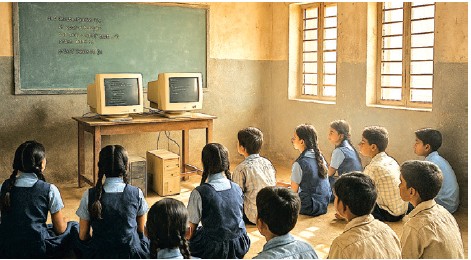
Across rural India, a quiet transformation is underway. Village schools—once the social and intellectual heart of rural communities—are disappearing. Some are merging with larger institutions, others are shutting down entirely due to low enrollment, teacher shortages, or administrative restructuring. While policymakers often justify these closures as efficiency-driven reforms, their long-term consequences for rural society remain deeply underexamined.
For decades, the village school represented more than a place of learning. It was where children from different castes and economic backgrounds shared a classroom, where midday meals ensured basic nutrition, and where education offered a fragile but real bridge to opportunity. Its decline signals more than an administrative change—it reflects a shifting relationship between the state and rural citizens.One of the main drivers behind school closures is migration. As rural livelihoods become increasingly precarious due to climate stress, declining agricultural returns, and lack of non-farm employment, families move to towns and cities in search of work. Fewer children remain in villages, leading to falling enrollment numbers. Schools with fewer than a certain number of students are deemed “unviable” and targeted for consolidation.
Teacher shortages further compound the problem. Many rural schools operate with one or two teachers handling multiple classes simultaneously. Transfers, absenteeism, and contractual hiring have weakened the stability of the teaching workforce. Instead of addressing these gaps, authorities often opt for closure, requiring children to travel longer distances to attend centralized schools.
This shift places a heavy burden on families. Younger children, particularly girls, are more likely to drop out when schools are far away. Safety concerns, transportation costs, and household responsibilities all contribute to reduced attendance. What appears as rational planning on paper often translates into lost educational years on the ground.
The impact on girls’ education is especially severe.
Start your day with The Savera Morning Brief, bringing you the latest news from India and around the...

Union Home Minister Amit Shah will pay tribute to police martyrs at the National Police Memorial in New...
Four more people, including two women, have been arrested in the Tiger Shroff firing case. Delhi Police are...
We are very proud that at present India is the number one country in the world by surpassing...
Every investor wants the wealth-creating power of equity and the reassuring stability of debt. Balanced Advantage Funds attempt...

Tourism is a major source of government revenue in our country. There are different types of tourism. Scenic...

Aries: The day will be auspicious...