Last Updated: October 20, 2026
Last Updated: October 20, 2026





Abhishek Vij
The logic behind the fierce conflict currently unfolding among the United States, Israel, and Iran remains utterly baffling to the world. On one hand, there is talk of a settlement; on the other, the war continues to escalate to ever-greater levels of intensity. The underlying reason is that Iran has adopted an uncompromising stance, while the United States has thrown its entire military might into the conflict. On Monday, Iran rejected a 15-point settlement proposal put forward by the U.S. Furthermore, it responded with wry humor to President Trump’s threat of “destruction” should the Strait of Hormuz remain closed, quipping that “the key to Hormuz is lying under the flowerpot.”
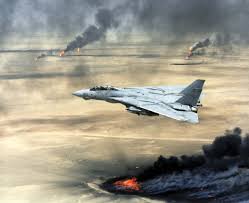
The implication is clear: even if Iran were to agree to a settlement, it would do so strictly on its own terms. The manner in which the U.S. successfully rescued its pilot—who had been hiding in the hills near Isfahan—is undoubtedly a testament to the valor of its commanders. However, experts suggest that this episode may also represent a peculiar blend of truth and fabrication. This skepticism stems from the fact that, earlier, the U.S. issued a misleading statement claiming the pilot had already been rescued; yet, simultaneously, it deployed an entire Air Force task force to effect his rescue. During this operation, a U.S. fighter jet was lost, though the rescue force ultimately succeeded in extracting the pilot.
Experts are now speculating whether the true objective behind deploying such a massive contingent to rescue a single pilot was, in fact, to destroy a hidden uranium stockpile located approximately 200 kilometers from Isfahan. However, Iran has declared this secondary objective a failure. Should a settlement eventually be reached—sooner or later—between the U.S. and Iran, the proposed framework suggests a two-phase process. In the first phase, the Strait of Hormuz would be reopened, immediately followed by the implementation of a ceasefire lasting approximately 20 days.
If a consensus is reached within the subsequent 20 to 25 days, a permanent peace would be established through an agreement prohibiting the development of nuclear weapons. Amidst this ongoing conflict, President Trump continues to alter his statements on a daily basis. Countries across the globe hope that a second phase of the war can be averted and that a lasting settlement can be reached.
However, the aggressive posturing of both warring factions leaves the situation far from clear. New reports surface daily—some false, others true. Yet, the undeniable reality is that this conflict has inflicted immense damage upon the Gulf nations. It is not just Iran; Israel, too, has suffered significant economic losses. Even if the fighting were to cease today, both Iran and Israel would require considerable time to recover from the economic fallout. The critical nature of the crisis lies in the fact that if a second phase were to commence—involving attacks on civilian targets in a mutual bid for destruction—it would signal a catastrophe of even greater magnitude.
Another scenario currently gaining currency suggests that, as an alternative to the Strait of Hormuz, ships have discovered a new route situated just 22 kilometers off the coast of Oman. Several vessels have reportedly traversed this passage with their navigational signals switched off. The Iranian Ambassador to India has issued a statement clarifying that the Strait of Hormuz route remains open to India; Indian vessels are free to navigate this passage without hindrance—just as ships from other friendly nations of Iran continue to do so unimpeded.
However, it appears unlikely that Iran will discontinue the levies it has begun collecting from ships passing through the Strait of Hormuz, even after the conflict has subsided. Indeed, one potential outcome of the war’s conclusion is that Iran may utilize these collected fees to replenish its national coffers, which have been depleted by the conflict. Meanwhile, things are not going smoothly for President Trump in the United States, as Democratic lawmakers have held him accountable for this costly and futile war.
Good Evening Viewers! Catch up on the day's biggest stories with The Savera Times Evening Bulletin. Get the...

Congress leaders continued their protest outside the Jaipur Police Commissionerate on Tuesday, demanding the registration of a zero...
On the auspicious occasion of Vijayadashami, Prime Minister Narendra Modi on Tuesday called on the countrymen to unite...
A historic milestone was achieved on Tuesday in the expansion of Chhattisgarh's rail networkA historic milestone was achieved...

Model Shraddha Dubey, one of the main accused in the death of Lucknow businessman Shiv Sharma, has been...

Rashtriya Swayamsevak Sangh (RSS) chief Mohan Bhagwat on Tuesday called for strengthening national unity, social harmony, indigenous practices...
Aries: The day will be auspicious...