Last Updated: September 30, 2026
Last Updated: September 30, 2026





Parneet Sachdev
Chairman of Real Estate Regulatory Authority and a leading author
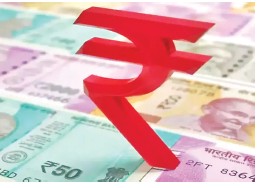
On a December morning in Mumbai, the digital boards outside currency kiosks flickered with a number that many had dreaded. Rs.90.30 to a dollar. India had crossed the psychological threshold that people instinctively understood as a measure of vulnerability. Parents wiring money for foreign university fees, importers pricing next month’s shipments, even those planning a holiday abroad, all would have to dish out more money now.
THE JOURNEY SINCE 1947
The Indian rupee has been on a long, nearly uninterrupted journey of depreciation since independence. When the country became free in 1947, one US dollar cost about Rs.3.30, a parity inherited from the British pound under the Bretton Woods arrangement (Wikipedia, History of the Rupee). By 1966, after a balance-of-payments crisis, New Delhi undertook a formal devaluation to about Rs.7.50 per dollar, and the currency continued sliding through the 1970s and 1980s. By 1995, one dollar fetched roughly Rs.37.7, and the steady decline through the era of liberalisation brought the rupee into the 70s and 80s during the 2010s and early 2020s. In December 2025, the breach of the Rs.90 mark marked a new symbolic low (Reuters, 3 Dec 2025).
OTHER IMPORTANT CURRENCIES
But the rupee’s fall this year stands apart not because of the magic number, but because of global headwinds, tariff shocks, capital outflows and an unexpectedly strong dollar. A recent IMF working paper observed that “emerging-market currencies face secular downward pressure whenever global financial conditions tighten”. China, for instance, has seen the renminbi weaken past 7.30 per dollar, its lowest in nearly 16 years, in response to slow domestic growth and capital outflows. The People’s Bank of China has intervened repeatedly, but even Beijing, with unparalleled monetary control, has not been immune to the gravitational pull of a strong dollar. As The Economist noted last year, “currencies bend before the United States Federal Reserve like saplings before a storm.”
Turkey provides a more dramatic example: between 2015 and 2023, the Turkish lira lost over 90% of its value, driven by unorthodox monetary policy, chronic inflation and political interference in its central bank. Brazil’s Real, South Africa’s Rand and Indonesia’s Rupiah have all depreciated significantly in the past decade, because the global financial architecture continues to privilege the dollar in times of uncertainty.
Seen against this global landscape, the rupee’s fall to Rs.90 appears less like an aberration and more like part of a broader recalibration. As former RBI Governor Raghuram Rajan once remarked, “A country with strong domestic fundamentals can still see a weakening currency when global forces dominate,” warning that exchange rates are often more a reflection of external sentiment than internal strength.
GLOBAL AND DOMESTIC HEADWINDS
The role of global sentiment has been unmistakable this year. With the US Federal Reserve maintaining high interest rates to tame inflation, capital has flowed back toward American assets, drawing money out of emerging markets. Reuters notes that foreign investors pulled nearly $17 billion out of Indian equities in 2025, the sharpest withdrawal in five years. That retreat translates directly into reduced demand for the rupee on global markets.
The trade side has offered no relief. India’s largest export market, the United States, imposed sharply higher tariffs; in some categories up to 50 per cent on a broad range of Indian goods on 27 August 2025. The duties affected almost 55 per cent of India’s $87 billion exports to the US, according to Reuters. For sectors like textiles, gem polishing, leather goods and light manufacturing, where margins are thin, such tariffs are economically devastating. No degree of currency depreciation can compensate for a 50 per cent duty.
Justin Yifu Lin Former Chief Economist, World Bank said in the keynote in 2012 that
“Sustained currency strength comes not from intervention but from structural transformation… moving into higher-value production.”
This is compounded by India’s deep import dependence. The country remains heavily reliant on foreign oil, gold, electronics and industrial inputs. Each of these is dollar-priced; each becomes more expensive when the rupee weakens; and each increases the demand for dollars simply to keep the economy functioning. India’s merchandise trade deficit widened in October and November, and Reuters reported an unusual surge in precious-metal imports.
The Reserve Bank of India, meanwhile, has taken a pragmatic approach. Rather than defending any particular level, it has allowed the rupee to drift lower while intervening only to prevent disorderly volatility. This is a marked departure from earlier episodes when the central bank drew hard lines, Rs.60, Rs.70, Rs.80 and spent billions of dollar reserves to ensure lower volatility. Today, with headline inflation averaging below 3 per cent and GDP growth hitting 8.2 per cent in the July–September quarter, the RBI is ensuring that there are no sudden shocks, byt beyond that it is allowing the Rupee to find its level.
STRONG VS WEAK RUPEE
The idea that a currency must reflect “strength” is a misconception economists have long challenged. Kenneth Rogoff Harvard Economist, former IMF Chief Economist had said in an interview with the Financial time (2019) that, “Exchange rates are notoriously unreliable signals of a country’s underlying economic health.”
Japan’s yen is weaker today than at any time in decades; China periodically guides the renminbi lower to support exports; South Korea and Taiwan both allow significant currency flexibility to maintain competitiveness.
A depreciating rupee does have consequences though. Imported fuel becomes more expensive; foreign travel and education become costlier; companies with unhedged dollar loans face higher servicing burdens; and inflation risks rise if depreciation becomes abrupt. However, exports become cheaper for the importer countries. That gives a fillip to Indian exporting industry and a partial hedge against the tariffs.
STRUCTURAL ISSUES
Since the 1950s, India has run persistent trade deficits, driven first by food and machinery imports and later by energy, gold, electronics. The country’s export basket remains insufficiently diversified and still leans heavily toward low-value sectors. Higher-value exports i.e defence, advanced electronics, green technologies are a pittance in the pie. In 2024, out of a total export of $ 434 bn, India exported nuclear reactors and other high value critical exports worth only around $ 40 bn i.e less than 10% (tradingeconomics).
For decades, Indian inflation exceeded that of major trading partners, and to it added India’s consistent trade deficit. For the first seven months of FY2026 (April-Oct 2025), the deficit stood at around $196.8 bn, a record (ICRA). Only in recent years has India achieved low, stable inflation. On the other hand, China’s export-led, manufacturing-intensive growth ensured decades of trade surpluses, while its tightly managed currency kept volatility in check. China could accumulate trillions in reserves; India spends heavily on imported oil. It is little surprise that their currency trajectories diverge.
The question, then, is whether India can address it fundamentals i.e reducing import vulnerability, expanding high-value exports.
WHAT LIES AHEAD
Even if the trade talks with USA result in substantive reduction in tariffs, most currency strategists expect it to hover in the Rs.89.5–Rs.91.5 corridor in the near term. The rupee could appreciate toward the Rs.86–Rs.88 range, but rising oil, global financial stress could foster a gradual slide toward Rs.95 or even Rs.100 over the next few years.
In the end, the breach of Rs.90 will likely be remembered not as a crisis but as a turning point. It will matter far less what the rupee’s nominal value is and far more whether India builds the real capacities, manufacturing depth, energy security, export sophistication. As The New York Times writes in “The Myth of the Strong Currency”, 2013
“A strong currency is not a badge of honour, and a weak one is not a mark of shame; it is simply one price among many in a large and complicated economy.”
Paul Krugman (Nobel Laureate)
(Views expressed are the author’s own).
Parneet Sachdev, IRS is the Chairman of Real Estate Regulatory Authority and a leading author.
The Savera Times Evening Wrap brings you the top India and world news, covering major developments across politics,...

Pakistan-based LeT terrorist Mohammad Asif alias Hashim Moosa, wanted in the Pahalgam terror attack case, was killed in...

The Supreme Court has ruled out both a complete firecracker ban and unrestricted 24-hour use, indicating that permissible...

The Centre has approved higher MSP for all mandated Rabi crops for the 2027-28 marketing season, with safflower...

Traders’ organisations have withdrawn the October 2 “No UPI Day” protest after meeting Finance Minister Nirmala Sitharaman over...

Ahmedabad: A Nigerian national allegedly acted as a link between a Gujarat-based wanted accused and a wider drug...
Aries: The day will be auspicious...