Last Updated: October 15, 2026
Last Updated: October 15, 2026





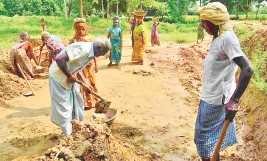
As the Aam Aadmi Party government in Punjab and the Congress oppose the G-RAM-G Act, the real issue is being obscured: whether a rural employment guarantee that under-delivered for years and enabled entrenched vested interests should remain immune to reform.
The resolution passed in the Punjab Assembly opposing the Viksit Bharat–Guarantee for Rozgar and Ajeevika Mission (Gramin), or G-RAM-G, has revived a familiar political script. The Aam Aadmi Party government has portrayed the reform as an assault on workers’ rights and federalism, a position quickly echoed by the Congress through calls for agitation. Yet behind the rhetoric lies a more uncomfortable question: who benefited from the existing system’s failures, and who stands to lose from reform?At one level, the objections appear principled. A rights-based framework is being redesigned, states fear loss of discretion, and a long-running welfare architecture is being reworked. These concerns deserve to be examined. But they cannot be divorced from outcomes — nor from the political economy that evolved around chronic under-performance.
Punjab’s Record: Rights on Paper, Failure on the Ground
Punjab’s performance under MGNREGA has been consistently weak and well-documented. In 2022–23, average employment per household stood at 38.1 days, compared to a national average of 47.8 days. In 2023–24, Punjab managed 41.0 days, while the national figure rose to 52.0 days. Preliminary data for 2024–25 shows no meaningful improvement: 40.8 days in Punjab against a national average of 50.2 days. These are not marginal gaps; they are structural. Despite nearly 12 lakh active job cards, fewer than three per cent of rural households in Punjab have reached the statutory 100-day entitlement in any of the last three years. For the overwhelming majority, the “right” existed only in theory. Wage delivery the most immediate test of any employment guarantee has been equally problematic. Payments routinely exceeded the statutory 15-day limit, with average delays of 45–60 days. Compensation for delayed wages, though legally mandated, was rarely disbursed. Official audits and ministry reports have flagged under-utilisation of over Rs300 crore, poor project planning, and a high incidence of incomplete works.These failures cannot credibly be blamed on central neglect. Funds were allocated. The breakdown occurred at the level of planning, execution, and accountability.
Vested Interests and Elite Capture
This chronic under-performance created a fertile environment for vested interests. In a mechanised agrarian economy like Punjab’s where demand for traditional manual work is limited employment generation increasingly depended on local discretion. Over time, this discretion translated into elite capture within panchayats, where access to work was shaped less by entitlement and more by proximity to local power structures.CAG observations and field assessments have repeatedly pointed to the dominance of low-value works pond cleaning, minor road repairs, cosmetic beautification that neither created durable assets nor generated sustained employment. Such works were easier to sanction, easier to control, and easier to fragment. For intermediaries, they offered influence; for political actors, they offered leverage.Women’s participation in Punjab has remained at 29 per cent, compared to a national average of 54 per cent, underscoring how the most vulnerable were systematically crowded out. Scheduled Caste households, while over-represented among job card holders, were under-represented in actual workdays generated. The rights-based framework did not prevent exclusion; in practice, it coexisted with it.
It is this ecosystem opaque, discretionary, and politically mediated that reform threatens. Resistance, therefore, is not merely ideological. It is also institutional.
What G-RAM-G Changes
Contrary to political claims, G-RAM-G does not dilute employment guarantees. It expands them — from 100 to 125 days per household. More importantly, it alters the organising principle of rural employment. Unlike MGNREGA’s largely wage-support orientation, G-RAM-G is designed as a productive, asset-linked development mission. Employment is tied to pre-approved, measurable projects, ensuring that public spending leaves behind durable community assets rather than short-term works.
Convergence with major national programmes the Jal Jeevan Mission, PM Awas Yojana (Gramin), PM-KUSUM, and the Pradhan Mantri Krishi Sinchai Yojana integrates rural employment with irrigation, housing, renewable energy, and water management. This alignment is intended to stabilise demand for labour while improving developmental outcomes.
Equally significant is the emphasis on digital transparency: real-time work tracking, direct wage disbursal, and asset mapping. These features are not administrative embellishments; they are structural correctives aimed at reducing leakages, limiting discretionary allocation, and curbing the very forms of elite capture that flourished earlier.
Why the Reform Matters for Punjab
Punjab’s rural economy faces deep structural challenges — stagnant farm incomes, soil degradation, groundwater depletion, recurrent floods, and chronic underemployment. The floods of 2023 alone damaged over 30,000 homes and affected 2.4 lakh hectares of farmland. Fragmented, low-value works were ill-suited to such crises.
G-RAM-G allows labour deployment for drainage restoration, embankment strengthening, canal desilting, culvert construction, and other climate-resilient infrastructure — activities that were often cumbersome or restricted earlier. Cross-departmental convergence enables faster, localised, and more transparent post-disaster rehabilitation.
In regions like Malwa, check dams, recharge wells, and contour bunds can address groundwater stress. In flood-prone districts such as Ropar, Ferozepur, and Hoshiarpur, raised rural roads and small bridges can improve connectivity and resilience. Agro-forestry and renewable energy projects offer the prospect of green jobs aligned with Punjab’s long-term sustainability needs.
Beyond Rhetoric
None of this suggests that G-RAM-G should be beyond scrutiny. Administrative capacity, project selection, and digital inclusion require close monitoring. But opposing reform by invoking rights while ignoring years of documented failure and the vested interests those failures sustained — risks confusing moral intent with administrative performance.The debate over G-RAM-G is not a referendum on welfare. It is a test of whether public policy should privilege statutory form over functional outcomes when the two diverge sharply. Rights matter — but only when they translate into work, wages, and resilience on the ground.
Defending a system that repeatedly failed Punjab’s rural poor and cash cow for the corrupt is not welfare politics. Reforming it to make delivery real is.
New Delhi: The Supreme Court on Thursday referred the cheque dishonour cases against actor and comedian Rajpal Yadav...

Mirzapur: Uttar Pradesh Chief Minister Yogi Adityanath on Thursday accused the Samajwadi Party (SP) and the Congress of...
Congress leaders and workers in Dehradun raised slogans outside Lok Bhavan on Thursday regarding the infamous Ankita Bhandari...
New Delhi: The Delhi High Court on Thursday recorded the assuarance by Delhi Polices promise that all legal...
New Delhi: The Ministry of Defence on Thursday said it has signed contracts worth Rs 4,106 crore for...

Patna: An Excise Department constable was killed after suspected liquor smugglers and an alleged accomplice opened fire on...

Aries: The day will be auspicious...