Last Updated: October 21, 2026
Last Updated: October 21, 2026





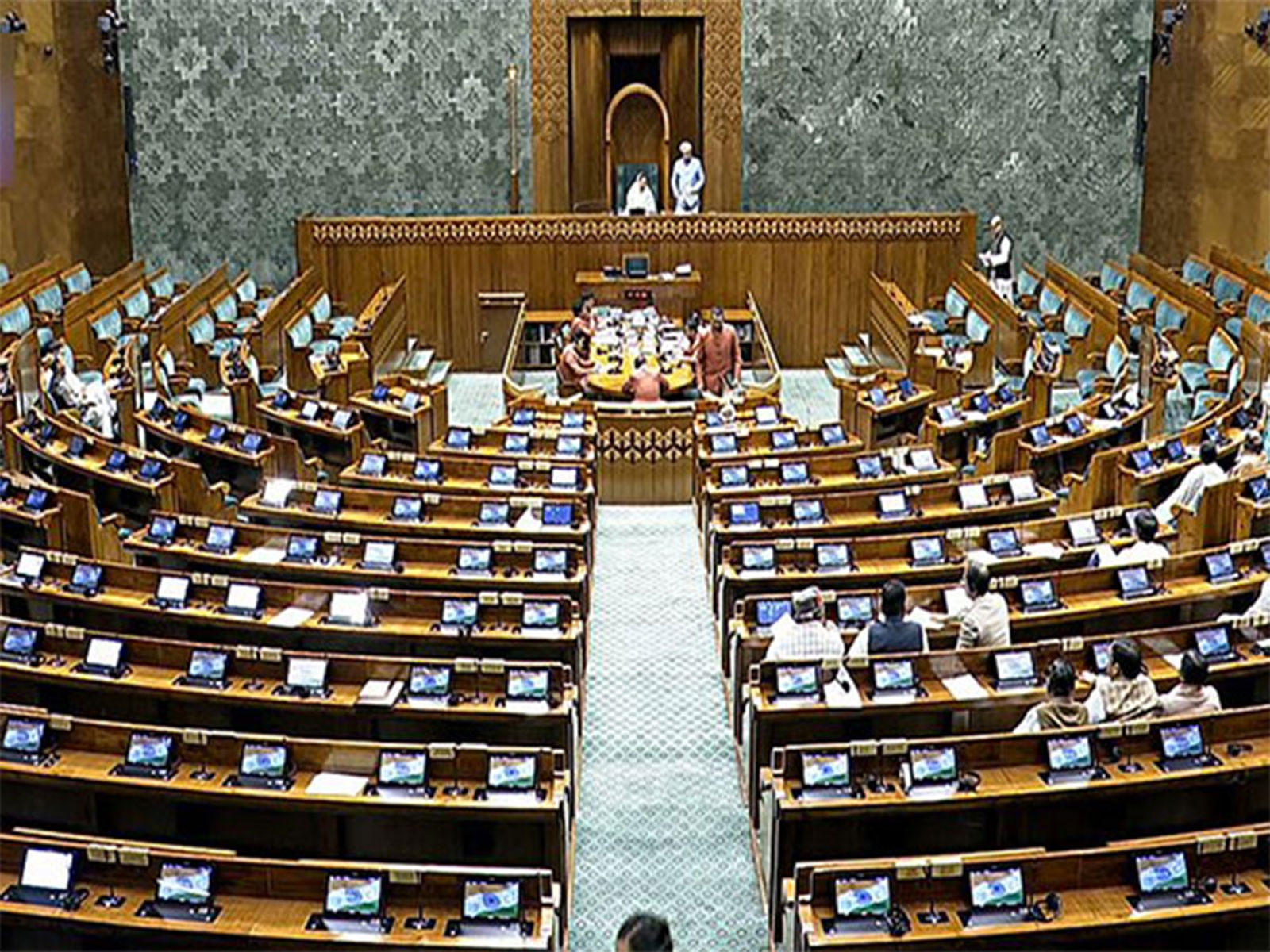
For decades, the Indian Republic has functioned on a mathematical paradox. We celebrate ourselves as the world’s largest democracy, yet our primary legislative altar—the Lok Sabha—remains a space where the floor test of gender parity fails with rhythmic consistency. As Parliament convenes for this crucial session in April 2026, the introduction of the Constitution (131st Amendment) Bill and the Delimitation Bill marks a definitive shift from rhetorical commitment to structural overhaul.
The skepticism surrounding the linkage of the Nari Shakti Vandan Adhiniyam (2023) to a fresh delimitation exercise is understandable in a political climate that prizes immediacy. However, a deeper dive into the constitutional and demographic fabric of India reveals that these are not two separate bureaucratic hurdles; they are the twin pistons of a single engine. To implement one without the other would be to invite a representative crisis that the Republic can ill afford.
The Imperative of the ‘Third’
The statistics remain a well-worn indictment of the status quo. Despite women’s voter turnout now rivaling or exceeding men’s across various states, their presence in the Lok Sabha has crawled from 5 per cent in 1952 to approximately 14 per cent today. This is not merely a “women’s issue”; it is a democratic deficit. When nearly half the population is sidelined from the sanctum sanctorum where laws are drafted, the resultant policy framework inevitably suffers from a lack of lived-experience perspective.
The 106th Amendment Act (2023) was the long-overdue corrective surgery. By mandating a 33 per cent reservation, India is acknowledging that the “merit” argument has long been a convenient cloak for patriarchal gatekeeping. The success of the 73rd and 74th Amendments at the Panchayat level—where over 1.4 million women now lead—serves as our indigenous proof of concept. Longitudinal studies have shown that female leadership at the grassroots translates into higher investment in drinking water, sanitation, and primary health—the “soft” infrastructure that forms the hard foundation of a developing economy.
Why Delimitation is the Necessary Companion
The critique that reservation should have been “immediate” often ignores the existential realities of the Indian electorate. The last time Lok Sabha seats were significantly restructured based on population was in the 1970s. Since then, the demographic landscape has shifted fundamentally. Linking women’s reservation to the 2026 delimitation exercise is a masterstroke of political pragmatism for three reasons:
1. Expanding the Pie, Not Just Slicing It
The 131st Amendment Bill proposes to increase the Lok Sabha’s maximum strength from 543 to 850 seats. This expansion is the only viable way to introduce roughly 280 women MPs without a “zero-sum” conflict. In a traditional house, carving out 33 per cent for women would necessitate unseating nearly 200 incumbent male lawmakers—a move that would trigger immense internal party friction and potential sabotage. By expanding the House, we create space for new female leadership while maintaining the proportional representation of existing stakeholders.
2. Accuracy of Representation The census-delimitation-reservation pipeline ensures that the seats reserved for women—including the vital sub-quotas for Scheduled Caste and Scheduled Tribe communities—are based on contemporary demographic data. To reserve seats based on 1971 population figures would be to bake historical inequity into a bill designed for future equality.
3. Federal Balance
Delimitation has long been a “third rail” of Indian politics, with southern states fearing a loss of voice due to their success in population control. By synchronizing this with women’s reservation, the government is attempting a grand bargain: a holistic refresh of the Indian Parliament that addresses gender, demographic weight, and federalism simultaneously.
Beyond Tokenism
Critics often point to the “Sarpanch-Pati” syndrome as a reason to doubt the efficacy of quotas. However, evidence suggests this is a transitory phase. By the second or third election cycle, the “proxy” effect diminishes as women gain independent political capital. Furthermore, the 15-year sunset clause in the 2023 Act ensures that reservation is a “booster shot” rather than a permanent crutch. It aims to reach a critical mass where the political culture is forced to evolve, and parties are compelled to nurture a genuine pipeline of female talent.
The 2029 Horizon
As we look toward the 2029 General Elections, the integration of these bills represents a “New India” that is unafraid of structural upheaval. The decision to proceed with delimitation based on the latest available data—lifting the decades-old freeze—signals that the government recognizes the demographic dividend cannot be harvested if half the harvesters are locked out of the granary.
We are moving toward a legislature that will finally resemble the streets of India—vibrant, diverse, and representative. The Women’s Reservation Bill, anchored by the technical precision of the Delimitation Bill, 2026, is more than a legislative victory; it is a renewal of the social contract. It is the realization that a democracy that walks on only one leg will always struggle to run. By ensuring women occupy a third of the expanded 850-member House, we aren’t just changing the face of Parliament; we are changing the fate of the nation.
Prime Minister Narendra Modi will visit Varanasi and Kedarnath on a two-day visit on October 24 and 25....
Stay updated with the latest national, international, Punjab, political, business, crime, weather, sports and entertainment news with The...

The family of 5-year-old Fabiana Cabello in New York City, USA, is in deep shock after her death....
The Delhi High Court on Wednesday posed several questions to Cockroach Janata Party (CJP) leaders Sourav Das and...
Cockroach Janata Party (CJP) leaders Sourav Das and Ashutosh Ranka withdrew their petition from the Delhi High Court...
A suspicious explosion occurred on Tuesday at a building under construction on Jermiah Road in the Pulikesi Nagar...
Aries: The day will be auspicious...