Last Updated: September 30, 2026
Last Updated: September 30, 2026





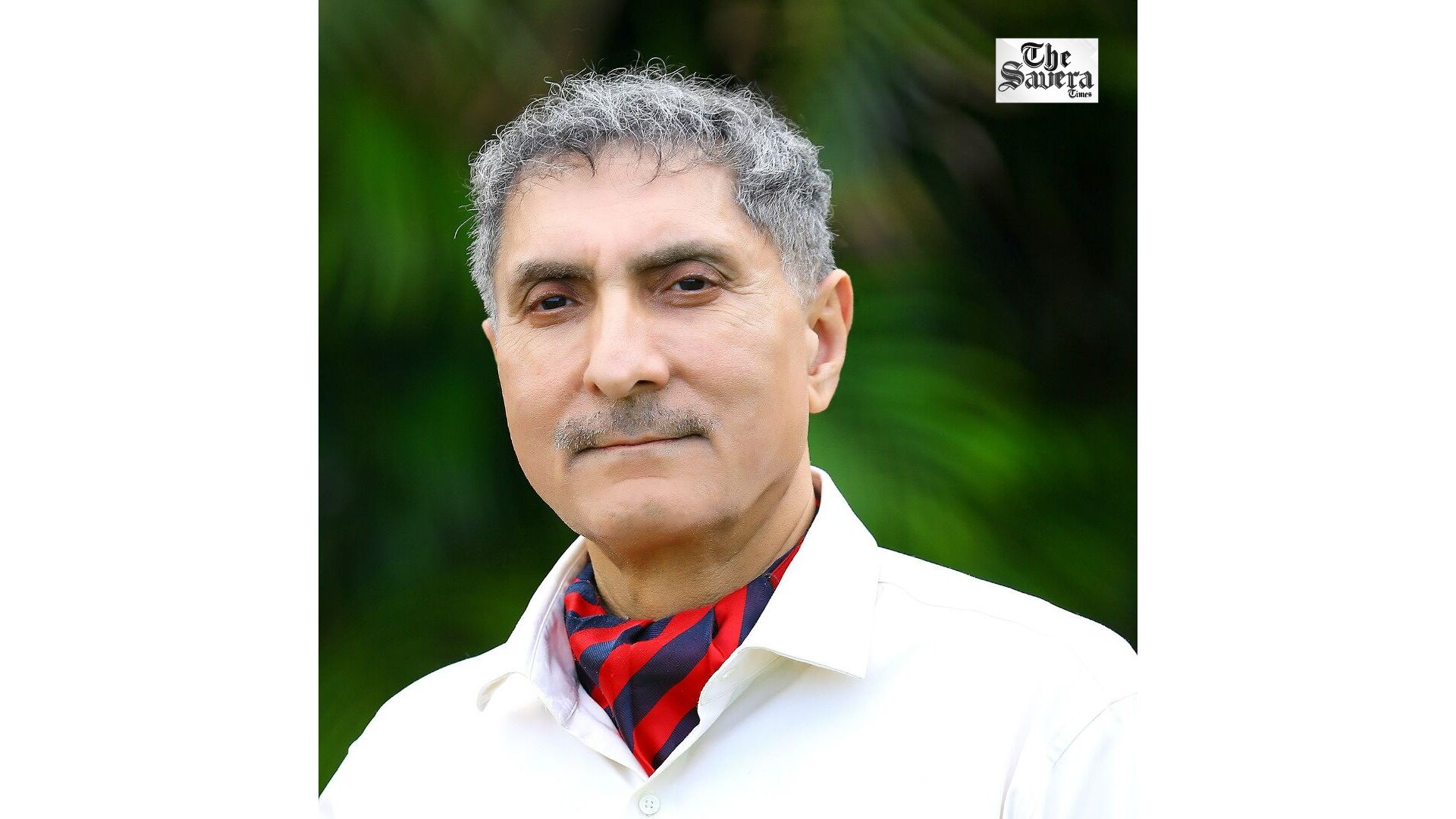
~Parneet Sachdev: Chairman of Real Estate Regulatory Authority and a leading author Antaryatra
A young lady had married a man she loved. He too was loving, caring and in many ways an ideal soul mate. Then he fell into drugs and alcohol. The marriage turned into a nightmare of abuse and torture—for years. No treatment could help. Finally, the lady happened to meet a great scientistsaint. He told her
“Biba (daughter) do the Mool Mantra for 1,50,000 times in 3 months.” By the time she had finished the chanting in 3 months, her husband had miraculously been cured, not only of the addictions, but also of the accompanying diseases. His DNA change (due to drugs) had been reversed. Her life had been restored. Yet she never found that saint again! In the temple near our home, the priest swears by the power of the chant of the Mahamrityunjaya Mantra for twenty minutes every morning. WISDOM OF NADA BRAHMA, SOUND HEALING For thousands of years, human beings have believed that sacred sounds possess transformative power.
Hindus chant mantras. Buddhists recite sutras. Sikhs sing Gurbani. Christians repeat the Jesus Prayer. Muslims engage in dhikr. Across cultures and religions, one striking pattern emerges: the rhythmic repetition of sacred sound appears capable of altering consciousness. Why? The idea that sound, even subliminal, possesses transformative power lies at the heart of many spiritual traditions. The ancient Indian sages expressed a remarkably similar idea through the concept of Nada Brahma — “the universe is sound.”
The concept of Nada Brahma takes us beyond mere auditory experience; it invites us to explore the vibrational nature of life itself, where every being, every thought, and every emotion is a frequency in the grand symphony of existence. Nada, in Sanskrit, translates to “sound” or “vibration,” while Brahma refers to the “supreme consciousness” or “universal spirit.”
The beauty of Nada Brahma lies in its simplicity—sound is all around us, constantly shaping and influencing our experience. By incorporating mindful listening into your daily life, you can bring the wisdom of Nada into every moment. Whether it’s the sound of nature, the hum of a mantra, or the music that moves your spirit, these vibrations offer an opportunity for healing and reflection. The Mandukya Upanishad describes Om as the primordial vibration underlying existence itself. Although, OM symbolises the Omniscience, yet many proponents use just the sound for healing. “Om is all this. The past, the present and the future are all Om.” For tribal and indigenous communities across the world, chanting has been regarded as a form of medicine for the mind, body and spirit. Anthropological studies among Indigenous communities in India, Native American tribes, the Sami people of Northern Europe, Indigenous Australians and the Senoi Temiar of Malaysia reveal that rhythmic chanting, drumming and sacred songs continue to play a central role in healing rituals even today.
A comprehensive review published in the journal Brain Sciences noted that chanting is used globally “to heal illness, overcome psychological and emotional difficulties, and induce altered states of consciousness,” often producing profound feelings of peace and well-being. Centuries before neuroscience existed, spiritual traditions had already concluded that sound could profoundly influence the mind. THE VAGUS NERVE CONNECTION A large nerve called the vagus nerve runs from the brainstem through the face, throat, heart, lungs and digestive organs.
It is one of the principal components of the parasympathetic nervous system, often described as the body’s “rest and restore” system. When the vagus nerve is activated, heart rate slows, blood pressure falls and the body shifts away from chronic stress. Remarkably, chanting appears capable of stimulating this system. Researchers at the National Institute of Mental Health and Neurosciences conducted a functional MRI study examining the effects of chanting Om. The researchers observed deactivation in several limbic brain regions, including the amygdala, hippocampus and areas associated with emotional distress. They proposed that the vibrational component of Om chanting may stimulate pathways similar to those activated during therapeutic vagus nerve stimulation. This is significant because vagus nerve stimulation is used clinically in some cases of depression and epilepsy. In the 1970s, cardiologist Herbert Benson introduced the concept of the “Relaxation Response.”
He found that repetitive prayer, mantra repetition and similar practices could produce physiological changes opposite to the stress response, including reduced oxygen consumption, lower heart rate and decreased blood pressure. The brain appears to respond powerfully to rhythmic repetition. Ordinarily, the mind behaves like a restless monkey, leaping continuously between memories, worries and future scenarios. A repeated sacred phrase acts as an anchor. Attention returns again and again to a single point.
Most sacred chants naturally synchronise breathing. Try chanting “Waheguru,” or “Om Mani Padme Hum” slowly and attentively. Almost immediately, breathing becomes deeper and more rhythmic. A preliminary study involving audible mantra repetition found measurable increases in vagal tone and heart-rate variability among participants practising sacred sound repetition. The ancients described this as peace. Modern physiology describes it as autonomic regulation. BUDDHIST MONKS AND THE QUIET MIND Buddhist traditions have long recognised the transformative effects of chanting. Whether one hears Tibetan monks intoning deep resonant mantras or Theravada monks reciting the Pali Canon, the chants are powerful. Research has shown some very amazing and paradoxical results. Certain forms of chanting and meditation enhance parasympathetic activity while fostering a calm yet alert state of awareness. This combination is unusual because modern techniques reduce arousal and also reduce alertness. With sacred chanting, the mind becomes quiet without becoming dull.
GURBANI AND THE TECHNOLOGY OF NAAM Among the world’s great spiritual traditions, Sikhism offers one of the most elegant understandings of sacred sound. The Gurus understood that melody, rhythm and sacred language together possess extraordinary transformative potential. Sikh spirituality places some emphasis upon sacred sound. Sri Guru Granth Sahib says, Ang (Page) 1083 “Kirtam naam kathay tere jihba.” (The tongue speaks Your sacred Name) Although, the import of this shabad is vast and symbolic, yet there is some relevance of sacred sounds. In fact, the entire Guru Granth Sahib is written in Ragaas. The repeated remembrance of the Divine shabads gradually reshapes consciousness itself.
THE HEALING OF VITILIGO A few months ago, I met a senior government officer who narrated his own story of miraculous healing. In his late thirties, the man had been suffering from vitiligo for several years. Inspite of years of treatments, his condition had worsened. Then fate posted him to Amritsar. One day as he was reading the holy verses from the Guru Granth Sahib, a man of great spiritual aura, visited his home. During conversation, this man explained that Gurbani (words of the Guru Granth Sahib ji) recitation transforms the human cells.
When we remember the Divine and praise him, our fundamental thought changes. One great sacred word is Waheguru (Praise be to the omnipotent, everloving creator inside of us) The young officer resolved to change his inner world. Every morning before work, he would visit the Golden Temple, chant “Waheguru” and take a dip in the sarovar near the revered Dukh Bhanjani Beri. Miraculously, changes began to appear. His condition improved and the depigmentation healed. He had stopped medical treatment years ago. The officer says that the daily repetition of the “Waheguru” had altered something deep within him. Long before his skin began to heal, he said, his mind had healed.
His mind seemed to slowly dissolved in the rhythm of “Waheguru.” A PRACTICE FOR THE WEEK Choose a chant that resonates deeply with your own tradition or spiritual inclination. It may be “Waheguru,” “Om,” the Mahamrityunjaya Mantra, “Om Mani Padme Hum,” the Jesus Prayer or any sacred invocation meaningful to you. The mantra must be from a Divine scripture- not man made. Every morning: Sit comfortably. Close your eyes. Breathe slowly and relax. Repeat the chant gently for ten minutes. Relax and let go. Try for a week. Sacred chants are not magical spells. Yet they attune you to the magic within!
Pakistan-based LeT terrorist Mohammad Asif alias Hashim Moosa, wanted in the Pahalgam terror attack case, was killed in...

The Supreme Court has ruled out both a complete firecracker ban and unrestricted 24-hour use, indicating that permissible...
The Centre has approved higher MSP for all mandated Rabi crops for the 2027-28 marketing season, with safflower...
Traders’ organisations have withdrawn the October 2 “No UPI Day” protest after meeting Finance Minister Nirmala Sitharaman over...

Ahmedabad: A Nigerian national allegedly acted as a link between a Gujarat-based wanted accused and a wider drug...

Flood victims in West Champaran protested against local MPs and MLAs during Samrat Choudhary’s visit as the Gandak...

Aries: The day will be auspicious...