Last Updated: October 21, 2026
Last Updated: October 21, 2026





Parneet Sachdev
It often begins in the smallest of ways.
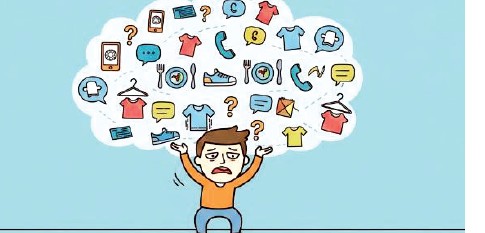
You wake up, reach for your phone, scroll a few moments longer than you should. What to make for breakfast? Shall I message back just now or shall I call? There is less time, shall I take a short walk? What to make for dinner? What to wear at the function today?
In one study by Brian Wansink and Jeffery Sobal at Cornell University, participants were first asked to estimate how many food- and beverage-related decisions they made each day. Most estimated around 15. However, when researchers asked specific questions about when, what, how much, and where they consumed meals or snacks, the actual number averaged roughly 221 decisions per day!
The study, published in Environment and Behavior, focused only on food decisions—yet even this single domain exposed how thin our awareness of choice truly is.
Most feel trivial. Yet, like invisible grains of sand, they pile up — shaping the dunes of our lives.
We may think that only our big choices define us. Whom we marry, where we work, which city we call home. However, we underestimate the great power of the small, daily decisions. It is these that silently sculpt the architecture of our mind, mood, and destiny.
Psychologists call this decision fatigue — the gradual erosion of mental energy that leaves us depleted by the evening, unable to choose wisely even when it matters most.
THE SCIENCE OF INVISIBLE LOAD
In 2011, social psychologist Roy Baumeister and colleagues at Florida State University published a landmark series of experiments arguing that every act of choice — even something as trivial as selecting a colour scheme or picking a snack — draws upon a finite reservoir of mental energy. Their research showed that participants who had made numerous small decisions performed significantly worse on subsequent tasks requiring self-control, sustained attention, or resistance to temptation (Baumeister et al., Journal of Personality and Social Psychology, 2011).
The brain treats each decision as a metabolic cost, a tiny withdrawal from a shared pool of cognitive resources.
Later, neuroscientists began to investigate what this depletion looked like inside the brain. A 2018 study at the University of Zurich, using high-resolution fMRI scans, mapped this process to the dorsolateral prefrontal cortex (dlPFC) — the region implicated in planning, inhibition, and executive control. As participants moved through repeated decision cycles, neural activation in the dlPFC showed measurable decline. The circuitry did not “switch off”; rather, it became less efficient, firing more sluggishly.
As neural efficiency dropped, people increasingly opted for the cognitively “cheaper” path — the extra slice of cake, the impulsive purchase, the snappish reply. In other words, mental tiredness translates directly into behavioural vulnerability.
The real-world implications of this phenomenon are striking. One of the most cited examples comes from the now-famous 2011 study by Shai Danziger, Jonathan Levav, and Liora Avnaim-Pesso, analysing more than 1,100 decisions made by Israeli parole boards (Proceedings of the National Academy of Sciences, 2011).
They found that the likelihood of a prisoner receiving parole started near 65 per cent immediately after a meal break, only to plummet to almost zero in the hours leading up to the next break. The judges were not consciously harsher; their brains were simply fatigued, more prone to the default option of refusal. The pattern underscored a subtle truth:
Justice, and by extension all human decision-making — depends not only on intellect and fairness but also on physiology.
Subsequent research has strengthened the point. Studies from the University of Sydney (2019) and the University of Minnesota (2020) show that decision fatigue correlates with elevated cortisol, reduced glucose availability to the prefrontal cortex, and decreased heart-rate variability — all markers of stress-induced cognitive depletion. Economists have observed similar patterns in financial decision-making: people make riskier choices late in the day, default on loan repayments more frequently at night, and are more prone to “bill fatigue” when confronted with multiple payments at once.
The mind is not a machine running on infinite bandwidth. It is a biological organ that requires rhythm, nourishment, rest, and recovery. When those needs are ignored, even the wisest among us drift toward poorer choices, not out of weakness but out of neurological exhaustion.
WHEN CHOICE BECOMES A CAGE
Technology has not merely accelerated life; it has multiplied the number of decisions our brains must make each day. Today, the digital sphere presents hundreds of micro-choices every hour: what to watch, what to wear, how to reply, when to react, and which of the dozens of notifications deserves attention. Each ping is a cognitive summons.
Nobel laureate and cognitive scientist Herbert Simon’s concept of bounded rationality argued that our decision-making is constrained not only by available information but by the finite bandwidth of the human brain itself. The more possibilities we must sift through, the less joy or certainty we derive from any single one — a psychological paradox that modern behavioural economists now call the “paradox of choice.”
Repeated, low-stakes decisions trigger a subtle but chronic release of cortisol, the primary stress hormone. Over time, says Stanford neuroendocrinologist Robert Sapolsky, this steady hormonal trickle ushers the brain into “chronic cognitive overdrive” — a mode where the prefrontal cortex is constantly engaged but never fully restored.
In this state, the mind does not crash; it simply never resets. The result is a quiet erosion of clarity, patience, and emotional balance. We feel it as irritability, indecision, or the exhaustion that comes from being “on” all day without ever encountering true rest.
MOMENTS OF SACRED PAUSE
Spiritual traditions have long understood what science is only now quantifying: that the space between decisions is sacred.The Buddha taught mindfulness as the art of observing impulses before acting on them.
Modern neuroscience calls it meta-awareness — the moment we notice the urge to click, speak, or decide, and simply breathe instead.
The author, in his new book writes that one must Insert sacred pauses: a moment of silence before a meal, a few deep breaths between tasks, a short walk at twilight. Let stillness return to your life in small, nourishing ways.
One minute of conscious stillness between decisions can reset an hour of clarity.
Dr. Amishi Jha, a neuroscientist at the University of Miami, found that such sacred pauses improved working-memory capacity by 22 percent among military participants under stress. The mind, once taught to pause, begins to conserve cognitive energy — a quiet antidote to decision fatigue.
Before you answer an email, take a breath. Before you choose your words in a tense meeting, let silence precede them. Declutter trivial choices — wear a simpler wardrobe, automate routine tasks, eat similar breakfasts. Each act saves mental energy for what truly matters.
As Viktor Frankl wrote, “Between stimulus and response there is a space. In that space lies our power to choose our response. In our response lies our growth and our freedom.”
The real weight of life seldom comes from its great crises; it gathers quietly in the pebbles we pick up without noticing — the tiny decisions, reflexes, and micro-judgements that accumulate from dawn to dusk. It is this invisible cargo, that strains the mind. Thankfully, a great miracle lies in the power of Sacred Pauses, explained by the Author in his book The Art of Surrender (living in harmony with the Tao) (available Amazon).
Wisdom lies rarely in discerning which choices truly matter, and letting the rest fall away. Sometimes the most intelligent act is not to decide more, but to decide more gently, more sparingly, and more consciously — giving the mind the spaciousness it needs to return to clarity.
(Views expressed are the author’s own).
Parneet Sachdev, IRS is the Chairman of Real Estate Regulatory Authority and a leading author.
Pakistan's Defense Minister Khawaja Asif has questioned alleged plans by senior government officials to permanently settle abroad. He...

The Baloch Liberation Army (BLA) has claimed responsibility for carrying out 34 operations between October 9 and 20...

Russian President Vladimir Putin said on Wednesday that Russia's first tanker carrying 40,000 tons of diesel fuel will...

Ten people were killed and 44 others injured in a horrific road accident in Pakistan's Punjab province. The...

North Korean leader Kim Jong-un's influential sister, Kim Yo-jong, and a military marshal inspected fortification work along the...

New Delhi: US Secretary of State Marco Rubio has assured India that America’s relations with any country in...

Aries: The day will be auspicious...