Last Updated: October 3, 2026
Last Updated: October 3, 2026





Abhishek Vij
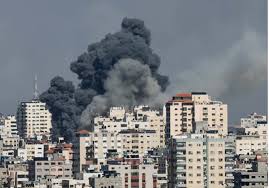
The devastating conflict in West Asia has not only pushed the economies of the Gulf nations toward decline but has also had repercussions on developing Third World nations like India. Over the past 15 years, India’s economy has made tremendous strides.
The country has acquired the strength to rise from being the world’s 11th-largest economy—first to the fifth, and now to the fourth-largest. We now envision becoming the world’s third-largest economic power by 2030, and a fully developed nation by 2047—the centenary of our independence. This implies that by 2047, India would surpass the United States and China—currently the world’s top two economic powers—to secure the number one position.
However, experts opine that to achieve this, India’s annual economic growth rate must consistently range between 8 and 10 percent. Yet, given the economic headwinds the country is currently facing, it appears doubtful that we will even be able to sustain the 7 percent growth rate we have achieved thus far. While we may take pride in the fact that our economic growth rate remains the highest in the world amidst this global period of economic slowdown, it is not substantial enough to propel us ahead of the developed nations. The most significant shortcoming is that this growth trajectory is not aligned with socialist objectives. In an effort to accelerate the country’s growth rate, we have begun prioritizing the private sector over the public sector.
A new paradigm has emerged—a partnership between the private and public sectors; however, within this framework, the private sector appears to be firmly in the driver’s seat. Consequently, the profits generated are largely confined to the wealthiest 10 percent—the investor class—while the remaining 90 percent—comprising the exploited, the deprived, and the middle class—fail to reap any of the benefits.
The second major shortcoming is that the country’s economy remains import-dependent. In this context—since we are compelled to rely on the dollar, ruble, and pound for currency exchange—our economy consistently faces deficits and suffers from the depreciating value of the rupee. Consequently, imports become prohibitively expensive; and because our domestic production and manufacturing sectors are heavily dependent on these very imports, inflation begins to run rampant across the country.
Furthermore, the pervasive corruption within the nation—coupled with the problem of youth unemployment stemming from a lack of effective policies—further complicates this entire situation. As a result, the country lags significantly behind in global prosperity indices. The ongoing conflict in West Asia has now begun to exert a detrimental influence on this already precarious situation. It would be erroneous to claim that the military conflict currently unfolding in West Asia will have no impact on India’s economic growth rate. We must not overlook the fact that India imports 85 percent of its oil requirements.
Moreover, the country’s agricultural sector is heavily reliant on fertilizers and manure. Due to the war, the supply chains for these essential inputs have been severely disrupted. The result is a 1 to 1.5 percent rise in the retail inflation rate and a 1 percent decline in the economic growth rate. The disruption of supply chains could directly impact various sectors, including textiles, urea fertilizers, paints, chemicals, general fertilizers, cement, and tires.
If these sectors face a dearth of investment and production becomes uncertain, it will inevitably lead to a shortage of employment opportunities. The vast domestic demand market—of which we take such pride—will come under even greater pressure. All in all, the prevailing atmosphere of war has completely thrown the dynamics of the Indian economy into disarray.
Washington: The United States has listed 50 countries whose nationals are subject to visa bonds of up to...
Washington: US President Donald Trump ruled out a ban on American diesel exports after European countries agreed to...
Swachh Bharat Mission (SBM), launched in 2014, has evolved into a broader movement for cleanliness, waste management, and...

Catch the top India and world news in The Savera Times Evening Wrap, featuring the latest developments, major...

The second edition of multinational air exercise Tarang Shakti 2026 is underway in Jodhpur, bringing together seven participating...

The Election Commission has directed states and UTs where SIR is complete to identify and enrol eligible voters...
Aries: The day will be auspicious...