Last Updated: October 21, 2026
Last Updated: October 21, 2026





Abhishek Vij
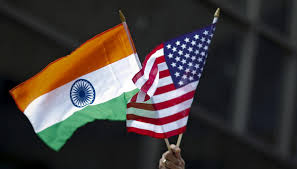
The most discussed topic so far for the year 2026 has been the India-US Trade Agreement and its draft. Both countries have repeatedly clarified their trade policies. These clarifications have sometimes revealed contradictions regarding agricultural goods, crude oil imports, and changes in tariff rates. Now, putting an end to all speculation, the trade agreement is expected to be finalized next week. Chief negotiator Darpan Jain, representing the Indian government, will depart for the US next week with his colleagues to finalize the agreement’s outline.
It is expected that the final agreement will be signed after the negotiations. Even if the negotiations drag on, this team is responsible for handling the entire process. The key feature of this agreement is that the current 50 percent tariff imposed on India has been reduced to 18 percent. Tariffs on many goods will be reduced, and some will be zero. However, an announcement regarding this will only be made after the final signing. Despite the US imposing a 50 percent tariff, India’s exports increased from $679 billion to $721 billion last year compared to 2024-25. However, our economy remained import-driven, with imports increasing from $773 billion to $823 billion during the same period. The trade deficit increased from $94 billion to $103 billion. This is why we saw the rupee depreciate against the dollar. The hope is that after the finalization of the trade agreement, our exports will increase, our trade deficit will decrease, and the currency’s value will improve.
But doubts remain amid expectations. Opposition parties in India say that the agreement does not take into account the interests of the country’s farmers, despite promises that American agricultural exporters would not interfere in the agricultural sector. The final decision on which crops will withstand American competition and which will survive will be determined only after the agreement is finalized. Oil and arms purchases from Russia have been major issues. The US advocates against purchasing Russian crude oil. If we want to buy oil, we must only buy from the US or Venezuela. In response, India says that we will buy from wherever we can find the cheapest oil. The US threatens to reimpose a 25 percent penalty if oil purchases from Russia are not completely stopped. India says that now that an agreement has been reached, the previous penalty should also be reverted.
Thus, there is a difference of opinion between the two sides. The team headed by Darpan Jain will negotiate and resolve this difference and finalize the final agreement. It should be noted that three other important agreements are awaiting finalization, but these agreements will be reached only after the India-US trade deal is concluded. The first is a free trade agreement with Israel. The second, the India-UK free trade agreement, is to be finalized in April, and the third, the main content of the trade agreement with
Canada, will be decided. However, all these agreements will be finalized only after the India-US agreement.
Therefore, the countrymen are eagerly awaiting the final outcome of the India-US agreement. India wanted complete clarity on one point: that it should not be required to achieve $500 billion in trade with the US in the coming years. The US clarified that reaching this trade target is not a requirement or restriction; it is merely a desire. Secondly, it remains to be seen what impact this agreement will have on India’s agriculture and farmers. Initially, there were reports that pulses were also included in this agreement, but this was later denied. Ultimately, it remains to be seen whether pulses will be excluded from this trade deal.
Start your day with The Savera Morning Brief, bringing you the latest news from India and around the...

Union Home Minister Amit Shah will pay tribute to police martyrs at the National Police Memorial in New...
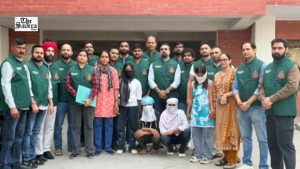
Four more people, including two women, have been arrested in the Tiger Shroff firing case. Delhi Police are...
We are very proud that at present India is the number one country in the world by surpassing...
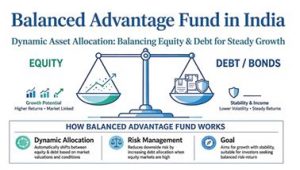
Every investor wants the wealth-creating power of equity and the reassuring stability of debt. Balanced Advantage Funds attempt...
Tourism is a major source of government revenue in our country. There are different types of tourism. Scenic...
Aries: The day will be auspicious...