Last Updated: September 23, 2026
Last Updated: September 23, 2026





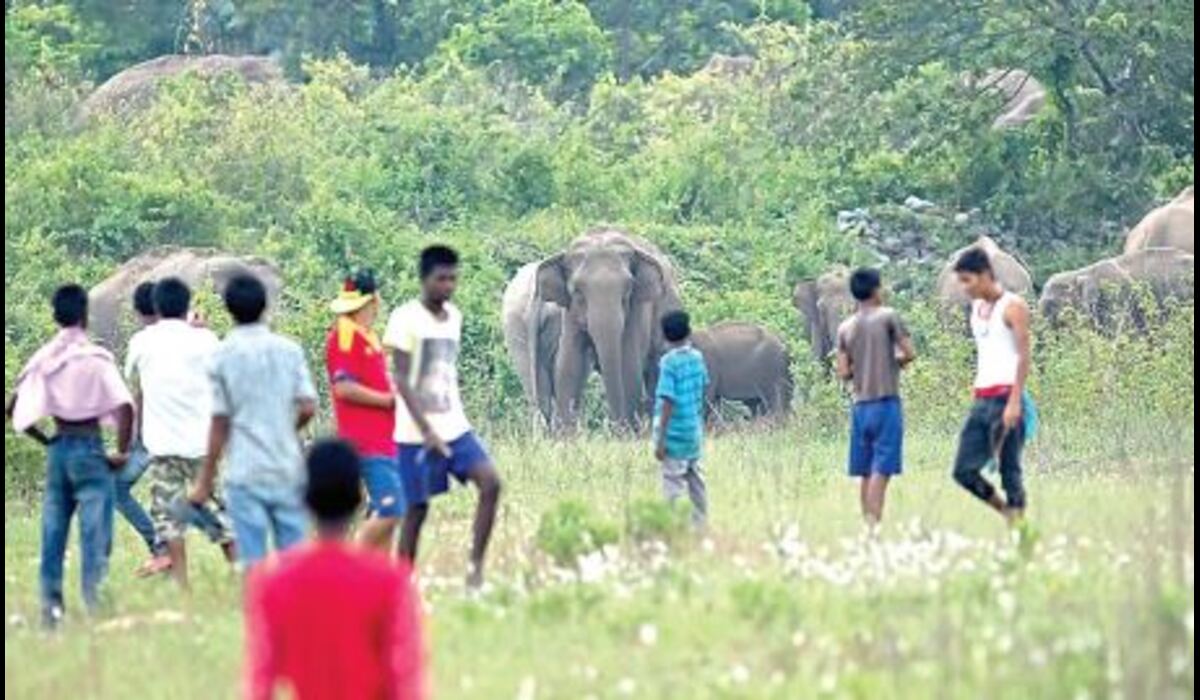
North Bengal has long been a land where forests, wildlife, and human life existed side by side with little disturbance.
For generations, dense jungles, tea gardens, and small settlements shaped a landscape in which elephants roamed freely and leopards moved silently, rarely clashing with people.
Humans, too, were largely non-hostile toward wildlife, barring a few isolated incidents. What we are witnessing today, however, is a sharp departure from that history. The relationship that once resembled coexistence is steadily unraveling, not because animals or people have changed, but because the land they share has been transformed.
In recent decades, both human communities and wild animals in North Bengal have been pushed into increasingly precarious situations by forces beyond their control. Forests are shrinking, food sources are becoming scarce, and ancient migration routes are being severed.
Highways, railway lines, expanding towns, tea estates, and construction projects have carved up landscapes that once functioned as continuous ecological corridors. As a result, fear, loss, and anger have begun to define interactions on both sides.
At the heart of this growing tension lies the Dooars, a lush belt of nearly 5,200 square kilometres stretching between the Teesta and the Sankosh rivers. Spread across Jalpaiguri, Alipurduar, and Cooch Behar districts, the region is home to some of eastern India’s most significant forests, including Buxa Tiger Reserve, Gorumara National Park, and Jaldapara Wildlife Sanctuary.
These forests were once part of a vast, uninterrupted corridor that allowed wildlife to move freely across North Bengal, Bhutan, and Assam. Today, that continuity has been broken. Tea gardens have expanded into former forest tracts, settlements have multiplied, and roads and railway lines now cut through animal paths.
Elephants that once migrated seasonally across international and state boundaries now find themselves trapped between human habitations or fatally struck by trains. Leopards, displaced from their shrinking forest homes, increasingly venture into tea estates, villages, and agricultural fields in search of prey and shelter.
This loss of safe space is a key reason why humanwildlife encounters in North Bengal have become more frequent and more deadly. Leopards slipping into paddy fields or tea gardens are often acting out of hunger rather than aggression.
Agricultural expansion and monoculture plantations have replaced diverse forests with uniform tea bushes. While tea gardens provide ideal cover for leopards, they support little natural prey, forcing the animals to look elsewhere for food.
Elephants, meanwhile, are drawn into villages by the smell of ripening paddy and stored grain, especially as forest food sources decline. Environmental stress has compounded the problem. Rivers are running thinner, water holes dry up earlier than before, and forests are increasingly disturbed by noise and human activity.
Villages offer easy access to water and food, making them attractive to wildlife. At the same time, feardriven responses from people — shouting, throwing stones, bursting firecrackers — often escalate encounters into violence, leaving both humans and animals injured or dead.
The consequences of this fractured coexistence are visible in the disturbing incidents reported almost every week. In Bairagirhat under Mathabhanga, an 18-year-old girl was mauled by a leopard while cutting paddy alongside her mother. The animal had been hiding just a few feet away, unseen until it was too late.
In Falakata’s Kadambini Tea Garden, workers discovered the body of a leopard lying among the bushes. While the death appeared natural, its presence deep inside a tea estate added to the fear already gripping labourers. E l s ewh e re, h u m a n behaviour has also heightened risks.
In Chalsa and Banarhat, tourists gathered dangerously close to a lone elephant at the Murti river, ignoring basic safety norms until forest guards intervened. In Lataguri, repeated elephant raids have forced villagers to sleep on the rooftop of a school building at night in an attempt to protect it from further damage.
These are not isolated stories but symptoms of a deeper crisis. What North Bengal is experiencing today is not merely a series of tragic encounters but the slow collapse of an ecological balance that once sustained both wildlife and people.
As forests continue to fragment and human activity pushes deeper into animal habitats, conflict becomes inevitable. Without urgent efforts to restore corridors, manage land use, and promote coexistence rooted in understanding rather than fear, the region risks losing not just its wildlife, but also the fragile peace that once defined its relationship with nature.
A 44-year-old man from Karnataka was allegedly murdered in Sharjah, United Arab Emirates (UAE). His body was found...

Sources within the Election Commission have sought to play down a report by the Indian Express which had...

A 21-year-old college student in South Delhi was allegedly stalked and harassed by two bike-borne youths.
Good Morning Viewers! Start your day with The Savera Times Morning Bulletin, bringing you the latest news from...

The Central Consumer Protection Authority (CCPA) has imposed a ₹10 lakh fine on e-commerce platform Xboom for listing...

Professor Suryanarayana Doolla, the key accused in the alleged suicide of 20-year-old IIT Bombay BTech student Sahil Ravindra...

Aries: The day will be auspicious...