Last Updated: October 12, 2026
Last Updated: October 12, 2026





Julie had been having dreams with eerily similar themes since childhood. She would see herself as a young woman, standing in a vast, frozen landscape beneath a leaden grey sky. The air was bitterly cold. Snow swirled across the ground. Before her stretched endless coils of rusted barbed wire. Then the wooden watchtowers, their silhouettes stark against the grey sky. In the dream she would be terrified. She could hear boots crunching on frozen earth. Harsh voices echo in a strange language. An overwhelming sense of dread gripped her chest as she felt trapped, hunted, and utterly helpless. Finally, when she would be awake, she would still be trembling. Her nightclothes soaked with sweat, her heart pounding.
The nightmare began when she was barely seven years old. It continued through adolescence and into adulthood.
When she finally chose therapy in college, the psychologist could not decipher any reason for the nightmares. She had grown up in a comfortable home in New York. She had never experienced war, imprisonment, persecution, or extreme hardship.
Years later, while exploring her family history, she discovered that her grandfather had perished in Nazi concentration camps during the Holocaust. As she read more about it, the barbed wires, watchtowers, the confinement acquired a haunting context.
Were the dreams coincidental? Had she unconsciously absorbed fragments of family pain from Auschwitz, she could not consciously know?
THE EERIE DISCOVERY
For decades, stories like these were dismissed as coincidence, family influence or psychological suggestion. Then psychology began uncovering something extraordinary.
Psychotherapists working with descendants of Holocaust survivors reported about patients who experience intense fears, recurring nightmares, despite having no direct exposure to holocaust. Researchers such as Rachel Yehuda and Natan Kellermann’s have connected environmental experience to gene expression, showing how severe stress leaves chemical “marks” that influence stress-response systems.
Rachel’s landmark 2016 study revealed altered methylation in the FKBP5 gene among Holocaust survivors and their offspring, a discovery central to the emerging science of intergenerational trauma.
The question is—can the experiences of our ancestors continue living within us?
EPIGENETICS
For centuries, families have observed bizarre repetitions across generations. A grandfather loses everything through gambling. A grandson repeats the pattern. A lineage marked by abandonment produces children who fear intimacy. Entire families seem haunted by anxiety, alcoholism, violence or poverty. Just as mysteriously, courage, artistic talent, spiritual inclination and resilience often appear to flow through bloodlines. That too with people who haven’t met or known their ascendants at all.
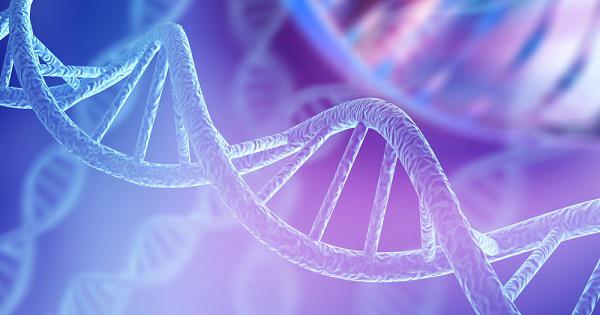
Epigenetics has discovered that life experiences can influence the way genes function without altering the genetic code itself. Think of DNA as the hardware of a computer. Epigenetics influences the software. Certain experiences can switch genes on or off, altering how the body responds to stress, illness and environmental challenges.
One of the most remarkable studies was led by Kellermann. He wrote that the “Holocaust left its visible and invisible marks not only on the survivors, but also on their children. Instead of numbers tattooed on their forearms, however, they may have been marked epigenetically with a chemical coating upon their chromosomes, which would represent a kind of biological memory of what the parents experienced.”
Previous research assumed that such transmission was caused by environmental factors, such as the parents’ childrearing behavior. New research, however, indicates that these transgenerational effects may have been also (epi) genetically transmitted to their children.
BODIES REMEMBER
Another remarkable clue emerged from one of the darkest episodes of the Second World War. During the winter of 1944–45, Nazi blockades created a devastating famine in the Netherlands. Thousands died. Decades later, researchers studying individuals who had been exposed to the famine in the womb discovered measurable epigenetic differences compared with their unexposed siblings. Even sixty years later, the biological imprint remained detectable.
In 2013, neuroscientists Brian Dias and Kerry Ressler trained mice to fear the smell of acetophenone, a scent resembling cherries or almonds. Unexpectedly, their offspring and even grand-offspring displayed heightened sensitivity and fear responses to the same smell despite never experiencing the shock themselves.
The experiment suggested that experiences may leave echoes capable of travelling further than previously imagined.
THE COLLECTIVE MEMORY
The great Swiss psychiatrist Carl Jung believed that human beings are shaped not only by personal experience but also by deeper inherited layers of psyche. He called this the collective unconscious.
Jung noticed that patients from vastly different cultures often produced similar symbols in dreams, myths and spiritual experiences. Serpents, wise elders, floods, sacred trees, journeys into darkness—these motifs appeared repeatedly across civilizations.
In a sense, every human being arrives carrying invisible luggage.
But perhaps family inheritance is even more intimate.
Consider the remarkable story of the Finnish children evacuated during the Second World War. Researchers later found evidence suggesting that the daughters of women who had experienced wartime evacuation were significantly more likely to be hospitalized for mental illness than their cousins whose mothers had remained behind.
PITRA RIN
Indian traditions, however, appear to possess a far deeper insight into the mechanism. The Śatapatha Brāhmaṇa says that there are three debts owed by a human:
Jāyamāno vai brāhmaṇas tribhir ṛṇavā jāyate:
brahmacaryeṇa ṛṣibhyaḥ, yajñena devebhyaḥ, prajayā pitṛbhyaḥ.
(A person is born with three debts: to the sages, to the gods, and to the ancestors. The debt to the ancestors is discharged through progeny.)
The concept of Pitra Rina—the debt owed to one’s ancestors, appears throughout Hindu tradition.
This doctrine recognises that we do not emerge from nowhere. We inherit language, culture, values, strengths, wounds and unfinished stories of our ancestors.
The ancient practice of Shraddha reflects this recognition. By remembering and honouring ancestors, one acknowledges participation in a continuum extending beyond individual existence.
The Sanskrit saying “Mātṛ devo bhava, Pitṛ devo bhava”—revere the mother and father as divine—points toward a profound truth. We are not isolated individuals. We are branches growing from ancient roots.
This idea finds echoes in Sikh thought as well. The Gurus repeatedly emphasised the power of lineage, association and inherited tendencies, while simultaneously insisting that spiritual awakening can liberate one from limiting patterns.
For if ancestral wounds can be transmitted, so can ancestral strengths.
UNFINISHED CHAPTERS OF A FAMILY
The family of John F. Kennedy is often cited as an example of a perceived family curse. Across generations the family experienced assassinations, plane crashes, accidental deaths, substance abuse, and public tragedies. Among the most famous were the assassinations of John F. Kennedy and Robert F. Kennedy.
The repeated tragedies gave rise to a powerful cultural narrative about destiny, inheritance, and family fate.
When three generations of a family suffer the same fear, repeat the same mistake, or pursue the same calling, are we witnessing genetics, upbringing, ancestral memory, karma, or all of them woven together?
The doctrine of karma suggests that inheritance may not be limited to biology alone. Souls may repeatedly incarnate into circumstances conducive to their growth. Families become classrooms in which recurring lessons unfold.
Perhaps this explains why certain family patterns feel strangely familiar, as though they are repeating unfinished chapters.
Yet the most important lesson emerging from both science and spirituality is one of hope. Nothing is fixed.
Epigenetic marks are not permanent verdicts. The brain possesses neuroplasticity. Psychological wounds can heal. Family patterns can be interrupted. Traumas that travelled through generations need not continue forever.
One of the most common questions people ask these days is how to lose belly fat. Belly fat...

Turtle doves picking fallen grain from Paddy fields, Cicada chirping on willow trees and the cackle of migratory...

Andre Agassi became one of the greatest tennis players in the world. Agassi’s father, Mike, a former Olympic...
Have you ever wondered how the words you speak can influence your thoughts, emotions, behavior, relationships and even...

Ac There’s no doubt that smoking can cause serious health related problems and also up the risk of...

Are you one of those who exercise daily but are still unable to lose weight? We might have...

Aries: The day will be auspicious...