Last Updated: October 21, 2026
Last Updated: October 21, 2026





Abhishek Vij
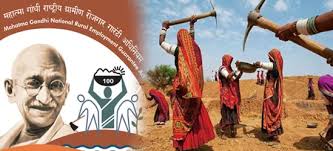
Agriculture Minister Shivraj Singh Chouhan, on behalf of the Government of India, introduced the Viksit Bharat-G Ram Ji Bill 2025 in the Lok Sabha on Tuesday. The bill aims to give a new name and a new form to the Mahatma Gandhi National Rural Employment Guarantee Scheme (MGNREGA). It is stated that this scheme will fulfil Mahatma Gandhi’s dream.
The new name for MGNREGA is Viksit Bharat-G Ram Ji. The new scheme has undergone a transformation. Earlier, 100 days of work were provided; now it will be 125 days, but the daily wage will remain the same. Previously, the central government fully funded the scheme. Now, the central government will contribute 60%, while state governments will contribute between 10% and 40%. Earlier, work was provided within 15 days of applying for the scheme.
Now, if work is not provided, the state government will provide an unemployment allowance. The MGNREGA scheme was aimed at alleviating rural poverty, and the VB-G Ram Ji scheme has made this effort a part of the developed India initiative. The new scheme will have digital monitoring. Rural Employment Guarantee Councils will be formed. Steering committees will be established. Schemes formulated at the Gram Panchayat level will be linked to PM-Vikash Gati Shakti. Why was this change necessary?
The bill has been presented in Parliament, but it is facing sharp debate between the ruling party and the opposition. The ruling party argues that the MGNREGA scheme was directionless and was like digging holes and then filling them up. The main objective was to provide work and money to one poor person in a family for 100 days. Now, this scheme will not be directionless because the government believes that villages have changed. Hunger has decreased, and rural unemployment is no longer such a challenge. Of course, the overall challenge remains for the country. The social and economic structure of rural India is changing.
Digital payments have reached there, and banking facilities are available. There is better connectivity, but fraud is rampant in MGNREGA.
Funds are being misused. It is also being said that in some states, labourers are not willing to work for such low wages. Therefore, there is a surge in the presentation of fabricated data in those states. Experts say that in 2024-25, there was a scam of Rs 194 crore in this scheme, and only 7.6 per cent of rural families were able to get 100 days of employment. But now the situation will change. Instead of fraud, it will become a streamlined, revamped scheme that will be implemented, using this workforce purposefully and linking it to nation-building. This will be a realistic plan. During the sowing and harvesting seasons, this scheme will suspend providing parallel employment. However, later, this workforce will be utilised in a targeted manner, which will transform rural life.
This is the government’s perspective, but the opposition asks why this new form could not have been given to the existing scheme? Why has Mahatma Gandhi’s name been removed from the scheme? Couldn’t the scheme have been aligned with specific objectives? It was also necessary to increase the remuneration for this workforce, considering the inflation rate. But instead of a wage increase, only the number of workdays was increased by 25. State governments are already complaining about their empty treasuries. Nevertheless, we can say that the new bill for the rural employment scheme, replacing the fraudulent MGNREGA, is a step towards reconstruction.
If a proper balance of financial support is established with the state governments, or if the central government takes on the responsibility of financing this bill as before, then it will certainly have a more positive impact on the country, and the improvement in the agricultural sector that we have been hoping for for years will begin to materialise as young people receive employment.
Good Evening Viewers! Get the latest updates from India and around the world with The Savera Times Evening...

Bharatiya Janata Party (BJP) National General Secretary Smriti Zubin Irani launched a scathing attack on Congress MP and...
New Delhi: Cockroach Janata Party (CJP) leaders Saurav Das and Ashutosh Ranka will be released from judicial custody...
According to police, three suspicious young men are seen in CCTV footage. Efforts are underway to identify them....
A video has surfaced of an alleged attempted assault on Jan Suraj Party's Bihar president Manoj Bharti. The...
Two accused have been convicted and sentenced to 10 years of rigorous imprisonment in a 2017 drug trafficking...
Aries: The day will be auspicious...