Last Updated: October 15, 2026
Last Updated: October 15, 2026





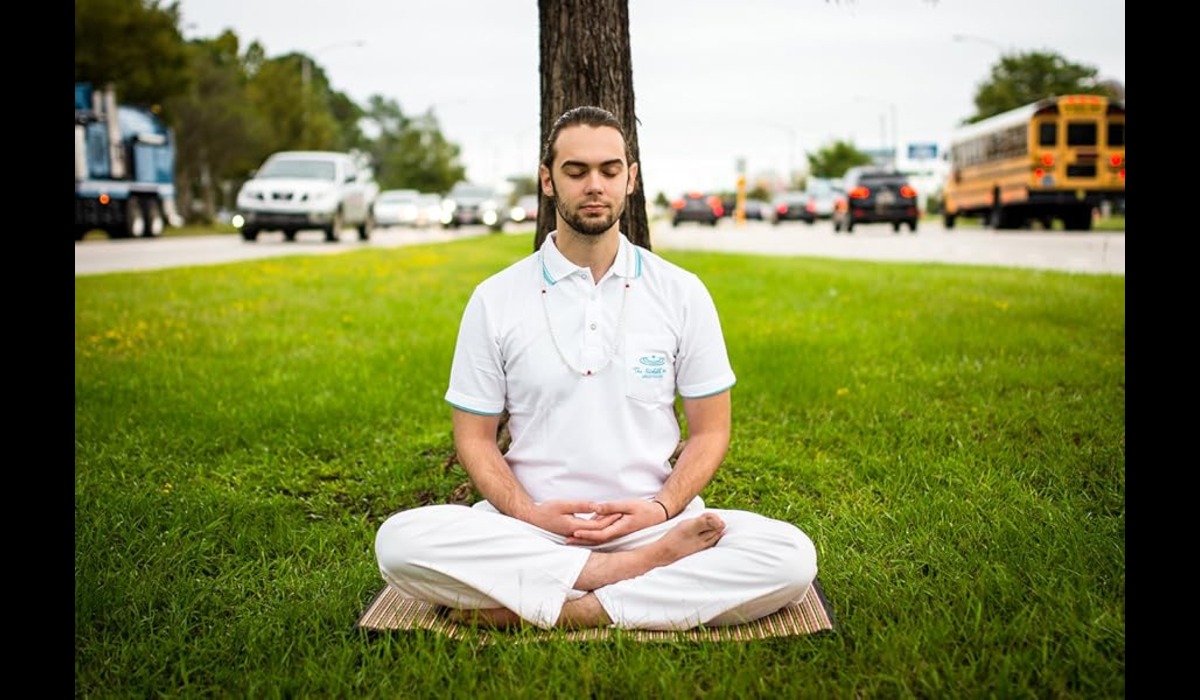
On most mornings, gratitude lists begin the same way.
I am grateful for my family. For my health. For the roof above my head.
However, there is another, quieter kind of gratitude that rarely makes it to the front page; gratitude for what never happened. For the accident that didn’t occur. For the illness that wasn’t diagnosed.
Psychologists call this practice “mental subtraction” and sometimes as the “power of beneficial absences”. The discipline of thanking life not only for its gifts, but also for its mercies.
THE SCIENCE BEHIND “WHAT IF IT HADN’T HAPPENED?”
In the early 2000s, psychologists began to test a simple question: along with listing blessings, what happens if people also imagined a related adverse event that never arrived?
In a landmark study titled “It’s a Wonderful Life: Mentally Subtracting Positive Events Improves People’s Affective States,” Minkyung Koo and colleagues found that those who practised “mental subtraction” of a cherished event felt more grateful and more positive than those who simply reflected on how the event had occurred (PMC). This counter-intuitive finding has been dubbed the “George Bailey effect”.
Later work on the “counterfactual nature of gratitude” has confirmed that imagining “ things that might never have happened” can deepen appreciation and emotional resilience (ResearchGate).
Classic studies including research on simple practices like “Three Good Things” found that writing down three positive events each night can increase happiness and reduce depressive symptoms for months afterwards (Greater Good in Action).
The message from the lab is subtle but clear. Mental subtraction adds a twist: we not only notice what went well, we briefly imagine the ache of its absence. Now, the life we actually have appears in sharper, more luminous detail.
BENEFICIAL ABSENCES IN EVERYDAY LIFE
Consider a few ordinary counterfactuals.
You met your life partner at a place you almost didn’t go to. For a moment, subtract that evening. Picture yourself in the present, but with that one person removed from history. Who would you be? Whom would you go home to?
Imagine you didn’t have education. The degrees, the colleagues, the books that shaped you—none of these would exist in your story.
Ordinary gratitude says, “Thank you for what I have.”
Gratitude for beneficial absences adds, “And thank you for all that, mercifully, never arrived.”
ANCIENT WISDOM: THE SACRED ART OF “WHAT MIGHT NOT HAVE BEEN”
Long before psychologists coined the phrase “mental subtraction,” spiritual traditions had discovered the phenomenon. In the Dhammapada, a revered Buddhist anthology of 423 verses in 26 chapters, written in the ancient Pali language, the Buddha is quoted as saying:
“Hard it is to be born a human being.
Hard is the life of mortals.
Hard it is to hear the True Teaching.
Hard it is for a Buddha to appear.”
Dhampadda verse 182
This is gratitude by subtraction. We are asked to contemplate all the births that are not human, all the lives in which the Dhamma is not heard, all the aeons in which an enlightened teacher does not appear. Against that cosmic backdrop, this brief, flawed, human life becomes an astonishing gift.
In the Bhagavad Gita, Krishna tells Arjuna in Chapter 18:
“If you take refuge in Me, you will, by My grace, overcome all obstacles.”
To “overcome” an obstacle is to live in a world where certain horrible outcomes do not materialise. The battle may or may not be avoided, but annihilation is. The Gita’s teaching that, with surrender, grace helps us cross obstacles is not a denial of the Kurukshetra battlefield; it is a refusal to let the battlefield be the whole story.
In the First Letter to the Thessalonians, Paul writes:
“Give thanks in all circumstances; for this is God’s will for you in Christ Jesus.”
1 Thessalonians 5:18
This suggests that even in difficulty, there are absences worth thanking for: the support we have, the strength we did not know we possessed, the worst-case scenario that did not come to pass.
Across traditions, then, we find that a mature gratitude does not merely catalogue pleasant events; it reveres the improbability of our current existence and the countless misfortunes that quietly did not happen.
WHAT THE BRAIN DOES WHEN WE PRACTISE THIS FORM OF GRATITUDE
In a notable fMRI study, researcher Glenn Fox and colleagues asked participants to imagine receiving life-saving help in the midst of extreme hardship. Feelings of gratitude were associated with increased activity in the anterior cingulate cortex and the medial prefrontal cortex—regions involved in moral judgment, emotion regulation and perspective-taking (PubMed).
Follow-up work suggests that even simple gratitude writing exercises can produce lasting changes in brain function (ScienceDirect). On the physiological side, a growing body of work links gratitude practices to better sleep, lower levels of inflammation, healthier cardiovascular parameters (APA). Gratitude journaling in heart-failure patients, for example, has been associated with reduced inflammatory markers and improved heart rate variability (PMC).
Gratitude does not erase structural injustice, but it does appear to tune both brain and body toward resilience—especially when it is honest, nuanced and willing to acknowledge pain alongside blessing.
HOW TO PRACTISE GRATITUDE FOR WHAT NEVER HAPPENED
One way to begin is with a weekly “beneficial absence reflection.” Take a notebook and write down one event that has shaped your life for the better: meeting your spouse, getting that scholarship, surviving a difficult illness, moving to a particular city. Then, for a paragraph, imagine the alternative.
What if you had never met your partner on that train? What if the biopsy had been positive? Let yourself feel, briefly the weight of that unlived life. Then look again at the life you actually inhabit.
Psychologically, this is exactly what the mental-subtraction is!
A second practice is relational mental subtraction. Choose one person you tend to take for granted—a parent, a soulmate, a son. Close your eyes and imagine a time in which he/they were simply not there. What warmth would go missing from your days? Often, this exercise softens irritations and rekindles affection far more deeply than a generic “I am grateful for my family.”
A third is momentary. When you catch yourself spiralling into complaint—about a delayed train, a demanding project, a noisy child—ask, very gently: what would my life be like if this problem existed only because something far worse had been avoided? The demanding project instead of unemployment. The noisy child instead of years of longing.
This is not about denying real frustration. It is about holding, in the same mind, both the pebble in the shoe and the miracle of still having legs that walk.
Gratitude without denial
Of course, there are limits. Telling someone who has just faced a bereavement or a violent disaster to “be grateful it wasn’t worse” is not gratitude; it is cruelty (Health).
LIVING WITH AWARENESS OF THE LIVES YOU DID NOT LIVE
At its deepest, gratitude for what never happened is an invitation to walk through life with a double vision.
One eye sees the visible world: the unpaid bills, the ageing parents, the arthritic knee, the anxiety about the future. The other eye, trained by mental subtraction, glimpses the invisible world of non-events: the illness that was caught in time, the wrong turn you did not take, the birth into a century with vaccines and books instead of plagues and illiteracy. There is something profoundly human about pausing, just for a while, to whisper a thank-you to the narrow escapes and alternate lives that left no trace.
You are reading these words because of thousands of events that did happen—and millions that, mercifully, did not. To be aware of both is to live with a fuller heart.
(Views expressed are the author’s own).
Parneet Sachdev, IRS is the Chairman of Real Estate Regulatory Authority and a leading author.
Patna: An Excise Department constable was killed after suspected liquor smugglers and an alleged accomplice opened fire on...
New Delhi: Amid the ongoing protests, investigators have found that certain elements backed by Pakistan launched a multi-layered...
Good Afternoon Viewers! Stay updated with The Savera Times Afternoon Bulletin, bringing you the latest news from Punjab,...

New Delhi: Heavy rain and thunderstorms swept parts of Delhi-NCR on Thursday as dark clouds covered the national...
A street vendor has approached the Delhi High Court seeking to stop the Cockroach Janata Party (CJP)'s protest...
Suva: India and Fiji on Thursday held discussions focused on deepening bilateral ties and reaffirmed their shared commitment...

Aries: The day will be auspicious...