Last Updated: October 21, 2026
Last Updated: October 21, 2026





Parneet Sachdev
Chairman of Real Estate Regulatory Authority and a leading author
In a pathbreaking experiment, (Kox et al., 2014, Proceedings of the National Academy of Sciences (PNAS)), healthy volunteers were trained in intensive breathing techniques. The participants were then subjected to an intravenous administration of lipopolysaccharide (LPS), a bacterial endotoxin that reliably triggers flu-like symptoms and systemic inflammation in humans. The people trained in breathing techniques demonstrated a dramatically reduced inflammatory response compared with the untrained control group. They did not develop the flu as against others who did.
SIMILAR BREATHING TRADITIONS ACROSS CULTURES
Breathing is intimately linked with mental functions. In the millenary eastern tradition, the act of breathing is an essential aspect of most meditative practices, and it is considered a crucial factor for reaching the meditative state of consciousness, or “Samadhi” (Patanjali, Yoga Sutras). The breath is also called “Prana,” which means both “breath” and “energy” (i.e., the conscious field that permeates the whole universe). “Prana-Yama” (literally, “the stop/control,” but also “the rising/expansion of breath”) is a set of breathing techniques that aims at directly and consciously regulating one or more parameters of respiration (e.g., frequency, deepness, inspiration/expiration ratio). Pranayama is primarily related to yoga practice, but it is also part of several meditative practices (Jerath et al., 2006).
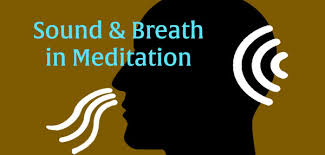
Across civilizations that never met, a striking convergence emerges: sound and breath were treated not as passive biological functions, but as instruments for transforming consciousness. Long before neuroscience could map neural oscillations or physiology could measure respiratory coherence, spiritual traditions intuited that vibration carried through voice and breath has the power to alter attention, emotion, and the experience of self.
The Chandogya Upanishad presents vibration and energy as a metaphysical foundation of reality, declaring Om to be the essence of all speech and existence (Chandogya Upanishad 2.23.3), although this also has to be understood symbolically and not literally. The Gospel of John situates creation itself in the Word, Logos; suggesting a symbolic representation of the infinite creative power (John 1:1). In Islamic mysticism, divine creative power is condensed into the command “Kun” i.e “Be” through which existence unfolds.
In the Rig Veda, speech is portrayed as sacred force, capable of both illumination and destruction. Across Hindu mantra, Buddhist chanting, Gregorian psalmody, Sufi zikr, Taoist incantation, and Indigenous song traditions, the same civilizational intuition persists: sound and speech are not merely expressive as language. They contain the power to alter consciousness, power to heal.
MODERN SCIENCE AND SOUND
Modern science suggests that sound is an energy, a vibration propagating through matter. When sound enters the ear, it is converted into electrical signals that synchronize neural activity across cortical and subcortical regions. The brain itself operates rhythmically; cognition, memory, and emotional regulation depend on oscillatory neural patterns (Buzsáki, 2006).
External rhythm, through chant, music, or mantra can entrain these internal oscillations, subtly reshaping perception and mental state.
This is why sacred sound traditions across cultures converge on repetition. Repetition stabilizes attention, quiets intrusive thought, and produces measurable shifts in autonomic nervous system activity. Studies on mantra chanting and rhythmic prayer demonstrate reductions in stress markers, improved heart rate variability, and increased parasympathetic activation associated with calm and emotional regulation (Bernardi et al., 2001; Porges, 2011). Functional neuroimaging studies of prolonged chanting of Om/ Waheguru etc show decreased activation in limbic regions linked to fear and arousal, alongside increased coherence in attentional networks (Kalyani et al., 2011).
BREATHING TRADIONS AND SCIENCE
Yet sound rarely acts alone. In many traditions, sound is inseparable from breath. Civilizations independently discovered that breath alters consciousness. In Indian pranayama, breath is cultivated to influence prana, the animating life force described in yogic physiology. Tibetan Tummo breathing combined visualization and respiratory discipline to generate heat and resilience under extreme cold. Sufi mystics developed rhythmic breathing integrated with divine remembrance, allowing breath itself to become prayer. Warrior traditions, from Japanese martial arts to Greco-Roman combat disciplines, trained breath control to stabilize fear, sharpen attention, and enhance endurance.
Modern respiratory neuroscience now clarifies that rhythm directly influences vagal tone and heart rate variability, key markers of emotional regulation and stress resilience (Porges, 2011). Slow, controlled breathing modulates activity in the limbic system, including the amygdala, reducing anxiety and improving attentional control.
By consciously regulating breath, individuals gain indirect influence over systems that govern fear, arousal, and emotional reactivity. What spiritual traditions called disciplining the life force, science increasingly recognizes as regulating autonomic and cortical dynamics.
Sound and breath thus operate as intertwined technologies of consciousness.
Studies on rhythmic vocalization and chanting demonstrate shifts in subjective state, attention, and emotional processing, alongside measurable changes in neural coherence (Neher, 1961; Maxfield, 1990). Beyond individual neurobiology, sacred sound and breath historically functioned as social instruments.
HEALING THROUGH CHANTS
Anthropological research on Indigenous healing and ritual traditions—from Shipibo medicine songs in the Amazon to Diné ceremonial chants in North America—shows that collective chanting synchronizes breathing, movement, and emotional tone among participants. This synchrony fosters bonding, trust, and shared identity, reinforcing communal resilience (McNeill, 1995). Experimental studies in social neuroscience confirm that synchronized movement and vocalization increase pain thresholds and social bonding, likely mediated by endogenous opioid release (Tarr, Launay & Dunbar, 2014).
The Buddha’s teaching on Right Speech links verbal discipline to mental purification (Majjhima Nikaya 41). The Bhagavad Gita describes disciplined speech as truthful, beneficial, non-harmful, and self-controlled (Bhagavad Gita 17:15). The Qur’an emphasizes accountability for every spoken word (Qur’an 50:18). Across cultures, speech is treated as an ethical force because it shapes thought, relationships, and inner narrative.
Contemporary psychology affirms this insight. Repeated verbal framing influences cognitive schemas, emotional interpretation, and memory encoding, gradually shaping personality and worldview (Beck, 2011). Internal dialogue, like external speech, becomes a form of silent mantra, either reinforcing fear or cultivating clarity. Sacred speech traditions recognized early that what we repeatedly say, we eventually become.
Rumi’s words echo this sensibility:
“The universe is not outside of you. Look inside yourself; everything that you want, you already are.”
Yet this power carries ethical risk. The same mechanisms that allow chant to heal can be used to manipulate. Propaganda, cult indoctrination, and extremist rhetoric exploit rhythm, repetition, and emotional priming to shape belief and suppress critical thought. Sacred traditions often recognized this danger, embedding speech discipline within moral frameworks. Sound can liberate, but it can also bind.
In contemporary life, constant notifications, algorithmic outrage, and performative speech overstimulate the nervous system while eroding coherence. We inhale rapidly, speak reactively, and rarely pause long enough to feel the rhythm of our own breath. The result is a culture of cognitive turbulence.
What, then, can a modern reader practice, without adopting religious identity or appropriating sacred ritual?
A grounded, universal exercise lies in coordinated breath and vocal resonance.
Set aside ten minutes in a quiet space. Sit upright with a relaxed posture. Begin by inhaling slowly through the nose and exhaling gently through the mouth, allowing the breath to lengthen naturally. Research on slow breathing demonstrates that extended exhalation increases vagal tone and promotes autonomic balance (Porges, 2011).
Then introduce a simple sound on each exhale—such as ‘Om’ or Waheguru or Ram (from Divine scriptures-not man-made) letting the vibration resonate in the chest and throat. Maintain a steady gentle rhythm.
As you continue, observe your internal dialogue. Notice how the cadence of breath and sound influences the tempo of thought. Over time, this practice cultivates awareness that the voice and breath are not merely biological functions, but instruments for shaping inner experience.
Long before laboratories could measure neural rhythms or heart rate variability, humanity discovered that sacred sound and conscious breathing could reorder awareness. Modern science has not dismantled this insight; it has begun to illuminate its mechanisms. The ancient science of vibration now stands as an early chapter in the ongoing study of consciousness.
We are very proud that at present India is the number one country in the world by surpassing...

Every investor wants the wealth-creating power of equity and the reassuring stability of debt. Balanced Advantage Funds attempt...

Tourism is a major source of government revenue in our country. There are different types of tourism. Scenic...
Good Evening Viewers! Catch up on the day's biggest stories with The Savera Times Evening Bulletin. Get the...

Congress leaders continued their protest outside the Jaipur Police Commissionerate on Tuesday, demanding the registration of a zero...

On the auspicious occasion of Vijayadashami, Prime Minister Narendra Modi on Tuesday called on the countrymen to unite...

Aries: The day will be auspicious...