Last Updated: October 20, 2026
Last Updated: October 20, 2026





Abhishek Vij
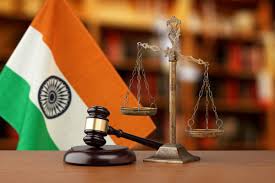
Indian democracy is said to have four pillars. The most respected pillar among these is the judiciary. Indians have always had great respect for their judicial system. They believe that whatever decision the court makes will be acceptable to everyone. After a year and a half of a legendary judicial system, the Modi government has now enacted a new penal code within the judicial system. Its main objective is to ensure speedy justice for the people, immediate punishment for criminals, and the creation of a clean society for the country.
In a moralistic country like India, it is legitimate to hope for the creation of a clean society. From Parliament to the streets, people believe that wherever injustice occurs in society, the judiciary will punish the oppressor and establish justice.
But for some time now, the judiciary’s image has suddenly become bleak. Previously, there were complaints of corruption, unnecessary delays, and adjournments in the lower courts. The government’s decision to establish an alternative system of adjudication through the Lokpal and mediators failed.
Even after the mediation award, those filing cases remain in trouble for court decisions. In the last ten years, unimaginable things have begun to happen. A total of 8,647 complaints have been filed with the Chief Justice against not only lower courts but also current judges of the High Courts and the Supreme Court. This information was officially disclosed by the country’s Law Minister in the Lok Sabha. Shockingly, these complaints include allegations of corruption, sexual misconduct, and other serious charges against senior judges. This evil, which has crept into the higher courts, has been reported only 7-8 years ago. Before this, Indian courts were considered to be completely clean.
In 2019, the number of complaints exceeded 1,000 for the first time. Between 2023 and 2025, the number of complaints increased sharply. The highest number of complaints was received in 2024. Additionally, complaints of adjournments, retentions, and pending decisions have also increased, even though the new penal code’s primary goal was to reduce delays. The judicial code now explains this by stating that the country has only 22 judges per million population, compared to the required 50. The Supreme Court, which commands the highest prestige, faces such a shortage of judges that it has only 0.028 judges per million population. The High Court has 0.92 judges per million population. The situation is particularly worrisome in states like Uttar Pradesh and West Bengal. The situation is slightly better in six states in South India.
Another issue concerns the appointment of judges. Currently, judges are appointed through a collegium system, with the Chief Justice of the Supreme Court having official say. The government sought to change this system, but opposition and dissatisfaction among judges prevented this change. Anna Hazare launched his much-talked-about Lokpal movement to establish a Lokpal to eradicate corruption.
A formal Lokpal appointment was made, but this initiative failed. Lokpals are still appointed in every state, but they have failed to achieve a better and cleaner form in the country’s penal code. The appointment of Lokpals has become a mere formality. In our view, the judiciary has a dignity. Even the slightest stain on it is unacceptable. Even tough measures are necessary to eradicate corruption that has permeated the judiciar
Good Evening Viewers! Catch up on the day's biggest stories with The Savera Times Evening Bulletin. Get the...

Congress leaders continued their protest outside the Jaipur Police Commissionerate on Tuesday, demanding the registration of a zero...
On the auspicious occasion of Vijayadashami, Prime Minister Narendra Modi on Tuesday called on the countrymen to unite...
A historic milestone was achieved on Tuesday in the expansion of Chhattisgarh's rail networkA historic milestone was achieved...

Model Shraddha Dubey, one of the main accused in the death of Lucknow businessman Shiv Sharma, has been...

Rashtriya Swayamsevak Sangh (RSS) chief Mohan Bhagwat on Tuesday called for strengthening national unity, social harmony, indigenous practices...
Aries: The day will be auspicious...