Last Updated: October 21, 2026
Last Updated: October 21, 2026






In an era of constant connectivity, access to news has never been easier. Smartphones vibrate with breaking alerts, social media timelines refresh endlessly, and live updates stream around the clock. Yet, paradoxically, this unprecedented flow of information has given rise to a growing phenomenon: news fatigue. Increasingly, audiences across the world are choosing to disengage from news altogether, not because it lacks importance, but because it feels overwhelming, repetitive, and emotionally exhausting.
News fatigue is not simply boredom. It is a psychological response to prolonged exposure to distressing information—wars, pandemics, climate disasters, political polarization, and economic uncertainty—often delivered in relentless cycles. Studies by media research organizations have shown that large sections of the population now deliberately avoid news for days or even weeks at a time. For many, especially younger audiences, the news feels like an unending source of anxiety rather than understanding.
One major driver of this fatigue is the 24-hour news economy. Traditional journalism once operated within defined publication cycles: the morning paper or the evening bulletin. Today, newsrooms compete in real time, often prioritizing speed over depth. Stories are updated minute by minute, sometimes with minimal new information. As a result, audiences are exposed to the same crises repeatedly, framed in slightly different ways, amplifying stress without necessarily adding clarity.
Social media platforms have intensified this effect. Algorithms favor content that provokes strong emotional reactions—anger, fear, outrage—because such posts generate higher engagement. While this may increase visibility, it also skews public perception of reality. When extreme events dominate feeds, users may feel that the world is constantly on the brink of collapse, even when positive developments go unreported. This imbalance contributes significantly to emotional burnout.
News fatigue also reflects a crisis of trust. In many countries, audiences feel alienated by sensationalism, perceived bias, or politicized reporting. When media outlets appear more interested in conflict than context, readers disengage. For marginalized communities, repeated negative portrayals can deepen feelings of misrepresentation, making avoidance a form of self-preservation rather than apathy.
However, the consequences of widespread news avoidance are serious. An informed public is essential for democratic participation. When citizens disengage, misinformation finds fertile ground. Rumors, propaganda, and half-truths spread more easily in the absence of credible journalism. Ironically, avoiding news to escape stress can make societies more vulnerable to manipulation.
Journalism itself must confront this challenge. Some newsrooms are experimenting with solutions-focused reporting, which emphasizes responses to problems rather than problems alone. Others are slowing down, offering explainers, backgrounders, and long-form narratives that prioritize understanding over urgency. These approaches acknowledge that audiences do not just want to know what happened, but why it matters and what can be done. Another promising shift is the rise of constructive journalism.
Instead of framing every issue as a crisis, this model highlights resilience, policy successes, and community-led initiatives. It does not ignore conflict or injustice, but places them within a broader, more balanced context. For readers, this can restore a sense of agency and hope, countering the helplessness that fuels fatigue.At the individual level, media consumption habits are also evolving. Experts recommend intentional news engagement—setting specific times to check reliable sources, limiting exposure to breaking news alerts, and avoiding doom-scrolling late at night. Curating trusted outlets rather than relying on algorithm-driven feeds can help restore a healthier relationship with information.
Start your day with The Savera Morning Brief, bringing you the latest news from India and around the...

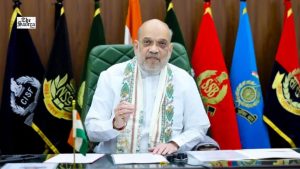
Union Home Minister Amit Shah will pay tribute to police martyrs at the National Police Memorial in New...
Four more people, including two women, have been arrested in the Tiger Shroff firing case. Delhi Police are...

We are very proud that at present India is the number one country in the world by surpassing...

Every investor wants the wealth-creating power of equity and the reassuring stability of debt. Balanced Advantage Funds attempt...

Tourism is a major source of government revenue in our country. There are different types of tourism. Scenic...

Aries: The day will be auspicious...