Last Updated: October 8, 2026
Last Updated: October 8, 2026






In the past decade, India has witnessed a dramatic shift in its payment landscape. The adoption of digital payment platforms, including mobile wallets, UPI, and online banking, has transformed the way Indians conduct financial transactions. The government’s push toward a cashless economy, coupled with technological innovations and widespread internet penetration, has fueled this digital revolution.
The launch of the Unified Payments Interface (UPI) by the National Payments Corporation of India (NPCI) in 2016 marked a turning point. UPI allows users to link multiple bank accounts to a single mobile application, enabling seamless money transfers, bill payments, and merchant transactions. According to NPCI data, UPI transactions surpassed 15 billion in volume and Rs.30 lakh crore in value in 2025, highlighting its growing popularity.
Mobile wallets such as Paytm, PhonePe, and Google Pay have also played a significant role in driving digital payments across urban and semi-urban regions. The COVID-19 pandemic further accelerated the shift to contactless payments as individuals and businesses sought safer alternatives to cash transactions. Many small merchants, previously reliant on cash, embraced QR code-based payments to maintain business continuity.
One of the key drivers of digital payment adoption has been financial inclusion. Government schemes such as Pradhan Mantri Jan Dhan Yojana (PMJDY), which aimed to provide bank accounts to the unbanked population, have ensured that more Indians have access to digital banking infrastructure. With mobile internet penetration in rural areas increasing, digital payments are no longer limited to urban centers.
Security remains a critical aspect of digital payments. While most platforms have implemented robust encryption protocols, two-factor authentication, and fraud detection systems, cyber threats continue to evolve. The Reserve Bank of India (RBI) has issued multiple guidelines to enhance the safety of digital transactions, and public awareness campaigns are helping users understand safe practices.
Another factor contributing to the adoption of digital payments is the convenience offered to consumers and merchants alike. Instant transfers, easy tracking of expenditures, and rewards programs encourage consistent usage. For businesses, digital payments simplify accounting, reduce cash handling, and enable wider customer reach.
Despite these advantages, challenges persist. Digital literacy, particularly in rural and remote areas, remains a barrier. Internet connectivity, device affordability, and trust in digital systems are ongoing hurdles. Moreover, merchants with limited technological know-how sometimes face difficulties in setting up and maintaining digital payment infrastructure.
Looking forward, the Indian digital payment ecosystem is poised for further growth. Innovations such as QR-based payment interoperability, AI-driven fraud detection, and blockchain-enabled settlements are likely to enhance security and efficiency. Fintech startups are exploring niche areas such as micro-lending, digital insurance, and digital savings products, leveraging the widespread adoption of digital wallets and UPI.
The trajectory of digital payments in India reflects a broader shift toward technological empowerment and financial democratization. With the government, banks, fintech players, and users all contributing to this transformation, India is steadily moving toward a cashless and inclusive financial future. The journey highlights the power of innovation, regulation, and user adoption in creating an ecosystem that benefits millions of Indians across socioeconomic strata.
New Delhi: Prime Minister Narendra Modi welcomed policymakers, maritime leaders, and experts from around the world to the...
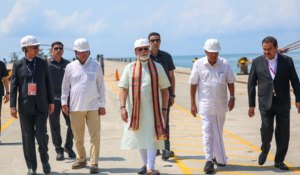
New Delhi: The outlook for onion availability has strengthened considerably with robust market arrivals and the commencement of...

New Delhi: The Delhi High Court on Wednesday permitted a senior director of Vivo Mobile India to travel...
New Delhi: INDIA bloc leaders, including Leader of Opposition in the Lok Sabha Rahul Gandhi and Congress MP...

Varanasi: Uttar Pradesh Chief Minister Yogi Adityanath on Wednesday said that the state has undergone a major transformation...
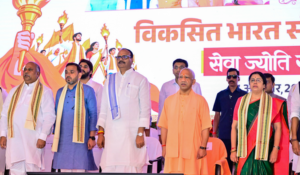
Chandigarh: The Punjab Vigilance Bureau (VB) during its ongoing drive against corruption in the state, the Punjab Vigilance...
Aries: The day will be auspicious...