Last Updated: October 21, 2026
Last Updated: October 21, 2026





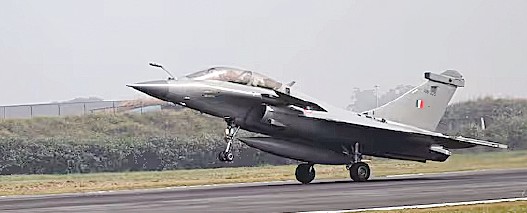
China’s evolving use of disinformation has become a defining feature of modern conflict, and the recent tensions in South Asia offered a vivid example. A US Congressional commission has pointed to a coordinated Chinese effort to shape global perceptions during and after Operation Sindoor, the brief but intense clash between India and Pakistan in May 2025. The episode illustrates how the battlefield is no longer limited to airstrips, radars, and missiles. Today it extends into digital spaces where images, narratives, and manufactured claims circulate as fast as weapons fire.
According to the commission, China used networks of fake social media accounts and AI-generated images to cast doubt on the reliability of Rafale fighter jets. The aim was straightforward. China wanted to position its own J-35 fighters as superior, even though they have not been used by Pakistan and have never seen combat in South Asia. By creating and spreading fabricated visuals of supposed Rafale debris, China attempted to manufacture the perception that its technology had outmatched French aircraft during the conflict.
The campaign followed days of intense fighting. Operation Sindoor began after Indian forces struck terrorist sites in Pakistan and in Pakistan Occupied Jammu and Kashmir. Pakistan responded with attacks on Indian cities and military assets, prompting India to hit back. The exchanges ended with a ceasefire after several days, but the impact was heavy. Multiple Pakistani air installations and air defence elements were damaged. The conflict, however, did not stop at the physical battlefield. Pakistan fought almost exclusively with Chinese-built platforms and weapons, turning the confrontation into a contest between Indian capabilities and Chinese systems flown under a Pakistani flag.
For China, the outcome was politically sensitive. The conflict became an unintended showcase of its own military exports. Pakistan deployed JF-17s and J-10s, supported by Chinese long-range missiles. These platforms struggled in the high-pressure environment of modern air combat. India relied on a combination of upgraded indigenous systems and foreign aircraft integrated into its own networked battle architecture. The result drew frustration and concern within Chinese strategic circles, according to analysts who followed the conflict closely.
This backdrop explains why China moved quickly to shape the narrative once the fighting ended. Rather than focus solely on its performance, it attempted to shift attention to the Rafale fleet by suggesting that French aircraft were vulnerable. The narrative was reinforced through synthetic imagery made with artificial intelligence. The visuals showed supposed wreckage of Rafales, despite the absence of real-world evidence. The intent was to plant doubt, especially among countries considering French fighters for their own air forces.
Experts in the United States have noted that the episode marks a new stage in the use of disinformation surrounding defence deals. Fighter aircraft are among the most expensive military purchases a government can make. Decisions are influenced not only by performance, but also by political and strategic factors. By flooding social media with manufactured claims, China aimed to tilt the balance toward its own aviation industry.
India’s military observers saw the episode differently. For them, the conflict underscored the rising importance of indigenous technology. US-based analyst Jon Spencer wrote that India did not only succeed operationally but also demonstrated the effectiveness of systems developed under its national manufacturing drive. In his view, the confrontation became a symbolic test of India’s technological independence. Pakistan’s reliance on Chinese platforms, he argued, meant that China felt the impact of the defeat almost as directly as Pakistan did.
The broader lesson from this episode is that information warfare has become inseparable from traditional conflict. Nations now compete not only with aircraft in the sky but with narratives online. A picture created by an algorithm can travel across borders much faster than any fighter jet. And in that speed lies a new kind of influence. What China attempted during Operation Sindoor is likely to become more common in future geopolitical contests, as states use both technology and storytelling to shape perceptions long after the firing stops.
Pakistan's Defense Minister Khawaja Asif has questioned alleged plans by senior government officials to permanently settle abroad. He...
The Baloch Liberation Army (BLA) has claimed responsibility for carrying out 34 operations between October 9 and 20...
Russian President Vladimir Putin said on Wednesday that Russia's first tanker carrying 40,000 tons of diesel fuel will...

Ten people were killed and 44 others injured in a horrific road accident in Pakistan's Punjab province. The...
North Korean leader Kim Jong-un's influential sister, Kim Yo-jong, and a military marshal inspected fortification work along the...

New Delhi: US Secretary of State Marco Rubio has assured India that America’s relations with any country in...

Aries: The day will be auspicious...