Last Updated: October 13, 2026
Last Updated: October 13, 2026





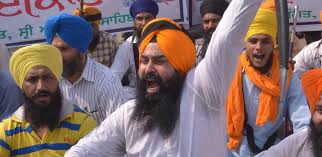
The dust from the “Badlav” (Change) rally in Moga has barely settled, but the echoes of Union Home Minister Amit Shah’s address continue to vibrate through the heartland of Punjab. By promising a comprehensive law to ban forced religious conversions if the BJP comes to power in 2027, the Home Minister has touched a raw nerve in a state already grappling with a demographic winter. This is not merely a political maneuver; it is a necessary intervention for a society currently besieged by “miracle” merchants and predatory proselytization.
For a state defined by the “Chardi Kala” (eternal optimism) and the distinct identity of the Khalsa, the rapid rise of self-styled “prophets” and “apostles” is an existential threat. These entities operate not in the realm of genuine spiritual seeking, but in the shadows of exploitation, targeting the vulnerable with a dangerous cocktail of “allurements” and fear.
The Cult of the “Miracle” and the Mirage of Healing
The recent conviction of Bajinder Singh, often referred to as “Prophet Baljinder,” serves as a chilling case study. In April 2025, Singh—the face of the “Yeshu Yeshu” viral phenomenon—was sentenced to life imprisonment by a Mohali court for the repeated rape of a woman in 2018. His modus operandi was a textbook example of predatory influence: luring victims with the promise of foreign visas or divine intervention, only to exploit them behind closed doors.
Similarly, the sprawling empire of Ankur Narula in Jalandhar has faced scrutiny over suspicious deaths on its premises and allegations of deceptive “healing” practices. When “spiritual hospitals” become sites of unexplained tragedies, the line between faith and fraud disappears. These ministries often violate the Drugs and Magic Remedies (Objectionable Advertisements) Act with impunity, claiming to cure terminal illnesses through theatrical exorcisms while siphoning funds from those who have nothing left to give.
A Demographic Winter: The Dwindling Sikh Population
The demographic data for Punjab is alarming. While the 2011 Census recorded the Sikh population at 57.69%, recent educational data and community surveys suggest a sharp decline. The “Sikh homeland” is facing a three-pronged attack:
* Mass Emigration: The youth are fleeing to the West in search of jobs, leaving an aging population behind.
* The Drug Scourge: A generation is being lost to addiction, creating a vacuum of leadership and spirit.
* Predatory Conversion: Exploiting these vulnerabilities, unscrupulous missionaries are reportedly converting thousands through “greed” and “misleading miracles.”
Organizations like the Punjab Bachao Andolan have alleged that the Christian population, officially at 1.26% in 2011, may have swelled significantly due to these unregulated conversions. While the freedom to practice any religion is a constitutional right, the freedom to exploit a person’s poverty or sickness to change their faith is not.
The Constitutional Mandate: Protection, Not Restriction
Critics argue that an anti-conversion law would infringe upon Article 25. However, as the Supreme Court of India has consistently maintained, the right to propagate religion does not include the right to convert another through “force, fraud, or allurement.”
A faith-protection law in Punjab would serve three critical functions:
* Accountability for “Pastors”: It would bring self-styled prophets under legal oversight, preventing the repeat of tragedies like those
associated with Bajinder Singh.
* Economic Safeguards: By banning “allurements”—such as the promise of Canadian visas or cash in exchange for baptism—it protects the poor from being commodified.
* Preservation of Heritage: It honors the legacy of Guru Tegh Bahadur Ji, who sacrificed his life to protect the freedom of conscience. As Amit Shah noted, the Sikh Gurus did not die so that their followers could be “bought” in the 21st century.
Conclusion: Reclaiming the Soul of Punjab
Punjab does not need “miracles” from self-appointed prophets; it needs the restoration of its own robust, self-reliant spirit.
A ban on forced and deceptive conversions is not about targeting a particular community—it is about protecting the most marginalized from being preyed upon by those who wear the mask of divinity to hide the face of a criminal.
To save the dwindling Sikh population and the historic identity of the state, the government must move beyond rhetoric.
It is time to enact a law that ensures faith remains a matter of the soul, not a transaction of the desperate.
Good Evening Viewers! Stay updated with The Savera Times Evening Bulletin for the latest news from Punjab, India...

eader of the Opposition in the Lok Sabha, Rahul Gandhi and 10 other INDIA bloc leaders have moved...

Amidst protests in central Delhi, the Delhi Metro Rail Corporation (DMRC) announced the reopening of entry and exit...
The Delhi Police has registered an FIR regarding the alleged disturbance at the Bangla Sahib Gurdwara in...

The Delhi Police on Monday removed Jantar Mantar from the list of officially designated protest sites. The police...

The Supreme Court on Monday clarified that it has not passed any judgment on the Election Commission's (ECI)...

Aries: The day will be auspicious...