Last Updated: October 15, 2026
Last Updated: October 15, 2026





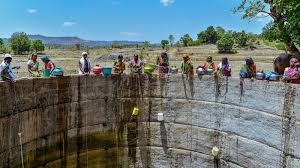
Groundwater is the invisible backbone of daily life across much of South Asia. It irrigates fields, fills household taps, and sustains cities that have outgrown surface water supplies. Yet beneath the ground, a silent crisis is unfolding. Aquifers are being depleted faster than they can recharge, threatening water security for millions.
The expansion of groundwater use began as a solution to unreliable monsoons and inadequate canal systems. Tube wells offered farmers control over irrigation and boosted agricultural productivity. Over time, however, this dependence deepened. Today, groundwater accounts for the majority of irrigation and a significant share of drinking water in both rural and urban areas.
The problem lies in unregulated extraction. Millions of private wells operate with little oversight, pumping water around the clock. Electricity subsidies further encourage overuse, disconnecting consumption from cost. In many regions, water tables have dropped dramatically, forcing farmers to drill deeper and invest in more powerful pumps.
As aquifers decline, water quality deteriorates. Deeper layers often contain higher concentrations of fluoride, arsenic, and salinity, posing serious health risks. In some areas, contaminated groundwater has led to chronic illnesses, skeletal deformities, and long-term public health burdens that go largely unaddressed.
Groundwater depletion also reshapes social relations. Wealthier farmers can afford deeper wells, while smallholders are left behind as shallow sources dry up. This creates new inequalities and conflicts over access. In urban areas, private tankers profit from scarcity, turning water into a commodity rather than a basic right.
Climate change intensifies the crisis. Erratic rainfall reduces natural recharge, while rising temperatures increase water demand. Floods, paradoxically, do little to replenish aquifers when paved surfaces prevent infiltration. The result is a vicious cycle of scarcity amid apparent abundance.
Policy responses have been fragmented. Groundwater is often treated as private property tied to land ownership, limiting regulation. Conservation programs exist but focus largely on supply-side solutions, such as rainwater harvesting, without addressing demand. Crop choices, irrigation practices, and pricing structures remain largely untouched.
There are examples of change. Community-led water management initiatives have demonstrated that recharge, monitoring, and collective decision-making can restore aquifers. Shifting to less water-intensive crops and promoting micro-irrigation also show promise. However, scaling these efforts requires political will and public participation.
Good Afternoon Viewers! Stay updated with The Savera Times Afternoon Bulletin, bringing you the latest news from Punjab,...

New Delhi: Heavy rain and thunderstorms swept parts of Delhi-NCR on Thursday as dark clouds covered the national...
A street vendor has approached the Delhi High Court seeking to stop the Cockroach Janata Party (CJP)'s protest...
Suva: India and Fiji on Thursday held discussions focused on deepening bilateral ties and reaffirmed their shared commitment...

Bokaro (Jharkhand): The protest by trained youth from displaced families affected by the Bokaro Steel Plant (BSL) intensified...
Varanasi: Uttar Pradesh Chief Minister Yogi Adityanath, on a two-day visit to Varanasi, honoured sanitation workers from the...
Aries: The day will be auspicious...