


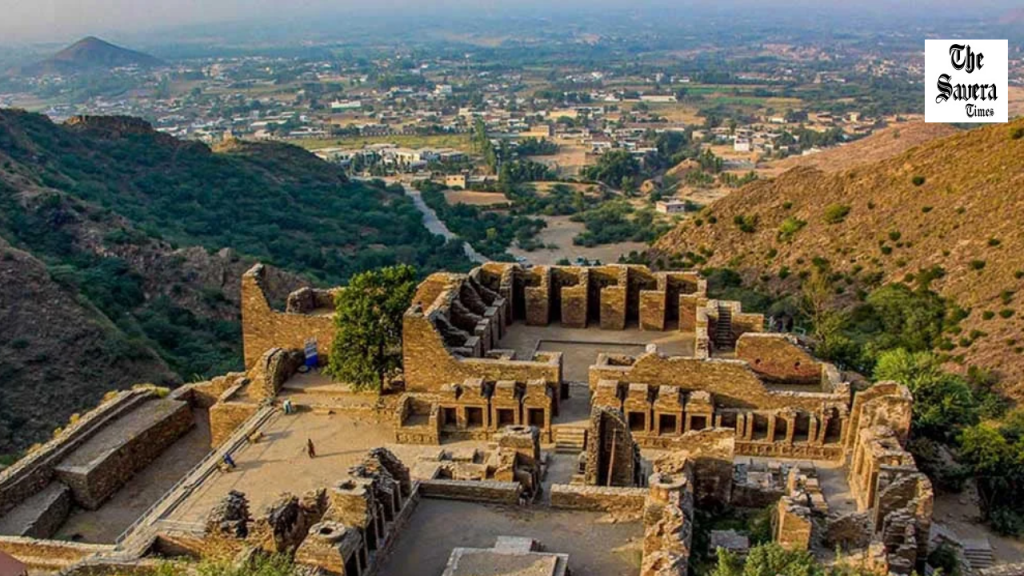
The reported demolition of the 125-yearold Gurdwara Singh Sabha Lahr in Farooqabad, formerly Chuharkana, is more than the destruction of an old building. If confirmed, it would be another entry in a long and melancholy ledger—the gradual disappearance of Pakistan’s nonMuslim past. The town itself is a reminder of the irony. Chuharkana, founded by Sikh Sardar Chuhar Singh and deeply intertwined with Sikh history, lies only a few kilometres from Gurdwara Sacha Sauda, one of the holiest sites associated with Guru Nanak. Yet even as pilgrims travel to the celebrated shrines of Kartarpur and Nankana Sahib, lesser-known Sikh and Hindu monuments continue to decay, be encroached upon, or disappear altogether. Pakistan often presents the Kartarpur Corridor as evidence of its commitment to religious pluralism. The corridor is indeed a commendable initiative. But grand gestures cannot obscure a harder truth: for decades, the country’s treatment of its minorities has oscillated between neglect, discrimination and, at times, outright persecution. The statistics are sobering. At the time of Partition in 1947, non-Muslims constituted roughly a quarter of the population in the territories that became Pakistan. Hindus and Sikhs were integral to the economic, cultural and intellectual life of Punjab and Sindh. Today, Pakistan’s non-Muslim population is estimated at around 3-4%, with Sikhs numbering only a few tens of thousands and Hindus concentrated largely in Sindh. Demography alone does not tell the whole story. Heritage tells a more unsettling one. Researchers and heritage activists estimate that hundreds of Sikh gurdwaras and thousands of Hindu temples existed in what is now Pakistan before Partition. Only a fraction remains functional today. Many structures have been abandoned, occupied by private individuals, converted into schools or warehouses, or simply left to collapse. The historic Gurdwara Rori Sahib near Lahore, associated with Guru Nanak, partially collapsed in 2023 after decades of neglect. The fourcentury-old “Guru Nanak Palace” near Narowal was partially demolished by local authorities in 2018 despite protests from Sikh groups. Reports have repeatedly emerged of historic shrines being used for commercial activities or falling into ruin because of official indifference. The issue is not confined to heritage. Pakistan’s minorities have faced a broader ecosystem of insecurity. Human-rights organisations and Pakistan’s own activists have documented repeated cases of forced conversion and marriage of Hindu and Christian girls, particularly in Sindh. The country’s blasphemy laws, among the harshest in the Islamic world, have disproportionately affected minorities. Accusations—often unsubstantiated—can result in mob violence, imprisonment, or social ostracism. The record of communal violence is equally troubling. The anti-Hindu riots following the demolition of the Babri Masjid in India in 1992 led to attacks on numerous temples and minority properties across Pakistan. In 2009, Christians in Gojra were burned alive after allegations of blasphemy. In 2021, a Hindu temple in Bhong, Sindh, was attacked and vandalised by a mob. The same year, a factory manager from Sri Lanka, Priyantha Kumara, was lynched by extremists in Sialkot after being accused of blasphemy. Sikhs have not been spared either. The community suffered grievously during the insurgency and militancy that engulfed Pakistan’s north-west. The Taliban targeted Sikhs in the tribal areas, imposing jizya and forcing families to flee. In 2010, Sikh leaders were kidnapped and killed in the Khyber region. In 2020, gunmen linked to Islamic State attacked Gurdwara Har Rai Sahib in Kabul, devastating the already tiny Afghan Sikh community, many of whom had sought refuge in Pakistan and India alike. The destruction of physical heritage and the intimidation of living communities are, in fact, intertwined phenomena. Buildings survive when communities survive. Once people disappear, monuments become vulnerable. To be fair, Pakistan’s story is not entirely one of unrelieved darkness. The restoration of Gurdwara Darbar Sahib at Kartarpur and the opening of the Kartarpur Corridor were significant achievements. Some temples in Punjab and Khyber Pakhtunkhwa have been reopened after decades of closure. Pakistan’s Supreme Court has occasionally intervened to protect minority rights. There are courageous Pakistani scholars, journalists and civilsociety activists who continue to document and defend the country’s pluralistic past. Yet these initiatives remain exceptions rather than the norm. The deeper problem is ideological. Pakistan emerged as a homeland for South Asia’s Muslims, but over time its national narrative narrowed into an increasingly Islamic conception of identity. Under General Zia-ul-Haq’s Islamisation drive in the 1980s, this process accelerated. Even place names were altered. Chuharkana became Farooqabad, a symbolic attempt to overwrite a distinctly Sikh historical memory. The result has been a curious national amnesia. Modern Pakistan occupies lands that once hosted some of the richest layers of Buddhist, Hindu and Sikh civilisation. Taxila, Nankana Sahib, Katas Raj, Udegram, Multan and countless villages across Punjab and Sindh bear witness to a multicultural past. Yet much of this heritage survives despite the state, not because of it. A nation that neglects the inheritance of its minorities impoverishes itself. Heritage is not merely about stones and domes; it is about memory and legitimacy. Countries derive confidence from embracing the entirety of their past, including the uncomfortable parts. India, too, has struggled with communal tensions and failures in heritage preservation. No country is immune from sectarian impulses. But what distinguishes successful societies is their willingness to protect the heritage of communities that are small, politically weak or absent altogether. The reported demolition of Gurdwara Singh Sabha Lahr should therefore concern not only Sikhs, or Indians, or Pakistan’s dwindling minorities. It should concern anyone who believes that civilisation is a shared inheritance. When a gurdwara collapses in Punjab, when a temple is vandalised in Sindh, or when a historic building is quietly razed because no one remains to defend it, humanity loses a fragment of its collective memory. Pakistan today faces a choice. It can continue down the path of selective remembrance, preserving only those monuments that serve diplomatic objectives while allowing the rest to decay. Or it can undertake the more difficult but ultimately more rewarding task of acknowledging its pluralistic foundations and safeguarding the remnants of its non-Muslim heritage. The ruins of Chuharkana are a warning. Civilisations do not disappear only through conquest. They can also vanish through neglect, indifference and silence—one demolished shrine at a time
The Slow Erasure of a Civilization: Pakistan’s Unfinished War on Minority Heritage
The Slow Erasure of a Civilization: Pakistan’s Unfinished War on Minority Heritage