Last Updated: October 21, 2026
Last Updated: October 21, 2026





Abhishek Vij
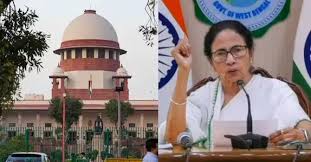
On Monday, the Supreme Court of India categorically reprimanded the West Bengal government on the SIR process (Special Intensive Revision) of voter lists. The SIR issue became dramatic when Chief Minister Mamata Banerjee herself approached the Supreme Court to plead against the intensive revision of voter lists in West Bengal ahead of the upcoming assembly elections.
Banerjee stated in court that the SIR process was biased and that the number of voters was being reduced without due diligence, and therefore, the Supreme Court should stop it. The Supreme Court has clearly stated that a thorough revision of voter lists must be conducted not only in West Bengal but in every state of the country. Like all other states, it must be conducted in West Bengal as well; it will not be allowed to be stopped. We will issue any necessary instructions in this regard. West Bengal was originally ordered to provide 8,505 Group B officers to the Election Commission.
The Election Commission alleged that the details were not provided by February 7th. Meanwhile, the issue became highly politicized. The court ordered the list to be provided by Tuesday, and the government provided it to the court. A political party, through an organization’s lawyer, alleged that deliberate attempts were being made to obstruct the SIR process.
The ruling Trinamool Congress (TMC) denied this. The Election Commission maintains that attempts are being made to disrupt, thwart, and derail the process in West Bengal. The state government and political officials are complicit in this. Now, the Supreme Court has made it clear that no such obstruction should be created, but reasonable time should be given. As such, the deadline for document verification in West Bengal has been extended by one week.
The BJP alleged that Mamata Banerjee wants to win the election by influencing a large number of Bangladeshi infiltrators to vote in West Bengal. To dispel such allegations, the Supreme Court’s recent decision to conduct a thorough revision of voter lists is also correct. We believe that the thorough revision of voter lists should be completed with complete transparency, with adequate time and facilities.
Elections are the lifeblood of democracy, and therefore, their dignity should not be tarnished in any way. There should be no confusion regarding voter lists, voting using EVMs, or the advocacy for reverting to ballot paper voting. The Supreme Court has repeatedly attempted to clarify this. Previously, the Supreme Court has also rejected the demand to abandon EVMs and return to ballot paper voting.
The atmosphere is such that if elections are won, EVMs and SIRs are fine, but when defeat is faced, attempts are made to discredit them.Instead of engaging in such politics, we should look for flaws in these systems and resolve them through collective discussion.
A thorough revision of voter lists had not been conducted for a long time. Voters who are no longer alive, have permanently relocated, or are registered in more than one place must be corrected. However, this requires proper machinery and public awareness. Unfortunately, instead of addressing these issues, blame-game politics is played out. The Supreme Court’s clear order suggests that there will be no impediment to the thorough revision of voter lists in West Bengal or the remaining states.
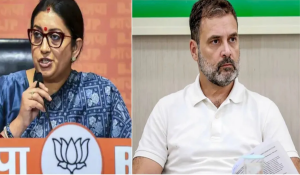
Bharatiya Janata Party (BJP) National General Secretary Smriti Zubin Irani launched a scathing attack on Congress MP and...
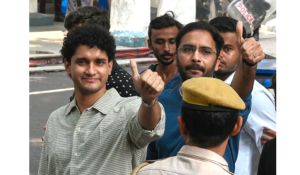
New Delhi: Cockroach Janata Party (CJP) leaders Saurav Das and Ashutosh Ranka will be released from judicial custody...
According to police, three suspicious young men are seen in CCTV footage. Efforts are underway to identify them....
A video has surfaced of an alleged attempted assault on Jan Suraj Party's Bihar president Manoj Bharti. The...
Two accused have been convicted and sentenced to 10 years of rigorous imprisonment in a 2017 drug trafficking...
The Delhi Police on Wednesday sought a three-day extension in the judicial custody of Cockroach Janata Party (CJP)...
Aries: The day will be auspicious...