Last Updated: October 21, 2026
Last Updated: October 21, 2026





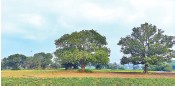
In many parts of rural India, scattered trees that once shaped the landscape are disappearing at a worrying pace. A neem tree standing alone in a field near Indore reflects a much larger national trend. Recent satellite-based research published in Nature Sustainability in May 2024 shows a steep decline in mature farmland trees across the country. The study mapped nearly 0.6 billion individual trees and found that about 11 per cent of large trees present in 2010–11 had vanished by 2018. An additional 5.3 million trees disappeared between 2018 and 2022, pointing to a rapid and largely unnoticed loss of rural canopy.
Central India recorded some of the sharpest declines. Regions in Telangana, Maharashtra and around Indore saw major reductions in large trees. This is alarming because more than half of India is farmland, while only one fifth is classified as forest. Farmland trees therefore form the backbone of rural ecosystems. They cool fields, enrich soils, support pollinators, store carbon and stabilise yields. Their removal weakens climate resilience and erodes long-term agricultural productivity.
A key reason the crisis has gone unnoticed is India’s method of tracking tree cover. The Forest Survey of India counts only contiguous patches larger than one hectare. Individual trees and small clusters are excluded, leaving millions of mature trees outside official records. Local land documents are also silent on scattered trees. As a result, their removal leaves no trace and the true scale of loss remains hidden.
Fieldwork in the Indore region offers insights into why farmers are cutting trees. Many see large trees as an obstacle to modern farming, citing shade, reduced cultivation space and interference with machinery. With shrinking landholdings and an emphasis on cash crops, every square metre of cultivable land is treated as valuable. There is little awareness of the ecological services trees provide. Markets also encourage felling, as local timber depots readily accept wood sourced from farms. Weak enforcement and complex felling rules further push farmers to remove trees quietly.
Urban expansion around Indore adds to the pressure. Conversions of farmland into residential areas often involve clearing existing trees. Natural events such as monsoon storms also play a role, but fallen trees are rarely replaced.
Experts argue that India needs a dedicated National Farmland Tree Policy. This includes creating a Farmland Tree Registry to record significant trees, reforming felling and timber-transport rules, and offering incentives for preserving mature trees. Heritage Tree status and stewardship payments could help protect old trees. Stronger monitoring of timber markets and integrating tree cover into agricultural planning are also essential.
Protecting farmland trees is crucial for soil health, crop productivity and climate adaptation. As rural landscapes continue to change, safeguarding mature trees will be vital for ecological stability and long-term rural well-being.
State Bank of India has confirmed that 3,897 customer records containing personal information were found on the dark...

A fire in a hut in Nonapar village of Deoria district claimed three lives, including those of a...

Amit Shah paid tribute to police personnel who died in the line of duty at the National Police...

Reduced water levels at Har Ki Pauri and other Haridwar ghats have inconvenienced pilgrims during the Upper Ganga...

Six people returning from a Dussehra Mela were seriously injured when a car hit them on National Highway...

Two people were killed and ten injured after a passenger bus met with an accident at Gala Pachound...

Aries: The day will be auspicious...