Last Updated: October 21, 2026
Last Updated: October 21, 2026





Sheena Sandhu
A retired civil servant
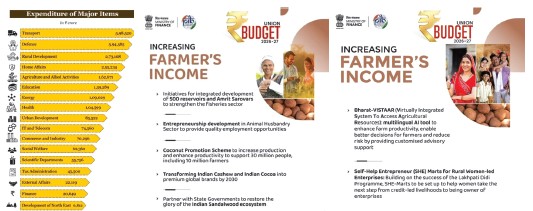
In a nation where agriculture remains the lifeline for nearly half the workforce, the Union Budget 2026-27 emerges as a calibrated attempt to steer the sector towards resilience and diversification. Presented amid concerns over stagnating farm incomes, climate vulnerabilities and over-dependence on traditional cereals, the Budget allocates Rs 1,62,671 crore to agriculture and allied activities—a 7.12 per cent rise from the revised estimates of Rs 1,51,853 crore for 2025-26. This modest uptick, while falling short of inflationary pressures, underscores a strategic emphasis on productivity, value addition and risk mitigation. Over the medium to long term, these interventions could foster a more robust rural economy, particularly for small and marginal farmers who constitute over 85 per cent of the agrarian community.
Central to this vision is the promotion of crop diversification and high-value agriculture, aimed at alleviating the pitfalls of monoculture in staples like wheat and rice. The Economic Survey preceding the Budget had flagged the sector’s average annual growth at 4.4 per cent over the past five years, with allied activities such as livestock and fisheries outpacing traditional crops.
Responding to this, the Budget extends targeted support to high-value segments, including coconut, cashew, cocoa, sandalwood, agar trees in the North-East, and nuts such as almonds, walnuts and pine nuts in hilly and coastal zones. Dedicated programmes will focus on rejuvenating low-yielding orchards, adopting high-density planting and replacing ageing trees with improved varieties. For coconut cultivation, which sustains around 10 million farmers and supports livelihoods for an estimated 10-30 million people through allied activities, a specific promotion scheme seeks to enhance productivity and integrate value chains.
This thrust, however, has elicited mixed reactions, particularly from agrarian heartlands like Punjab and Haryana. These states, which contribute disproportionately to national foodgrain procurement—Punjab alone accounts for over 20 per cent of wheat and 12 per cent of rice—face acute challenges of groundwater depletion, soil fatigue and income stagnation from the paddy-wheat rotation.
While the Budget’s diversification agenda aligns with long-standing calls to shift towards sustainable practices, it lacks explicit incentives tailored to the Indo-Gangetic plains. Farmer unions and opposition leaders in Punjab, including Chief Minister Bhagwant Mann and Finance Minister Harpal Singh Cheema, have decried the absence of a legal guarantee for Minimum Support Price (MSP) on all crops, debt waiver provisions or a special package for crop transition. Haryana’s opposition echoed similar sentiments, noting that while saline land reclamation and veterinary subsidies offer peripheral benefits, the focus on coastal or hilly crops like cashew and pine nuts overlooks the region’s agro-climatic realities. In the long run, though, as national markets for high-value produce mature, farmers in these states could leverage allied diversification—perhaps through horticulture pilots or nut cultivation in suitable pockets—to mitigate water stress and boost returns, provided state governments bridge the gap with localised schemes.
Allied sectors receive a substantial fillip, promising diversified revenue streams and employment beyond crop cycles. Animal husbandry, recognised as a growth engine, sees an allocation of Rs 6,153 crore—a 16 per cent increase—with a Rs 500 crore integrated scheme for entrepreneurship development. This includes credit-linked subsidies for modernising livestock enterprises, scaling integrated value chains in dairy and poultry, and bolstering Livestock Farmer Producer Organisations (FPOs).
Such measures could generate quality jobs in rural and peri-urban areas, while expanding veterinary infrastructure and training over 20,000 professionals. In Punjab and Haryana, where dairy already supplements crop incomes for millions—Haryana ranks among the top milk producers—these initiatives may amplify existing cooperatives, enhancing milk quality and urban market access to cushion against monsoon uncertainties.
Fisheries development, too, is prioritised with a total outlay of Rs 2,762 crore, including Rs 2,500 crore for the Pradhan Mantri Matsya Sampada Yojana. The plan encompasses integrated development of 500 reservoirs and water bodies like Amrit Sarovars, fortifying coastal value chains, and facilitating market linkages for startups, women-led collectives and Fish FPOs. Duty exemptions on certain fish catches further enhance competitiveness. For landlocked or semi-arid regions like Punjab and Haryana, this may translate into inland aquaculture opportunities, though the coastal bias limits direct gains. Over the next decade, these allied pushes could reduce over-reliance on crops, fostering inclusive growth for landless labourers and women, who often helm small-scale livestock and fisheries units.
Technology integration stands as a potential game-changer. The introduction of Bharat VISTAAR—a multilingual AI platform merging AgriStack data with Indian Council of Agricultural Research (ICAR) best practices—aims to deliver personalised advisories on crops, pests, weather and markets. Accessible in regional languages, it democratises precision farming, potentially slashing input costs and elevating yields for smallholders. In Punjab and Haryana, grappling with irrigation inefficiencies and pest outbreaks, this could prove transformative, enabling data-driven shifts towards sustainable agriculture. Yet, as farmer bodies like the Samyukt Kisan
Morcha point out, digital tools must be complemented by ground-level extension services to bridge the adoption gap among resource-poor cultivators.
Rural infrastructure and inclusion provide the foundational scaffolding. The Rural Development Ministry’s allocation surges by 21 per cent, with the Centre’s share for MGNREGA at Rs 95,692 crore—totaling over Rs 1.51 lakh crore with states’ contributions. Women-centric schemes, building on Lakhpati Didi, promote enterprise through SHE-Marts and FPOs. PM-KISAN retains Rs 63,500 crore, offering direct income support. While Punjab’s Agriculture Minister Gurmeet Singh Khuddian lamented the Budget’s paltry 3 per cent share for agriculture in the total outlay, these enhancements could improve living standards, curb migration and redirect household savings towards productive investments.
In the medium to long term, the Budget 2026-27 charts a pathway from subsistence to sustainable prosperity, emphasising diversification, technology and allied sectors. For Punjab and Haryana, the omissions—particularly on MSP and debt relief—underscore a perceived neglect of the ‘food bowl’, prompting calls for intensified advocacy. Yet, if implemented with federal collaboration, these national frameworks could indirectly alleviate regional strains, empowering farmers to engage in higher-value chains, adapt to climate imperatives and contribute to a Viksit Bharat. The true test lies in execution, lest the promise of rural renaissance remains confined to rhetoric.
Good Evening Viewers! Catch up on the day's biggest stories with The Savera Times Evening Bulletin. Get the...

Congress leaders continued their protest outside the Jaipur Police Commissionerate on Tuesday, demanding the registration of a zero...
On the auspicious occasion of Vijayadashami, Prime Minister Narendra Modi on Tuesday called on the countrymen to unite...
A historic milestone was achieved on Tuesday in the expansion of Chhattisgarh's rail networkA historic milestone was achieved...

Model Shraddha Dubey, one of the main accused in the death of Lucknow businessman Shiv Sharma, has been...

Rashtriya Swayamsevak Sangh (RSS) chief Mohan Bhagwat on Tuesday called for strengthening national unity, social harmony, indigenous practices...
Aries: The day will be auspicious...