Last Updated: October 21, 2026
Last Updated: October 21, 2026





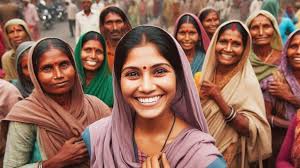
As watertables fall, that “employer” is showing up less at the village gate: fewer transplanting seasons, shorter harvests and less de-mand for daily wage labour.
How strange—and alarming—to think that an invisible employer is vanishing beneath our feet. Groundwater, long treat-ed as a private convenience, has quietly underpinned millions of days of casual farm work across India. As watertables fall, that “employer” is showing up less at the village gate: fewer transplanting seasons, shorter harvests and less de-mand for daily wage labour.
The result is not only ecological stress but a mounting labour-market shock for the most precarious rural workers. Start with the scale. The Central Ground Water Board’s (CGWB’s) “Dynamic Ground Water Resources of India 2024” assessment reports India’s annual groundwater recharge at roughly 448.5 billion cubic metres (BCM), with an annual ex-tractable resource of 407.8 BCM and estimated annual extraction of nearly 247.2 BCM.
Those national aggregates can lull policymakers into complacency. The truth is local and sharp: in the CGWB’s 2023 block-level accounting, 736 of some 6,553 assessment units (about 11 per cent) were classified as “over-exploited”—extracting more water than recharges—with many more labelled “critical” or “semi-critical.”
Why does that matter for labour? Two linked facts do the damage. One, casual agricultural labour is a major source of rural work. As per Union Ministry of Statistics and Programme Implementation’s “Periodic Labour Force Survey” for 2022-23, roughly one in four rural workers are casual—people hired day to day during peak cropping operations. Two, groundwater-fed irrigation historically expanded cropping intensity and the seasonal calendar that generates those jobs. When wells go dry or pumping costs spike, farmers cut irrigation, shift to less labour-intensive crops, or reduce cropped area.
We are very proud that at present India is the number one country in the world by surpassing...
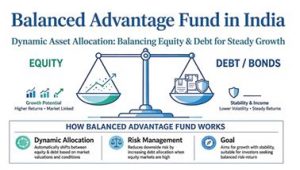
Every investor wants the wealth-creating power of equity and the reassuring stability of debt. Balanced Advantage Funds attempt...
Tourism is a major source of government revenue in our country. There are different types of tourism. Scenic...
Good Evening Viewers! Catch up on the day's biggest stories with The Savera Times Evening Bulletin. Get the...

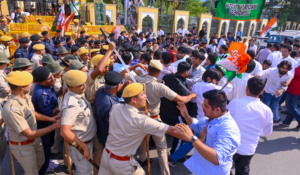
Congress leaders continued their protest outside the Jaipur Police Commissionerate on Tuesday, demanding the registration of a zero...
On the auspicious occasion of Vijayadashami, Prime Minister Narendra Modi on Tuesday called on the countrymen to unite...
Aries: The day will be auspicious...