Last Updated: October 21, 2026
Last Updated: October 21, 2026






Parneet Sachdev
Chairman of Real Estate Regulatory Authority and a leading author
In India, the answer to the aforementioned question is often derived from planetary configurations and of course, the ubiquitous karma. In Islamic traditions, it is framed as qismat. Christianity has long debated providence and grace. Buddhism speaks of causation. The vocabulary differs, but the underlying disquiet is the same:
Why does life distribute outcomes so unevenly?
This question becomes profound when capable individuals remain financially constrained, or when years of disciplined work is undone by a sudden reversal.
THE MAN WHOM THE PLANETS FORSOOK
Consider the story of Ritin (all names, locations etc have been changed). By every outward measure, he was successful. His business had grown, his reputation robust, his family closely knit. But the axis around which his life truly revolved was an astrologer named Pandit Sheshadri. No doubt, Panditji, as he was addressed respectfully was a renowned scholar. No journey for the family began without a calculated muhuratam. No contract was signed, no new venture launched, no festival meal planned without planetary consultation. Over time, Pandit Sheshadri did not merely advise; he accompanied the family, a living talisman against any potential misfortune.One winter morning, after elaborate calculations had been performed to the minute, the time was set. Departure 0832 hours. Ritin would sit on the back passenger seat, to the right side. Panditji would be seated on the left of Ritin. The driver would wear his usual gear. The three of them would partake of a sweet made of goat milk before departure. This would ensure safety and success. However, somewhere on the highway, their car was struck by a speeding truck. There were no survivors. If destiny had been computed so precisely, why had it not paused for a single red light? That question, unanswered, lingered long after the rituals ended.
COMPREHENDING FATE
To deny circumstances would be dishonest. No one begins life with identical conditions. Family environment, early education, health, geography, and historical timing all exert undeniable influence. Ancient traditions recognised this clearly. Even the Buddha writes
“Hard is it to be born as a man; hard is the life of mortals.
Hard is it to gain the opportunity to hear the sublime truth (Dhamma);
and hard to encounter is the arising of new Buddhas.”
Dhammapada, Verse 182
This sermon recognises that people are bound to have different settings. Some will encounter Dhamma in their lives. Maybe from parents, friends, spouse or others. Others may encounter tyranny, adhamma and a learning that is opposed to the preaching of the prophets. However, the quote also underscores that in this chaos exists a methodology, an approach, hard as it may be; this method promises growth, abundance and emancipation. We can become masters of our destiny, even when the planets ordain otherwise.
In essence, Karma, properly understood, creates an environment, not imprisonment. Astrology describes tendencies, probabilities.
Confusing influence with control is the mistake that
strands many lives into passive acceptance.
WHEN SOULS ASKED FOR FREEDOM
In mystical Jewish thought, Christian Gnosticism, Hindu cosmology, and later Sufi reflections, the same narrative appears in different forms: creation was but a response to a demand for autonomy.
It is said that there was a time when the material realm did not exist. Beings lived as souls in various domains. In joy and peace. Yet, in many of them, there was a spark of yearning. A longing to know themselves more deeply. Although, mythological accounts say that in those fields, souls were sustained in Grace. Free of suffering. However, there were also no choices to be made by them. These were realms of no self-authorship. And they gathered before the Divine, Superconsciousness and asked, “May we have the knowledge of who we are? May we have the ability to create the lives we desire?”
THE CREATION OF THE REALMS
To know oneself, the Divine gave freedom. And freedom, presupposes the possibility of error.
Choice without the risk of failure is not choice at all; it is choreography. Thus, for consciousness to awaken to itself, it had to arise in a realm where consequences unfolded without constant divine correction.
This insight appears with striking consistency across spiritual cosmologies. In Jewish mysticism, particularly in the Lurianic Kabbalah, creation begins with tzimtzum, the self-contraction of God. As Gershom Scholem summarizes, “Creation is not an act of outward expansion but of inward withdrawal” (Major Trends in Jewish Mysticism, 1941).
A parallel idea appears in the Christian tradition. In the Book of Genesis, God places the Tree of the Knowledge of Good and Evil at the center of Eden, not as a trap, but as a necessary condition for moral agency. The early Church Father Irenaeus argued that humanity was created immature, not fallen, and that
A world without the capacity to disobey would be a world
without genuine love or self-knowledge.
In Christian mystical traditions the Doctrine of the Fall is not a moral catastrophe. The forbidden fruit was not poison; it was permission. Without it, humanity would have remained innocent, but unconscious. Devoid of knowledge.
In the Bhagavad Gita, Krishna articulates the same principle. After revealing divine truth, he explicitly refuses to coerce Arjuna’s decision:
“Thus, I have explained to you this wisdom more secret than secrecy itself. Reflect on it fully, and then act as you choose”
Bhagavad Gita 18:63
The Divine instructs, illuminates, and withdraws, leaving the burden of choice, and therefore karma, to the human soul. In Hindu cosmology, this descent is described as the unfolding of prakrti, matter; governed by gunas and bound by causation. The soul (atman) enters the world of form, where actions produce consequences, and where freedom is exercised not by command, but by choice within law.
The Qur’an repeatedly states that God guides whom He wills, yet also affirms human responsibility:
“Indeed, we guided him to the way, be he grateful or ungrateful”
(Qur’an 76:3).
In none of these traditions does the Divine refuse humanity’s longing to know itself. The Divine does creates perceived distance. It is the very architecture of existence.
WHY POVERTY, PAIN, AND LIMITATION EXIST
If God intervened at every moment, freedom would collapse. Thus, the physical realms were governed by order. Souls were now free; however, unprotected from the results of their freedom. This is why suffering appears in the world; as feedback to the soul.
Once this framework is understood, it is clear that poverty is not a curse imposed by God. It is a condition that arises when freedom is exercised without alignment. Ignorance, fear, greed, and unconsciousness distort choice; and distorted choice produces distorted outcomes. However, there is a huge silver lining.
If the soul is free enough to fall into limitation (poverty in all aspects),
it is free enough to rise beyond it.
THE POWER OF SELF-AUTHORISHIP
Free will is often misunderstood as only effort. Free will lies in the ability to choose one’s inner posture. How events are interpreted by us, what meanings are assigned, and which narratives are reinforced.
A mind trained to expect loss behaves cautiously. A mind trained in sufficiency behaves decisively. Over time, these internal dispositions crystallise into external outcomes.
This is why wealth becomes such a revealing domain. Money touches survival, dignity, and freedom simultaneously. It exposes fear quickly and mercilessly.
A person who fears losing money never truly possesses it. The Bhagavad Gita articulated this principle with remarkable precision:
“Let a man raise himself by his own mind, not degrade himself.
For the mind alone is the friend and the enemy of the self.”
(Gita 6:5)
We thus, have an indelible choice. Align with the Divine law or create imperfect and distorted outcomes, life after life.
(Views expressed are the author’s own).
We are very proud that at present India is the number one country in the world by surpassing...

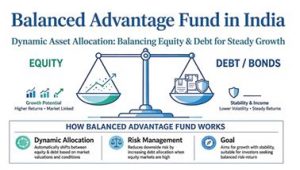
Every investor wants the wealth-creating power of equity and the reassuring stability of debt. Balanced Advantage Funds attempt...
Tourism is a major source of government revenue in our country. There are different types of tourism. Scenic...
Good Evening Viewers! Catch up on the day's biggest stories with The Savera Times Evening Bulletin. Get the...

Congress leaders continued their protest outside the Jaipur Police Commissionerate on Tuesday, demanding the registration of a zero...
On the auspicious occasion of Vijayadashami, Prime Minister Narendra Modi on Tuesday called on the countrymen to unite...
Aries: The day will be auspicious...