Last Updated: October 21, 2026
Last Updated: October 21, 2026





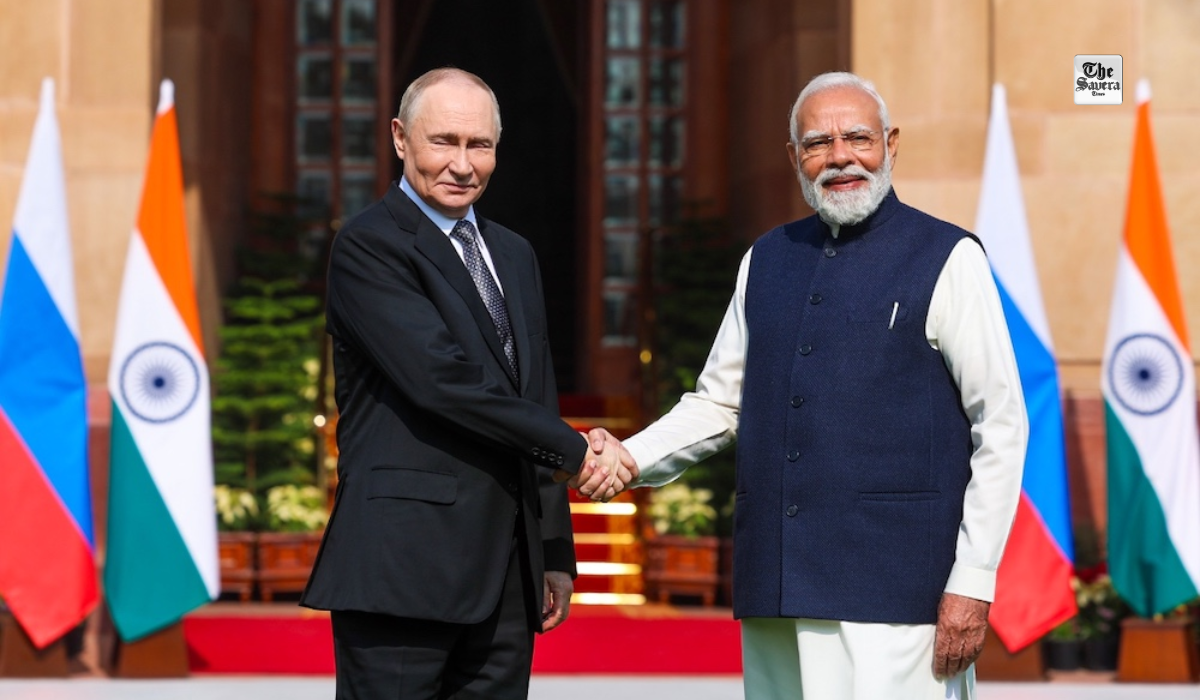
New Delhi: Russian President Vladimir Putin’s first visit to India since the outbreak of the Ukraine-Russia conflict marked a significant shift in emphasis, as the annual India-Russia summit went beyond its traditional focus on defence and strategic cooperation to place economic and trade relations firmly at the centre of bilateral ties.
Economic Ties Take Centre Stage
The visit came against the backdrop of sustained pressure from Western powers, particularly the United States, urging India to reduce its imports of Russian oil to discourage Moscow from continuing the war in Ukraine. Prime Minister Narendra Modi’s assertion that “elevating our economic cooperation with Russia to new heights is a shared priority” was widely seen as India’s response to the tariff and policy pressure exerted by US President Donald Trump.
After talks with President Putin, Prime Minister Modi described the India-Russia relationship as having remained “steady like a guiding star” for over eight decades, despite global upheavals, owing to its foundation of mutual respect and deep trust. President Putin, in turn, highlighted a series of agreements aimed at expanding economic cooperation, reiterating that India and Russia are important partners in trade, investment and technology.
An Economic Cooperation Programme has been launched to raise bilateral trade from the current $68 billion to $100 billion by 2030, with Prime Minister Modi expressing confidence that the target could be achieved even earlier. The prominence of economic and commercial issues underscored the evolving priorities of the partnership.
Energy Security and Global Pressures
Amid US sanctions on Russian energy companies, President Putin assured India of continued and uninterrupted supplies of oil, gas and coal, calling Russia a reliable energy partner for India’s fast-growing economy. His remarks were seen as an implicit call for India to withstand external pressure on its energy choices.
Prime Minister Modi described energy security as a vital pillar of bilateral relations and announced that cooperation in civil nuclear energy would also be advanced to support clean energy goals. On the Ukraine conflict, Modi reiterated India’s support for all efforts aimed at a negotiated settlement, stating that India was “not neutral, but on the side of peace,” and remained ready to contribute to peace initiatives.
President Putin acknowledged ongoing efforts, including with the US, to explore possibilities for a peaceful resolution and thanked India for its engagement. Notably, the Ukraine crisis did not figure in the joint statement, which instead expressed concern over the humanitarian situation in Gaza and called for cessation of hostilities and sustainable peace.
Mobility, Security and Strategic Autonomy
Several agreements were signed in areas such as mobility, migration and shipping. India and Russia agreed to create a framework for the movement of skilled Indian workers to Russia, particularly in sectors like IT, construction and engineering, to meet Russia’s growing labour needs. India also announced free 30-day employment-tourist visas for Russian nationals on a reciprocal basis.
Foreign Secretary Vikram Misri described economic cooperation as the “driving impulse” of the visit, noting that regulatory hurdles would be addressed and Indian exports in pharmaceuticals, agriculture and marine products boosted to correct the trade imbalance.
Counter-terrorism featured prominently in discussions, with both leaders reaffirming a zero-tolerance policy. Prime Minister Modi said India and Russia stood shoulder-to-shoulder against terrorism, linking attacks in Pahalgam and Moscow’s Crocus City Hall to the same roots of extremism. The joint statement called for concerted action against UN-listed terror groups, including Al Qaeda and Islamic State, and their affiliates.
External Affairs Minister S. Jaishankar summed up the visit as a reflection of India’s strategic autonomy and freedom of choice. He noted that the summit produced a five-year economic programme, a mobility agreement and deeper energy cooperation, while reiterating that no country could claim a veto over India’s foreign relations. Clearly, by balancing ties with both Russia and the US, India underscored its sovereign approach to diplomacy—an approach that allowed both New Delhi and Moscow to emerge as beneficiaries of President Putin’s visit.
We are very proud that at present India is the number one country in the world by surpassing...
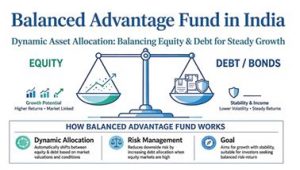
Every investor wants the wealth-creating power of equity and the reassuring stability of debt. Balanced Advantage Funds attempt...
Tourism is a major source of government revenue in our country. There are different types of tourism. Scenic...
Good Evening Viewers! Catch up on the day's biggest stories with The Savera Times Evening Bulletin. Get the...

Congress leaders continued their protest outside the Jaipur Police Commissionerate on Tuesday, demanding the registration of a zero...
On the auspicious occasion of Vijayadashami, Prime Minister Narendra Modi on Tuesday called on the countrymen to unite...
Aries: The day will be auspicious...