Last Updated: October 21, 2026
Last Updated: October 21, 2026





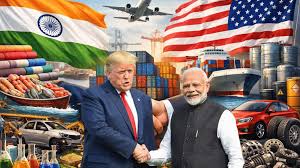
Recent murmurs regarding a proposed India-US trade understanding on cotton have sent ripples of anxiety through the black soil belts of Gujarat, Telangana, and Andhra Pradesh. In a landscape where agrarian distress often becomes a political flashpoint, the narrative is tempting: that “zero-tariff imports” from American industrial farms will flood our markets and devastate the livelihoods of millions of Indian farmers. However, a dispassionate look at the policy framework and the structural needs of our textile industry reveals that these fears, while understandable, are largely misplaced.
The proposed agreement is not an “open-door” policy but a “carefully calibrated, quota-based concession”. By focusing on high-quality, long-staple cotton that India often lacks, this trade deal is designed to strengthen our textile ecosystem, ultimately securing the very demand that keeps Indian cotton farming viable.
The Quality Gap and Industry Survival
India is a global titan in cotton production, yet our textile industry—the country’s second-largest employer—faces a persistent paradox: we produce millions of bales, yet we often lack the specific grades of “contamination-free” and Extra-Long Staple (ELS) cotton required for high-end exports.
Currently, domestic cotton prices are trading roughly 10% above international benchmarks, with Brazilian and US cotton landing at significantly more competitive rates. For an export-oriented spinning mill in Tamil Nadu or a garment factory in Noida, this price gap isn’t just a balance-sheet issue; it’s a matter of global survival. When our input costs are higher than our competitors in Bangladesh or Vietnam, we lose global market share. By allowing a limited, regulated quota of US cotton, we provide our mills the specific fiber they need to fulfill high-value international orders.
Safeguarding the Farmgate
The most critical concern for an Indian farmer is price stability. Critics argue that duty-free imports will cause a price crash. However, the Indian government maintains a robust safety net through the Minimum Support Price (MSP) mechanism. For the 2025–26 season, the MSP was increased to Rs 7,710 per quintal for medium staple and Rs 8,110 for long staple cotton.
The Cotton Corporation of India (CCI) acts as the “buyer of last resort,” having already procured over 31 lakh bales worth nearly Rs 13,500 crore this season to prevent distress sales. In reality, cotton imports typically constitute less than 15% of domestic consumption and are largely confined to specialized varieties that do not compete directly with the bulk of Indian produce. A limited import quota is unlikely to be the determining factor in the cultivation decisions of a farmer in Vidarbha compared to more immediate factors like pest incidence or weather-related yield variability.
The Strategic Trade-Off
In the modern geopolitical economy, trade is a two-way street. The India-US trade deal, which seeks to reduce reciprocal tariffs to roughly 18%, offers India a unique strategic advantage. In exchange for concessions on agricultural products like cotton, India is eyeing zero-tariff access for its finished garments and textiles in the massive US market.
This is the “Value Chain” argument. If Indian garments gain duty-free access to America, the surge in demand for “Made in India” shirts and bedsheets will exponentially increase the domestic demand for Indian cotton. We are, in effect, trading a small amount of raw fiber imports for a massive increase in finished product exports.
Moving Beyond Protectionism
A rigid protectionist stance might offer short-term political comfort, but it risks undermining India’s long-term industrial competitiveness. The real threats to the Indian cotton farmer are not US imports, but stagnant yields and the rising cost of inputs like fertilizers and seeds.Our policy focus should shift from “trade isolation” to “technological insulation”. This means investing in improved seed technology to combat the pink bollworm, expanding irrigation to reduce rain-fed vulnerability, and modernizing our ginning processes to reduce contamination.
Conclusion
The narrative that a limited US cotton quota is a “death warrant” for Indian farmers is more rhetoric than reality. Policy prudence demands that we balance the immediate welfare of the farmer with the long-term health of the textile industry.
By securing a “limited, controlled, and reviewable” quota, India is not surrendering its agricultural sovereignty. Instead, it is threading a needle—using strategic imports to bolster an industry that provides 45 million jobs, ensuring that the Indian textile tiger can compete, win, and ultimately buy more cotton from the Indian farmer. In a globally interconnected economy, the path to prosperity lies in strategic engagement, not isolation.
We are very proud that at present India is the number one country in the world by surpassing...

Every investor wants the wealth-creating power of equity and the reassuring stability of debt. Balanced Advantage Funds attempt...
Tourism is a major source of government revenue in our country. There are different types of tourism. Scenic...

Good Evening Viewers! Catch up on the day's biggest stories with The Savera Times Evening Bulletin. Get the...

Congress leaders continued their protest outside the Jaipur Police Commissionerate on Tuesday, demanding the registration of a zero...

On the auspicious occasion of Vijayadashami, Prime Minister Narendra Modi on Tuesday called on the countrymen to unite...
Aries: The day will be auspicious...