Last Updated: October 19, 2026
Last Updated: October 19, 2026





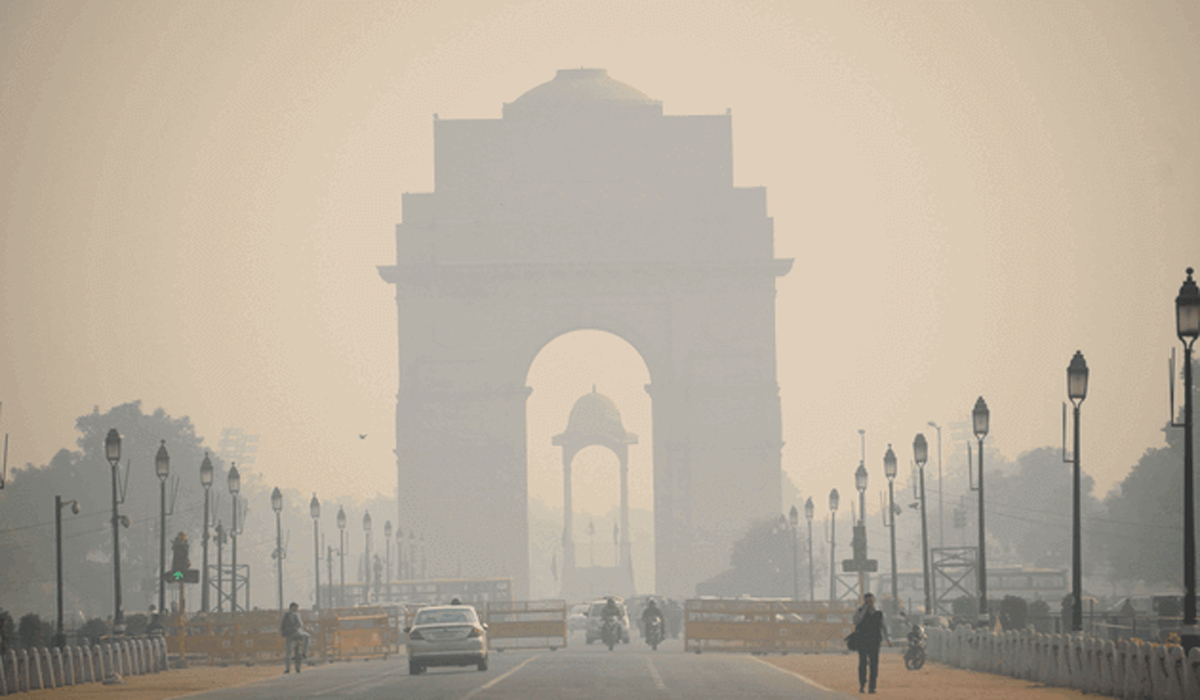
As October 2025 drew to a close, the air across North India turned into a grey veil of dust and smoke. In Dharuhera, a small industrial town in Haryana, the haze was thicker than anywhere else in the country. According to a new analysis by the Centre for Research on Energy and Clean Air (CREA), Dharuhera recorded the highest levels of air pollution in India during October, revealing once again how deeply the National Capital Region (NCR) is trapped in its annual smog cycle.
The data paints a grim picture. Dharuhera registered an average PM2.5 concentration of 123 micrograms per cubic metre, breaching India’s safety limit on most days of the month. Residents endured two days of ‘Severe’ and nine of ‘Very Poor’ air quality. Behind those numbers lies an uncomfortable truth: nearly every major NCR city shared the same fate. Rohtak, Ghaziabad, Noida, Ballabgarh, Delhi, Bhiwadi, Greater Noida, Hapur, and Gurgaon completed the list of the ten most polluted cities — all within a few hundred kilometres of each other, forming a suffocating belt across the IndoGangetic Plain.
Delhi, often seen as the face of India’s air pollution crisis, ranked sixth with an average PM2.5 level of 107 µg/m³, nearly triple its September average. While stubble burning across Punjab and Haryana is often blamed for Delhi’s winter smog, CREA’s findings challenge that assumption. The report notes that crop residue burning contributed less than six per cent of Delhi’s PM2.5 levels in October, suggesting that vehicles, industries, and construction dust remain the dominant culprits. “Winter and festive periods don’t create India’s pollution problem, they expose it,” says Manoj Kumar, an analyst at CREA.
“Seasonal spikes amplify baseline pollution that stays dangerously high all year. If we tackled emissions sector by sector, with accountability, these crises would be preventable. But policies remain reactive and short-term.” The report shows how the country’s air quality shifted dramatically within a month. Cities with ‘Good’ air (PM2.5 below 30 µg/m³) dropped sharply from 179 in September to just 68 in October. Those with ‘Satisfactory’ air (31–60 µg/m³) rose to 144, while the number of ‘Moderate’ and ‘Poor’ cities also increased. Only one city — Dharuhera — crossed into the ‘Very Poor’ category.
The judicial custody of Cockroach Janata Party (CJP) leaders Ashutosh Ranka and Saurav Das was extended by two...

Three people were killed and several others injured in separate incidents in Imphal East and Thoubal districts of...

A controversy erupted during Punjabi singer Daler Mehndi's live performance in Uttarakhand's Tehri Garhwal district. Daler Mehndi, who...

Jamia Millia Islamia (JMI) has formed a seven-member committee to negotiate with students protesting for the reinstatement of...

The Directorate of Revenue Intelligence (DRI) has seized over 10 kg of narcotics and arrested three people in...
The Food Safety and Standards Authority of India (FSSAI) has issued notices to four companies, including the fast-track...
Aries: The day will be auspicious...