Last Updated: October 15, 2026
Last Updated: October 15, 2026





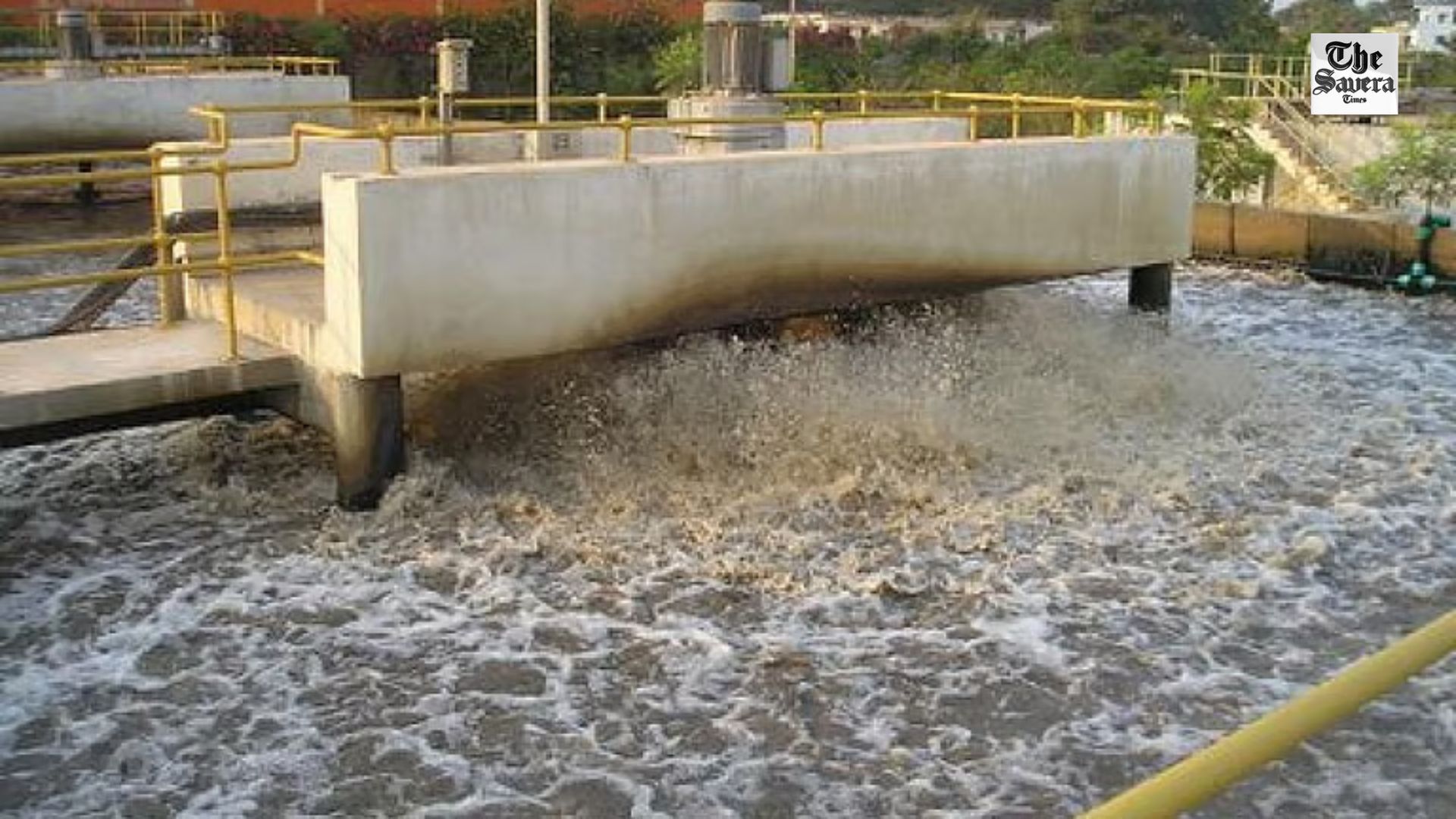
India’s water crisis is no longer a distant warning; it is a lived reality. With 18 per cent of the world’s population but barely 4 per cent of global freshwater resources, the country has spent decades focusing on one central question: How do we secure more water? Governments have built dams, expanded pipelines, promoted rainwater harvesting and invested heavily in drinking water schemes. Yet one uncomfortable truth continues to escape the national conversation — what happens after water is used. Nearly 80 per cent of water supplied to households returns as wastewater. In a country facing chronic water stress, treating this as mere “waste” is both economically irrational and environmentally dangerous. India’s water security debate remains incomplete because it focuses almost entirely on supply while ignoring recovery, reuse and recycling. A bucket can never remain full if its leaks are ignored. The larger problem is that sanitation and water management are still treated as separate sectors. Water departments focus on supply; sanitation departments focus on disposal. But the two are inseparable. Every litre of water consumed eventually becomes wastewater, and every wastewater stream contains recoverable resources. Unless India closes this loop, its water strategy will remain fundamentally flawed. The debate around wastewater treatment itself is also too narrow. Most policy discussions stop at treated water reuse for parks, agriculture or industry. What is overlooked is the enormous value contained in sludge — the semi-solid by-product of sewage and faecal sludge treatment. Across India, sludge piles up near treatment plants as an unwanted burden, despite being rich in organic carbon, nitrogen, phosphorus and potassium. This is a tragic contradiction for a country whose soils are increasingly nutrient-deficient. Nearly 85 per cent of Indian soils reportedly suffer from low organic carbon content, forcing farmers to depend heavily on expensive chemical fertilisers. At the same time, cities are discarding nutrientrich biosolids that could partially restore soil health. India is importing fertiliser nutrients while throwing away the same nutrients as “waste.” The irony is that the technology and evidence already exist. In Karnataka’s Devanahalli, faecal sludge has been co-composted successfully for years, producing nutrient-rich compost that meets official standards and is actively sought by farmers. Similarly, dried sewage sludge is proving useful as an alternative fuel in cement and brick kilns due to its calorific value, reducing dependence on coal. From farms to factories, the message is clear: Sludge is not a liability; it is a resource. What then prevents large-scale adoption? The answer lies less in science and more in policy paralysis. India lacks a strong regulatory ecosystem that can certify treated biosolids, assure quality and facilitate their safe entry into agricultural and industrial markets. The Fertiliser Control Order still does not adequately mainstream treated human waste as a recognised input. Without enforceable standards, testing systems and market pathways, treated sludge continues to remain trapped within treatment plants. This is not a technical failure. It is a governance failure. India’s rivers are polluted not only because sewage remains untreated, but because treated outputs are not reused effectively. Groundwater is depleting because freshwater continues to be used where treated water could suffice. Soil degradation continues because organic nutrients are discarded instead of recycled. These are interconnected crises demanding interconnected solutions. Water security in the 21st century cannot mean merely finding new water sources. It must mean building a circular water economy where wastewater is treated as a recoverable asset, not an endpoint. Sanitation reuse must move from the margins of policy discussions to the centre of national planning. The country has already demonstrated what is possible. What it now requires is political will, regulatory clarity and institutional coordination. The sludge accumulating outside treatment plants is more than an operational issue — it is a symbol of a broken system that still sees waste where opportunity exists. India cannot afford such linear thinking anymore. In an age of climate uncertainty and increasing water scarcity, true water security will come not from endlessly extracting more freshwater, but from learning how to responsibly reuse what already flows through our cities every day.
Singapore: Two Singapore-registered container vessels were reportedly struck by unknown projectiles while transiting the Strait of Hormuz on...

Shimla: The Himachal Pradesh government has constituted a four-member commission to examine the reorganisation of administrative units in...

New Delhi: The Supreme Court on Wednesday listed for November 17 the appeal filed by self-styled godman Asaram...

Ranchi: Doctors in Jharkhand launched a protest on Wednesday over a slew of demands concerning their safety and...

Greater Noida: Police and Anti-Narcotics Team in Uttar Pradesh’s Greater Noida have seized ‘ganja’ worth Rs 1 crore...

New Delhi: The Enforcement Directorate (ED) has attached assets worth Rs 2,032.81 crore belonging to Reliance Power Ltd...
