Last Updated: November 3, 2026
Last Updated: November 3, 2026





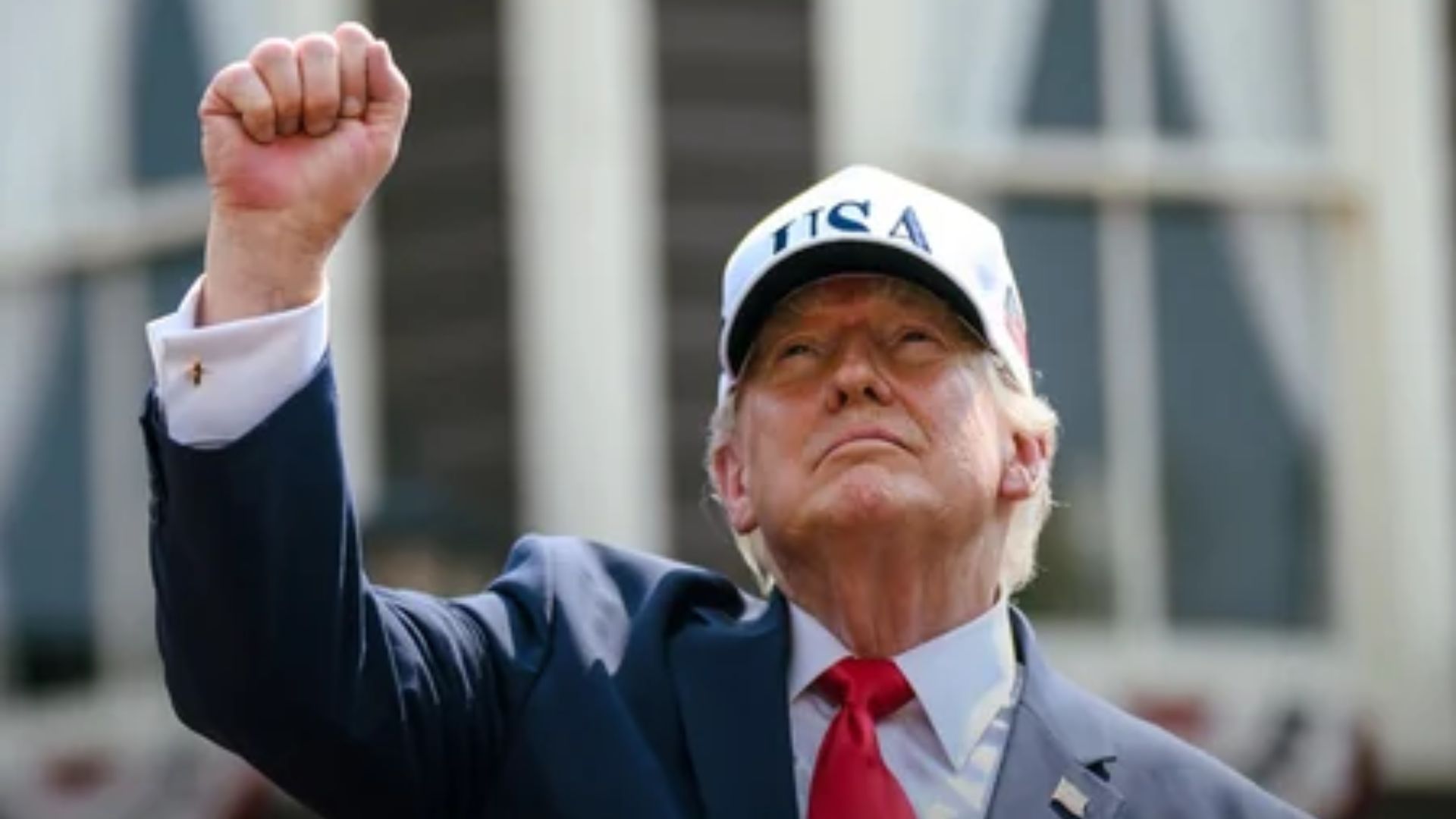
Washington: US President Donald Trump has appealed to voters in five states to vote for Republican Party candidates ahead of the midterm elections. He participated in several campaign rallies held via phone, presenting the Senate, Congress, and gubernatorial elections as the public’s verdict on his presidency and his government’s agenda.
Trump addressed voters in Georgia, Indiana, South Carolina, Alaska, and New York. During the campaign, he endorsed Republican candidates and targeted Democratic Party leaders. He warned that if the Republican Party loses the election, his government’s policies related to tax and border security could be changed.
Trump’s main message was that supporters should vote as if their own names were on the ballot. During a phone rally in South Carolina, he said, “Go out tomorrow and vote. Act as if I were on the ballot.”
Emphasis on Taxes, Immigration, and Gun Rights
In his address, Trump highlighted issues such as tax policies, illegal immigration, and gun rights. He also mentioned energy projects in Alaska and tax cuts in New York.
Trump repeatedly claimed that vote turnout increases significantly when his name is on the ballot. However, the available transcript did not provide any data to support this claim.
In Georgia, Trump urged voters to elect Mike Collins to the Senate and Rick Jackson to the governorship. He criticized Democratic Senator Jon Ossoff, saying that Republican candidates must win to continue his government’s policies.
Endorsed these candidates in Indiana and South Carolina
In Indiana, Trump endorsed Victoria Spartz of the 5th Congressional District. He praised her for supporting his agenda on taxes and border security. Trump also claimed that Spartz helped secure more than $200 million for rural healthcare facilities.
He targeted Spartz’s Democratic opponent, J.D. Ford, on tax, immigration, and gun policy. However, available information does not include any response from Ford to these allegations.
In South Carolina, Trump endorsed Darlene Graham for Senate and Alan Wilson for governor. He praised Wilson’s work as Attorney General and claimed that if elected, he would abolish the state’s income tax.
Trump accused the Democratic candidates of posing a threat to gun rights and border security. He also criticized their stance on transgender healthcare and used derogatory language on several occasions.
Raised the issue of oil and gas projects and ranked choice voting in Alaska
In Alaska, Trump appealed for the re-election of Senator Dan Sullivan and Congressman Nick Begich. He also endorsed Bernadette Wilson for governor.
Trump repeatedly pointed out the difference between incumbent Senator Dan Sullivan and another candidate with the same name. He alleged that attempts were being made to confuse voters.
He also appealed for support for a ballot proposal that he described as eliminating Ranked-Choice Voting. He also praised Sullivan and Begich for advancing oil, gas, and infrastructure projects.
Calls for votes for three Republican candidates in New York
In New York, Trump endorsed Mike Lawlor, Mike LiPetri, and Jeanine Driscoll for Congress. He specifically mentioned Mike Lawlor’s work on the federal tax deduction on state and local taxes (SALT).
Trump said, “So go out and vote for Mike Lawlor, Mike LiPetri, and Jeanine Driscoll. These are great people.”
During a phone rally in New York, Trump also defended military action against Iran. He claimed that oil prices would fall after the conflict ended. However, no independent evidence was provided to support this prediction.
What are US midterm elections?
Midterm elections are elections held in the US between the four-year terms of a president, i.e., two years after the end of his term. These elections involve voting for all 435 seats in the House of Representatives and approximately one-third of the Senate. Elections are also held for positions in various states and local bodies.
The president’s name is not on the ballot in these elections, but their results are considered crucial to the president’s policies and the political standing of his party.
An Indian sailor was killed and 13 other crew members were rescued after an unidentified aerial object struck...
Two helicopters collided in Solukhumbu, a hilly district in eastern Nepal, on Tuesday morning. One foreign national was...

Iran has indicated that if the US accepts its demands, the Strait of Hormuz could be reopened within...
The Indian Navy has safely rescued all 20 crew members of the fishing vessel "Azini" that was held...

Amid escalating military tensions between Iran and the US, multiple explosions were heard on Qeshm Island and Bandar...
Afghanistan has expressed its "serious concern" over reports that the United States intends to transfer certain Afghan refugees...
Aries: The day will be auspicious...