Last Updated: October 21, 2026
Last Updated: October 21, 2026





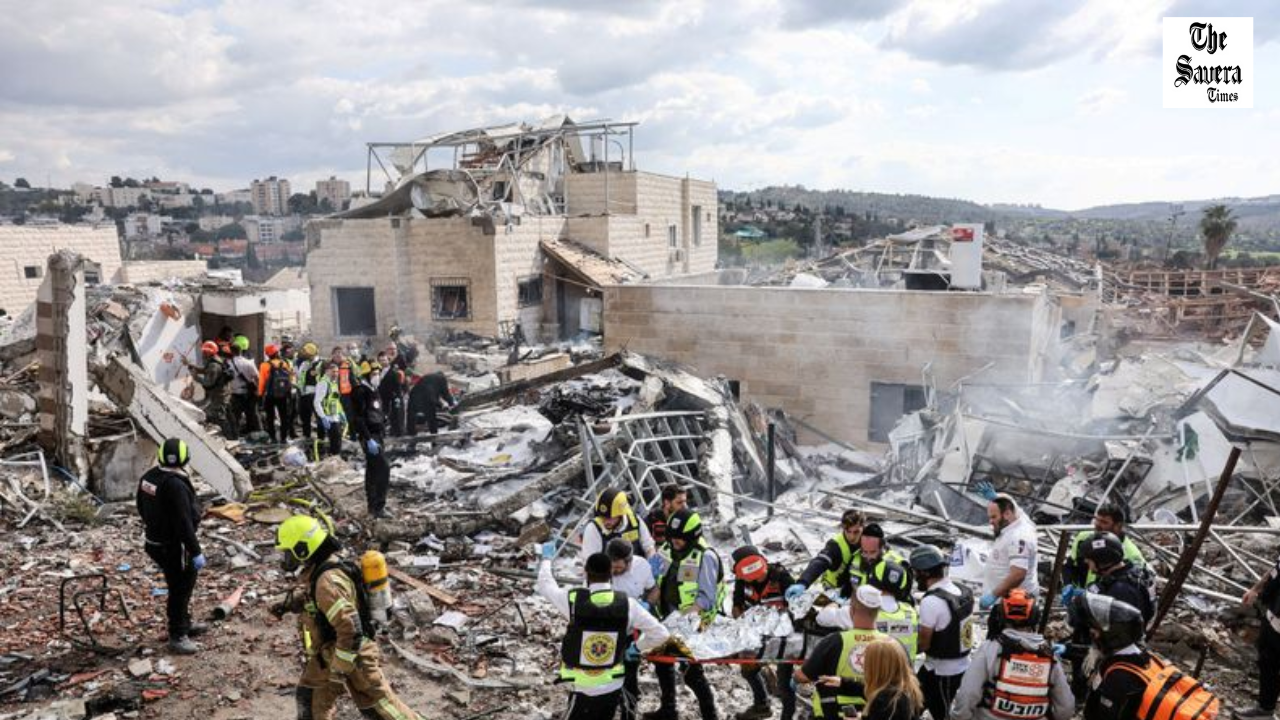
Washington/Dubai, March 3, 2026: As the Middle East military conflict involving the United States, Israel, and Iran escalates, U.S. President Donald Trump has acknowledged the war with Iran could extend for weeks beyond initial estimates, while Israeli Prime Minister Benjamin Netanyahu has defended the decision to strike Tehran, describing the operation as necessary to counter perceived threats. The comments come amid fierce fighting, regional instability, and rising global concern.
Trump’s remarks signal an acceptance that the initial four-to-five-week timeframe for the military campaign may stretch longer, reflecting the complexities of confronting a large and resilient adversary with widespread missile, air defence, and nuclear infrastructure.
In remarks released by news agencies, Trump reiterated that while the campaign was originally projected to last roughly four to five weeks, it could continue for a longer period depending on how the situation unfolds on the ground. He emphasized that U.S. forces and their partners were prepared for sustained operations.
“The mission may take weeks we anticipated four to five weeks, but it could go longer,” Trump said, stressing that the United States remained committed to meeting its objectives in the conflict.
Analysts note that this shift in public messaging reflects the unpredictable nature of modern warfare against an adversary like Iran, which has both conventional and asymmetric military capabilities. The expanding nature of the conflict has already seen attacks on U.S. diplomatic missions and allied interests across the region, including a suspected drone strike on the U.S. Embassy in Saudi Arabia earlier this week.
At the same time, Israeli Prime Minister Benjamin Netanyahu has defended Israel’s military action against Iran, arguing that removing what he describes as an “existential threat” posed by Tehran’s missile and nuclear programmes is essential for Israel’s security.
Netanyahu, speaking on U.S. media, said although the conflict may take “some time”, he did not believe it would last for years like previous Middle East wars. “It may take some time, but it’s not going to take years,” he asserted, pushing back against narratives that anticipate prolonged occupation or endless combat.
The Israeli leader’s stance underscores the strategic rationale behind coordinating military action with the United States framing it as a defensive necessity amid Tehran’s continued development of programmes that Jerusalem and Washington claim could destabilize the region.
As the confrontation intensifies, Iran has launched retaliatory missile and drone strikes against U.S. and allied positions and infrastructure throughout the region, including recent assaults on Saudi Arabia and Gulf energy assets, raising fears of a broader conflagration.
Reports also indicate that U.S. and Israeli forces have conducted extensive air and missile strikes within Iranian territory, aiming to degrade military bases, air defence networks, and missile systems. Civilians and combatants on all sides have suffered casualties amid the fighting.
The conflict’s escalation has had immediate economic consequences, with global oil prices rising sharply amid fears of disruption in key shipping lanes particularly the Strait of Hormuz and supply chain shocks affecting energy markets worldwide.
With no clear end in sight, global leaders and diplomatic channels are under pressure to seek a resolution. Attempts at negotiations have so far been overshadowed by ongoing military operations and deep distrust between Tehran, Washington, and Jerusalem.
Experts warn that, even if the current phase of the conflict subsides, lingering tensions and unresolved geopolitical disputes could continue to fuel instability across the broader Middle East region.
US President Donald Trump says Washington and New Delhi are close to a trade agreement that will differ...
Iran has ruled out transferring its enriched uranium stockpile outside the country, with security official Mohsen Rezaei reiterating...
Donald Trump has urged Volodymyr Zelensky to pursue a peace deal with Russia, warning that Ukraine could face...
Pakistan, battling insurgencies at home and tensions along multiple borders, is too overstretched to offer meaningful military support...
The World Bank Group has launched its first comprehensive digital strategy, placing artificial intelligence, affordable internet access and...

Fifty-four organisations and movements associated with France's October protests, along with their wider networks of supporters and international...
Aries: The day will be auspicious...