Last Updated: October 3, 2026
Last Updated: October 3, 2026





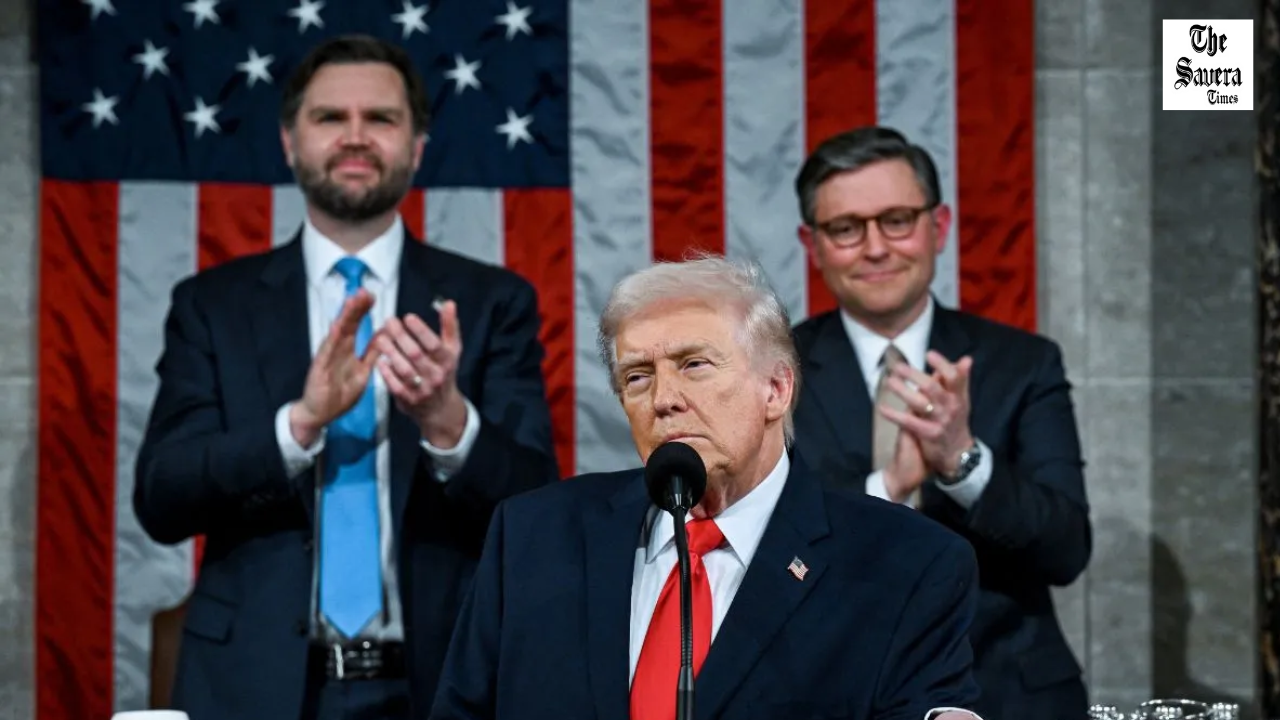
Washington, D.C.: U.S. President Donald Trump on 24 February 2026 criticized a recent U.S. Supreme Court ruling that struck down key aspects of his tariff policy, calling the decision “unfortunate” and an unnecessary interference in his economic strategy. The comments came during statements tied to his 2026 State of the Union address, where he framed tariff policy as central to his broader economic agenda.
The Supreme Court’s ruling which found that Trump exceeded his legal authority in imposing sweeping tariffs under emergency powers dealt a significant blow to a major plank of his trade and revenue policy. The court’s decision overturned the administration’s use of the International Emergency Economic Powers Act (IEEPA) for broad tariffs, a measure Trump had relied on since mid-2025.
During his speech and related remarks, Trump reaffirmed his belief that tariffs are key to reducing America’s trade deficits, protecting domestic industries, and “easing the financial burden on Americans,” despite the setback.
The Supreme Court’s ruling found that the president lacked constitutional authority to impose large, wide-ranging tariffs without explicit congressional approval — a power reserved under Article I of the U.S. Constitution. The decision, handed down in a 6–3 majority, struck down key tariff provisions that had raised billions in duties on imported goods.
Economists estimate that the ruling could save American households hundreds of dollars annually by reducing levies on consumer products. For many families, the tariff burden has contributed to higher everyday costs, and experts say the decision may reduce average annual expenses by roughly $600 to $900, although some tariffs remain in place under other statutes.
Despite the reduction of some levies, many tariffs are still active due to other legal authorities meaning families may continue paying elevated prices for certain imported goods.
Trump described the Supreme Court’s interference as “unfortunate” but used the moment to stress that tariffs paid by foreign trading partners help relieve tax burdens on U.S. citizens and strengthen domestic markets. His remarks reiterated a core theme of his trade policy that reciprocal duties force other nations to contribute to the U.S. economy.
The president also defended his intention to continue using tariffs as a tool for economic leverage, suggesting he may pursue alternative legal avenues or adjustments to existing trade statutes to reinstate key duties in modified form.
The tariff ruling has sparked political and financial reactions across the country. Several U.S. governors, including New York’s Kathy Hochul, have demanded tariff refunds for state residents, citing excessive financial burdens imposed by the duties. Hochul formally called for a $13.5 billion tariff refund to offset costs consumers and businesses shoulder.
Large corporations, such as FedEx, have already filed lawsuits seeking tariff reimbursements, noting that the duties have greatly inflamed operational costs. Over 1,000 companies are pursuing legal routes for refunds based on the ruling.
The court’s decision has implications beyond U.S. borders, affecting international trade dynamics. It may ease pressure on global supply chains and trading partners previously targeted by the broad tariff regime. At the same time, economists caution that some remaining duties under other statutes will keep certain price pressures intact for consumers.
Washington: US President Donald Trump warned South Korea that it could face a higher price if it does...
Washington: A Hindu temple in Ohio’s Greater Cleveland area was attacked with bricks that shattered windows while priests...

A Chinese-run networking club, targeting business and political elites in Brussels, bears the hallmarks of an influence and...
~Abhishek Vij Indian pilot Smit Machar averted a tragedy with his bravery in such a way that the...

Bangladesh has come under renewed scrutiny over allegations of immigration officials subjecting unmarried women travelling abroad to intrusive...

Imagine being seriously injured inside a flying aircraft, with blood on your clothes, passengers in panic and the...

Aries: The day will be auspicious...