Last Updated: October 21, 2026
Last Updated: October 21, 2026





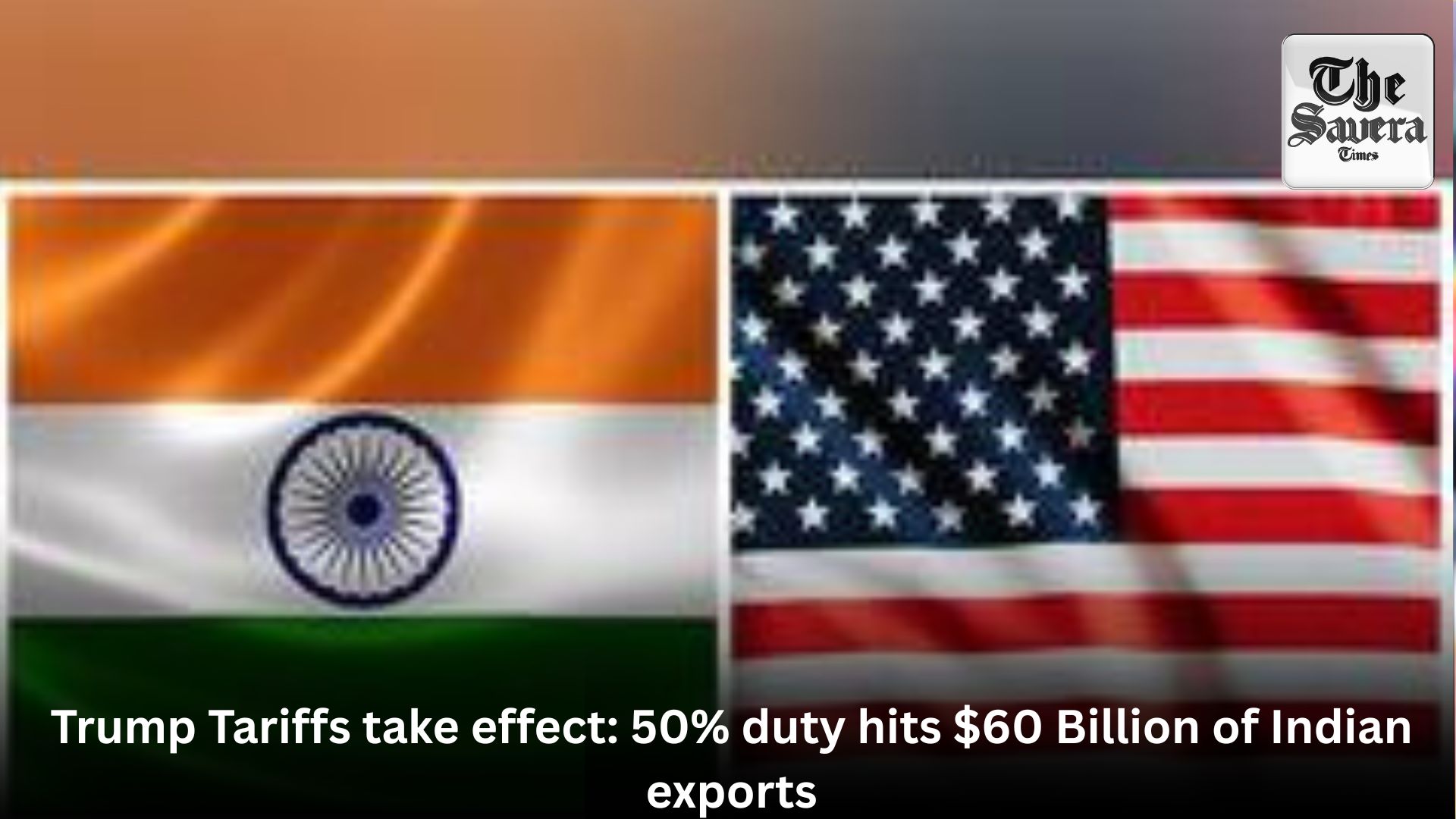
New Delhi: The 50 per cent tariffs on Indian goods imposed by the Donald Trump administration came into force on Wednesday, following a notice by the US Customs and Border Protection (CBP). The move poses serious challenges for India’s US-oriented exporters.
According to an analysis by ICRIER, it exposes nearly 70 per cent of India’s exports, worth USD 60.85 billion, to the elevated duties.
US President Trump, who has on several occasions described India as a “tariff king,” and cited the trade deficit with India and New Delhi’s continued purchases of Russian oil and military equipment as reasons for the move.
Meanwhile, Prime Minister Narendra Modi asserted that his government would shield small entrepreneurs, farmers, and livestock rearers.
During the recent Monsoon session of Parliament, Commerce and Industry Minister Piyush Goyal made a statement in both Houses, affirming that the government is examining the impact of tariffs and will take all necessary steps to safeguard the national interest.
While around 30.2 per cent of India’s exports to the US, valued at USD 27.6 billion, will continue duty-free, including pharmaceuticals and electronics, and some others, the tariffs hit labour-intensive industries hardest.
Items such as iron and steel, aluminium products, passenger vehicles, semi-finished copper products, and critical minerals are exempt from the additional duties.
Ajay Srivastava, founder of the Global Trade Research Initiative (GTRI) said labour-intensive sectors, such as diamonds, gems, jewellery, textiles, garments, and shrimp, will be significantly impacted due to their high dependency on the US market and increased competition from countries with lower tariffs. Faced with the challenges, he noted that India can offset the loss of US trade to some extent through increased domestic consumption.
We are very proud that at present India is the number one country in the world by surpassing...
Every investor wants the wealth-creating power of equity and the reassuring stability of debt. Balanced Advantage Funds attempt...
Tourism is a major source of government revenue in our country. There are different types of tourism. Scenic...
Good Evening Viewers! Catch up on the day's biggest stories with The Savera Times Evening Bulletin. Get the...

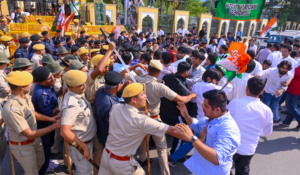
Congress leaders continued their protest outside the Jaipur Police Commissionerate on Tuesday, demanding the registration of a zero...
On the auspicious occasion of Vijayadashami, Prime Minister Narendra Modi on Tuesday called on the countrymen to unite...
Aries: The day will be auspicious...