Last Updated: October 22, 2026
Last Updated: October 22, 2026





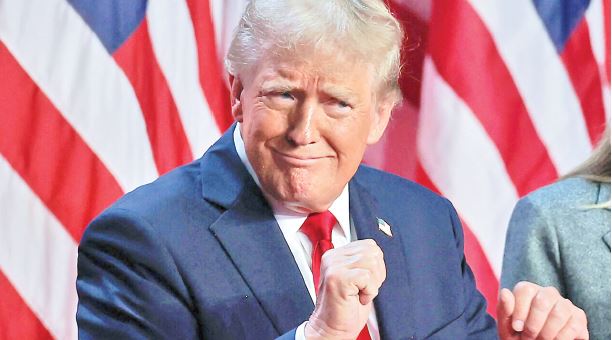
The already fragile trade relationship between India and the United States has come under fresh strain after the Trump administration imposed a 100 per cent tariff on branded and patented pharmaceutical products imported from India. The move, announced earlier this week, adds to an already steep tariff regime, with duties on some Indian goods reaching as high as 50 per cent.
The latest escalation directly targets India’s pharmaceutical sector, a cornerstone of the country’s export economy. With nearly 40 per cent of revenues for Indian pharmaceutical companies dependent on the US market, the tariff shock is being widely seen as one of the most significant trade hurdles India has faced in recent years.
This development comes against the backdrop of recurring tensions over New Delhi’s continued purchase of Russian crude oil amid the Ukraine war. Washington has repeatedly expressed frustration at India’s stance, with some senior aides of President Donald Trump accusing India of indirectly aiding Moscow’s war efforts. Both New Delhi and Ukrainian President Volodymyr Zelenskyy have categorically rejected this assertion, insisting that India has maintained an independent foreign policy while balancing its energy security needs.
The bluntest remarks came from American trade secretary Howard Lutnick, who in an interview with News Nation openly criticised India and Brazil for what he described as policies detrimental to US interests. “We have a bunch of countries to fix, like Switzerland, Brazil, India. These are countries that need to really react correctly to America. Open their markets, stop taking actions that harm America, and that’s why we’re on opposite sides with them,” Lutnick said.
Lutnick’s comments underscored a broader shift in Washington’s negotiating style under Trump, who has consistently favoured aggressive tariffs as leverage in trade talks. Explaining the administration’s approach, Lutnick remarked, “The way that President Trump does deals, the first deal is always the best deal. And then the next deal is higher, the next deal is higher, the next deal’s higher.” His statement suggested that unless countries move quickly to align with US demands, punitive measures would continue to mount.
India has already borne the brunt of this tariff-driven strategy. Its pharmaceutical exports, traditionally among the most competitive in the global market, now face significant pricing pressures in their most lucrative overseas destination. Industry observers note that the timing could not be more difficult, with Indian drugmakers already navigating global inflationary trends, rising input costs, and regulatory compliance expenses.
For Washington, however, the message is clear: market access for American businesses remains non-negotiable. Lutnick insisted that countries seeking to maintain privileged access to US consumers must “play ball” with the President of the United States. His sharp rhetoric singled out India and Brazil as the “big ones” on Washington’s agenda, while also hinting at upcoming negotiations with Taiwan.
“You still have Taiwan. That’s a big one that’s coming pretty soon. I expect to really be talking to them and sorting that out. So a bunch of countries left, but the big ones, India and Brazil, are little…but we’ll sort it out over time,” Lutnick added.
The trade secretary’s remarks coincided with the resumption of formal talks between India and the US, as a high-level Indian delegation led by Commerce and Industry Minister Piyush Goyal visited Washington from September 22 to 24. The team met with US Trade Representative Ambassador Jamieson Greer and Ambassador-designate to India Sergio Gor to discuss the contours of a potential trade agreement.
According to a statement issued by India’s Ministry of Commerce, the meetings were described as “constructive.” Both sides exchanged views on the possible framework of a deal and agreed to continue engagements to reach “an early conclusion of a mutually beneficial Trade Agreement.” The language reflected cautious optimism but stopped short of providing specific details, indicating that significant differences remain unresolved.
The central sticking points are not new. For years, Washington has demanded greater access for American agricultural goods, medical devices, and digital services in India, while New Delhi has sought relief from high US tariffs on steel, aluminium, and now pharmaceuticals. The Trump administration’s approach, however, has made the negotiations more contentious, with tariffs being used as a tool to exert maximum pressure.
Analysts suggest that the imposition of 100 per cent duties on pharmaceuticals could be an attempt to push New Delhi to make early concessions in the trade talks. The move also places the Indian government in a politically sensitive position, as the pharmaceutical sector not only drives export earnings but also employs millions across the value chain.
Meanwhile, Trump’s aides continue to link India’s trade policies with its broader geopolitical choices. The repeated references to Russian oil imports illustrate Washington’s growing impatience with India’s independent energy strategy. Despite Western sanctions against Moscow, India has consistently argued that its oil purchases are driven by national interest and do not contravene international law. Ukrainian President Zelenskyy himself has previously defended India’s position, calling it a matter of sovereign decision-making.
For New Delhi, the challenge now lies in balancing its economic and strategic priorities. On the one hand, the US remains India’s largest trading partner and a key ally in technology and defence. On the other, maintaining affordable energy supplies from Russia and safeguarding domestic industries like pharmaceuticals are vital for India’s internal stability and growth.
The current tariff episode marks a critical juncture in this balancing act. While trade disputes between the two countries are not new, the severity of the latest measures highlights the growing gap between Washington’s demands and New Delhi’s red lines. Whether the resumed talks can bridge this divide will be closely watched not only in Delhi and Washington but also in global markets, where Indian pharmaceuticals play an indispensable role in supplying affordable medicines.
For now, the rhetoric from Washington remains combative. By placing India squarely among the countries that “need fixing,” the Trump administration has set the stage for a high-stakes negotiation where the costs of delay could rise sharply. With tariffs doubling overnight and political accusations intensifying, the road to a trade agreement appears increasingly fraught, leaving Indian exporters, policymakers, and consumers bracing for turbulent times ahead.
Good Evening Viewers! Get the latest updates from India and around the world with The Savera Times Evening...

Bharatiya Janata Party (BJP) National General Secretary Smriti Zubin Irani launched a scathing attack on Congress MP and...
New Delhi: Cockroach Janata Party (CJP) leaders Saurav Das and Ashutosh Ranka will be released from judicial custody...

According to police, three suspicious young men are seen in CCTV footage. Efforts are underway to identify them....
A video has surfaced of an alleged attempted assault on Jan Suraj Party's Bihar president Manoj Bharti. The...
Two accused have been convicted and sentenced to 10 years of rigorous imprisonment in a 2017 drug trafficking...

Aries: The day will be auspicious...