Last Updated: October 13, 2026
Last Updated: October 13, 2026





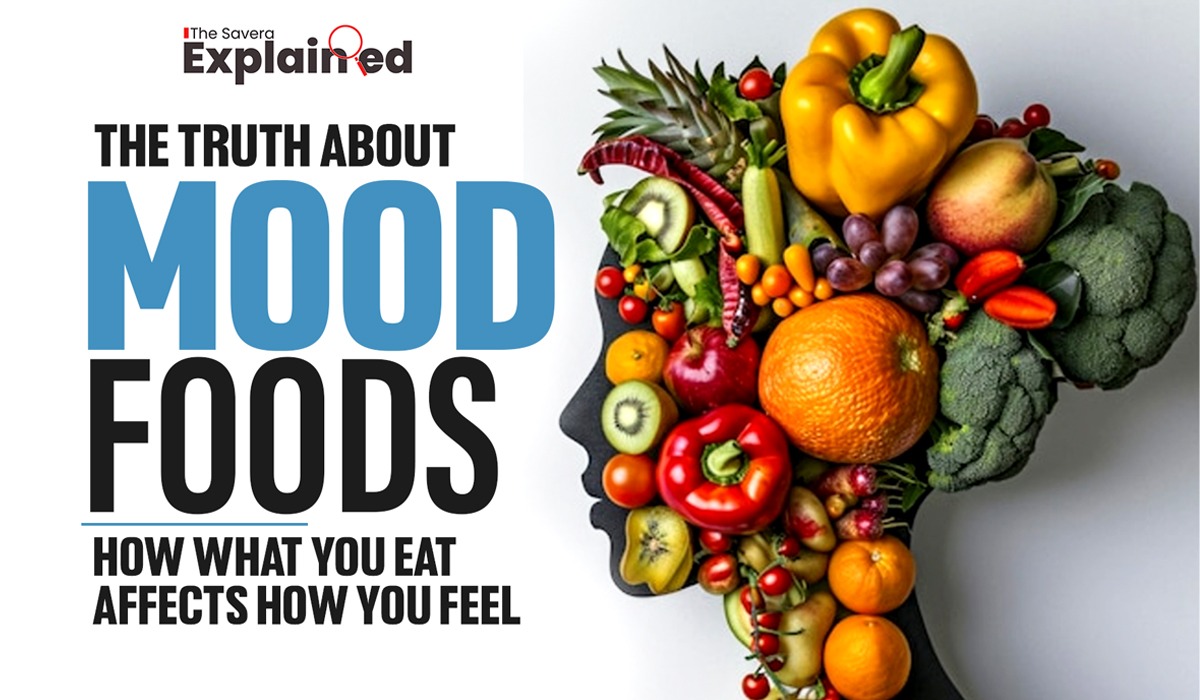
We’ve all been there — reaching for chocolate after a bad day or craving coffee to lift our energy.
But what if your cravings aren’t random at all? What if what you eat actually shapes how you feel?
Welcome to the world of mood foods — a growing wellness trend that connects nutrition with emotion. Let’s explore what’s myth, what’s fact, and how your plate might be influencing your mood more than you realize.
“Mood foods” are simply foods believed to influence your emotions or mental state.
And while it might sound like a social media trend, there’s real science behind it.
Certain nutrients — like tryptophan, B vitamins, and omega-3 fatty acids — help the brain produce neurotransmitters such as serotonin and dopamine, which regulate mood, focus, and emotional balance.
That’s why foods like bananas, nuts, salmon, and dark chocolate often get labeled as “feel-good foods.”
But not everything you’ve heard about food and mood is true. In fact, some popular beliefs do more harm than good.
Let’s break down a few myths you’ve probably heard about food and feelings:
Truth: Only temporarily. Sugar gives you a quick burst of energy and pleasure — followed by a crash that can leave you tired, irritable, and craving more sweets.
Truth: Caffeine can make you feel alert for a short while, but it also increases heart rate and stress hormones. For some people, it actually worsens anxiety.
Truth: Skipping meals lowers your blood sugar, which can mess with your concentration and make you more irritable. A steady supply of nutrients keeps your brain sharp and your mood stable.
Truth: Comfort doesn’t have to come from processed snacks.
Homemade, nutrient-dense meals — like warm soup, a lentil curry, or creamy oatmeal — can be just as soothing, while nourishing your body too.
Because comfort isn’t about being processed — it’s about being personal.
Eating to feel better is something we all do — and that’s okay.
Food is emotional. It reminds us of safety, home, or happier moments.
But when eating becomes our main coping mechanism, it can lead to emotional eating cycles and mood swings.
Instead of avoiding it, the key is to notice why you’re eating.
Ask yourself:
“Am I hungry, or am I trying to feel better?”
That small moment of awareness can completely change your relationship with food.
You don’t have to choose between eating for fuel and eating for feelings — both matter.
Here are a few simple ways to support your mood through mindful eating:
Choose whole, colorful foods that nourish both body and brain.
Stay hydrated — even mild dehydration can affect your mood.
Get sunlight and movement daily — they naturally boost serotonin.
And enjoy comfort foods mindfully — without guilt.
Yes, food can affect your mood — but not in the quick-fix way we often hope for.
The real secret? Balance, awareness, and nourishment.
When you eat with intention, food becomes more than fuel — it becomes a form of care.
Eat to nourish. Eat to feel. Eat with awareness.
A significant loss of plant diversity could result in grasslands wor ldwide , including meadows and pastures, absorbing...

Cancer is believed to be the most deadly disease in India, with its expensive treatment. A family affected...

One of the most common questions people ask these days is how to lose belly fat. Belly fat...

Turtle doves picking fallen grain from Paddy fields, Cicada chirping on willow trees and the cackle of migratory...

Andre Agassi became one of the greatest tennis players in the world. Agassi’s father, Mike, a former Olympic...

Have you ever wondered how the words you speak can influence your thoughts, emotions, behavior, relationships and even...

Aries: The day will be auspicious...