Last Updated: October 22, 2026
Last Updated: October 22, 2026





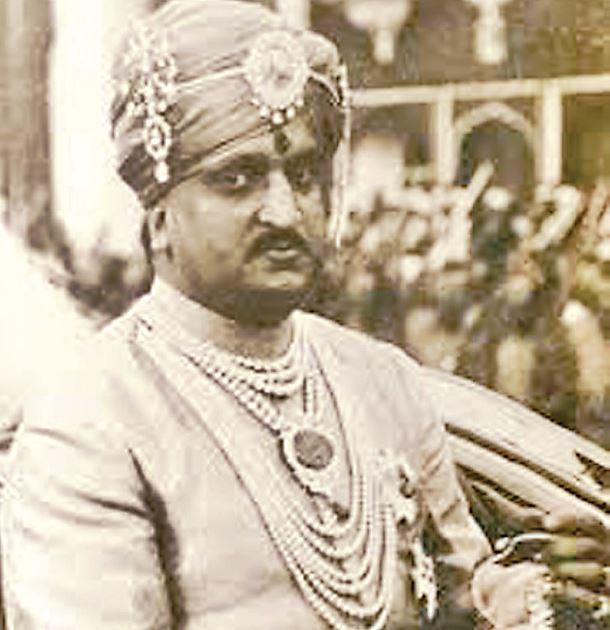
October 26 reads like a compact history lesson: a single date linking three very different but consequential moments that reshaped nations — the accession of Jammu & Kashmir to India (1947), the assassination of South Korea’s strongman Park Chung-hee (1979), and the enactment of the USA PATRIOT Act (2001). Each event reflects how crises, power struggles and security fears can redraw political boundaries, alter governance and reshape civil liberties. Here’s a closer look at what happened on this date — and why it still matters.
Maharaja Hari Singh signs the Instrument of Accession (1947)
On October 26, 1947, Maharaja Hari Singh of Jammu and Kashmir signed the Instrument of Accession, formally seeking to join the newly independent Dominion of India. The decision was not made in a calm political atmosphere: it came after a sudden, large-scale invasion of tribal militias from across the western frontier that began on October 21–22, 1947. Facing an urgent internal security collapse and the prospect of widespread violence, the Maharaja requested military assistance from New Delhi and attached the accession document to that plea.
The accession allowed India to airlift troops into Srinagar, marking the start of the first Indo-Pakistan conflict over Kashmir. The episode set the terms for a long and bitter dispute between India and Pakistan: questions of legality, popular consent and competing territorial claims that would reverberate for decades. For India, the Instrument of Accession provided a legal basis to defend and administer the state; for Pakistan, it remains the origin of an unresolved territorial contest. The immediate effect was militarisation and prolonged conflict; the long-term effect has been a frozen dispute with recurring episodes of violence, diplomacy and international mediation.
South Korea’s turning point: Park Chung-hee assassinated (1979)
Three decades later, on October 26, 1979, South Korea’s authoritarian president Park Chung-hee was shot dead by Kim Jae-gyu, the director of the Korean Central Intelligence Agency (KCIA). Park had led South Korea since a 1961 coup and presided over rapid industrialisation and economic growth. Yet his rule was also marked by tight political repression and curbs on dissent.
The assassination unfolded during a dinner meeting at Park’s safe house. The motives remain contested — Kim later claimed he acted to stop escalating repression and restore democracy — but the killing triggered immediate political upheaval. Park’s death precipitated a chaotic transition: a period of emergency rule, a power struggle within the military, and ultimately the emergence of Chun Doo-hwan, who imposed martial law and consolidated power. South Korea would endure further repression before a return to civilian rule and a more robust democracy in the late 1980s. The Park assassination thus stands as a watershed: the sudden removal of an autocratic leader that opened a fraught path toward political transformation.
The PATRIOT Act: security vs. civil liberties (2001)
On October 26, 2001 — barely six weeks after the September 11 attacks — the U.S. Congress enacted the USA PATRIOT Act. Passed with broad bipartisan support amid national shock and fear, the law significantly expanded federal surveillance, intelligence and law-enforcement powers in the name of countering terrorism. Among other changes, it eased information sharing among agencies, broadened the scope of search and seizure authorities, and allowed enhanced monitoring of electronic communications.
Proponents argued the measures were necessary to prevent further attacks; critics warned the law tilted the balance toward state power at the expense of privacy and civil liberties. Over the following decade, revelations and legal challenges would sharpen that debate. The 2013 disclosures by Edward Snowden about mass surveillance programmes intensified concerns about unchecked governmental monitoring. Some provisions of the PATRIOT Act were later reined in or reformed — notably by the USA FREEDOM Act in 2015 — but the core tension remained: how to reconcile security imperatives with constitutional protections.
What links these moments? Crisis, power and the trade-offs of stability
Across continents and eras, these October 26 events share a pattern. In 1947, a security emergency forced a rushed constitutional choice with long geopolitical consequences. In 1979, a personal and institutional rupture toppled an authoritarian order and set off an unstable transition. In 2001, a terror shock prompted broad changes to the architecture of state power and civil rights. In each case, urgent perceived threats produced rapid decisions that had lasting, sometimes unintended, consequences.
They also remind us of trade-offs: sovereignty versus self-determination in Jammu and Kashmir; stability versus repression in South Korea’s modernisation; security versus privacy in post-9/11 America. Each outcome solved an immediate problem but left new questions and tensions for subsequent generations to manage.
Why October 26 still matters
These anniversaries are not only markers of the past; they are prompts to examine ongoing debates. Kashmir remains central to regional security and identity politics in South Asia. South Korea’s trajectory from authoritarianism to a consolidated democracy is still studied for lessons about economic development and political liberalisation. And debates over surveillance, emergency powers and civil liberties that spiked with the PATRIOT Act persist in the digital age, where technology redefines both risk and remedy.
History seldom offers tidy resolutions. October 26 provides three case studies in how states respond under pressure — and how those responses shape political life for decades. Revisiting these moments helps explain present dilemmas and underlines a perennial lesson: the choices made in moments of crisis often set the terms of politics long after the alarms have faded.
Good Evening Viewers! Get the latest updates from India and around the world with The Savera Times Evening...

Bharatiya Janata Party (BJP) National General Secretary Smriti Zubin Irani launched a scathing attack on Congress MP and...
New Delhi: Cockroach Janata Party (CJP) leaders Saurav Das and Ashutosh Ranka will be released from judicial custody...

According to police, three suspicious young men are seen in CCTV footage. Efforts are underway to identify them....

A video has surfaced of an alleged attempted assault on Jan Suraj Party's Bihar president Manoj Bharti. The...
Two accused have been convicted and sentenced to 10 years of rigorous imprisonment in a 2017 drug trafficking...
Aries: The day will be auspicious...