Last Updated: October 12, 2026
Last Updated: October 12, 2026





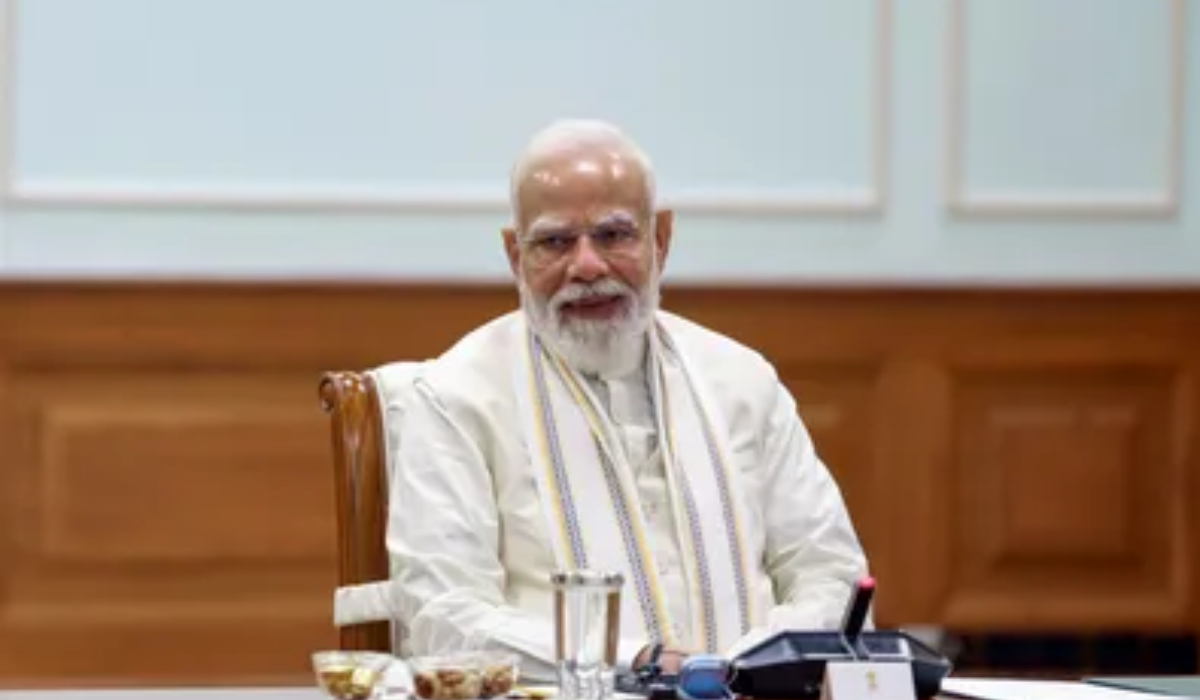
The completion of twelve years of the NarendraModiled National Democrat ic Alliance (NDA) government marks a significant milestone in contemporary India’s political and developmental journey. Few governments in independent India’s history have enjoyed such continuity in leadership while simultaneously attempting large-scale reforms across governance, welfare, infrastructure, national security, and foreign policy. Supporters of the government describe these twelve years as a period of transformation that moved India from policy paralysis to decisive governance, from welfare leakages to direct delivery, and from aspiration to execution. When Prime Minister NarendraModi assumed office in 2014, India faced several challenges.
Economic growth had slowed, infrastructure projects worth lakhs of crores were stalled, investor confidence had weakened, and governance was often criticized for delays in decision-making. One of the government’s earliest priorities was to restore administrative efficiency and accelerate implementation. Over the years, more than Rs 10 lakh crore worth of stalled projects were revived, helping unlock investments, create jobs, and boost economic activity. Financial inclusion emerged as one of the most ambitious pillars of the government’s governance model. Through the Pradhan Mantri Jan DhanYojana, over 56 crore bank accounts were opened, bringing millions of poor households into the formal banking system. Combined with Aadhaar and mobile connectivity, these accounts created the foundation for a new welfare architecture.
Direct Benefit Transfer (DBT) ensured that subsidies and benefits reached citizens directly without intermediaries. According to government estimates, the system has helped save more than Rs. 2.5 lakh crore by reducing leakages and improving transparency. The introduction of the Goods and Services Tax (GST) represented another landmark reform. By replacing multiple indirect taxes with a unified system, GST transformed India into a common national market. It simplified interstate trade, strengthened formalization of the economy, and enhanced revenue collection.
The fact that monthly GST collections regularly exceed Rs. 1.7 lakh crore reflects the growing scale and resilience of the Indian economy. Beyond economic reforms, the government placed considerable emphasis on improving the quality of life for ordinary citizens. The Swachh Bharat Mission led to the construction of more than 11 crore toilets, addressing sanitation challenges and improving dignity, particularly for women. Schemes such as PM AwasYojana, JalJeevan Mission, rural electrification, and expanded access to clean cooking fuel aimed to ensure that development translated into tangible improvements in daily life. The government’s welfare philosophy increasingly focused on empowerment through asset creation rather than temporary assistance. The COVID-19 pandemic presented one of the greatest tests of governance in modern times.
Like countries around the world, India faced unprecedented health and economic challenges. During this period, the government leveraged its digital welfare infrastructure to support vulnerable populations. Free food grains were provided to more than 80 crore people, while financial assistance reached beneficiaries through direct transfers. The Rs 20 lakh croreAtmanirbhar Bharat package was introduced to support businesses, protect employment, and facilitate economic recovery. The post-pandemic years witnessed a renewed focus on self-reliance and manufacturing. Through Production Linked Incentive (PLI) schemes, the government sought to strengthen domestic manufacturing in sectors such as electronics, pharmaceut ical s , telecommunications, and advanced technology. India’s mobile phone manufacturing sector became a symbol of this transformation. Once heavily dependent on imports, India has emerged as a major manufacturing hub, with mobile exports crossing Rs 1.9 lakh crore. National security has remained a defining aspect of the Modi government’s narrative. The Balakot air strike, the abrogation of Article 370, modernization of the armed forces, and the induction of indigenous defence platforms such as INS Vikrant have been projected as evidence of a more assertive and confident India. The government’s approach has consistently emphasized zero tolerance toward terrorism and a stronger response to security threats. On the global stage, India has significantly expanded its diplomatic footprint. During the COVID-19 pandemic, the Vaccine Maitri initiative supplied vaccines to numerous countries, reinforcing India’s image as a responsible global partner. India’s successful G20 Presidency further enhanced its international standing. The country’s growing engagement with major powers, leadership among developing nations, and advocacy for the Global South have contributed to its emergence as an increasingly influential voice in global affairs. Infrastructure development has been another hallmark of the last twelve years. Massive investments in highways, expressways, railways, airports, ports, and logistics corridors have transformed connectivity across the country. Initiatives such as PM Gati Shakti seek to integrate infrastructure planning and execution, reducing costs and improving efficiency. The introduction of Vande Bharat trains symbolizes the government’s emphasis on modernization and technological advancement. India’s digital transformation has perhaps been one of the most visible changes experienced by citizens. The rise of the Unified Payments Interface (UPI) has revolutionized the country’s payment ecosystem. From street vendors and small shopkeepers to large businesses, digital payments have become part of everyday life. India’s digital public infrastructure is now being studied and admired globally for its scale, efficiency, and inclusiveness.
Looking toward the future, the government has identified emerging sectors such as semiconductors, artificial intelligence, electric vehicles, renewable energy, defence manufacturing, and startups as key growth drivers. Initiatives aimed at strengthening these sectors reflect a broader vision of positioning India as a global center for innovation, manufacturing, and technology. The passage of the Nari Shakti VandanAdhiniyam, providing 33 percent reservation for women in the LokSabha and state legislatures, is being hailed as a significant step toward greater political representation for women. Simultaneously, projects such as the Shri Ram Mandir in Ayodhya and the KashiVishwanath Corridor have highlighted the government’s focus on India’s civilizational and cultural heritage.
As the Modi-led NDA government completes twelve years in office, its supporters argue that the defining achievement has been the shift from announcements to implementation and from governance by intention to governance by measurable outcomes. Whether viewed through welfare delivery, economic reforms, national security, infrastructure creation, or global diplomacy, the last twelve years have undoubtedly shaped India’s trajectory in significant ways. The government’s central claim remains that national progress is no longer visible only in statistics and reports but increasingly in the everyday lives of citizens
Chief Justice Surya Kant said every citizen can approach the Supreme Court through a petition after declining a...

A major fire broke out at a scrap warehouse opposite the Maruti Temple in Sangameshwar, Maharashtra, around midnight....

A 48-year-old man, Pawan Sharma, died after an alleged altercation over a senior citizen seat at Delhi’s Supreme...

Shiv Sena (UBT), in its mouthpiece Saamana, has criticised the Centre over security measures and detentions during anti-government...
Former BJP MLA Attar Singh Bhedana died at Jaipur’s SMS Hospital after a violent clash at a crusher...

An eyewitness has recounted the fatal Mini Cooper crash in Nedumbassery, Kochi, claiming the driver said his father...

Aries: The day will be auspicious...