Last Updated: October 21, 2026
Last Updated: October 21, 2026





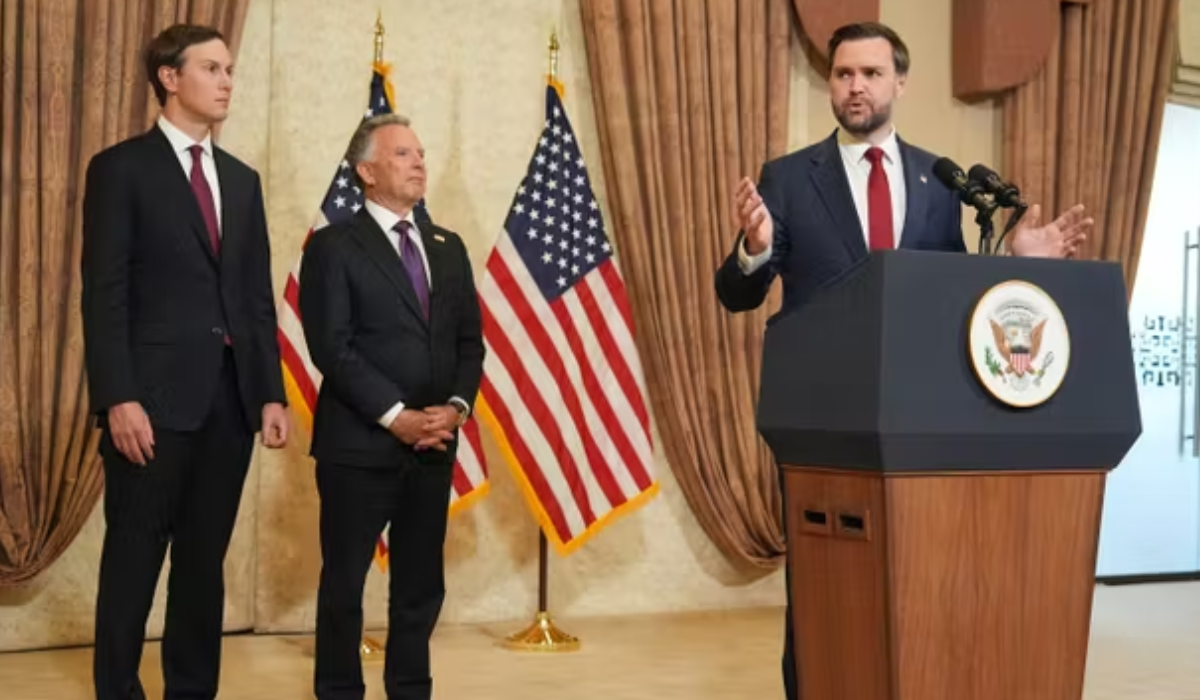
Face-to-face negotiations between the United States and Iran concluded on Sunday without reaching any agreement to end the ongoing war. This has cast serious doubt over the fragile 14-day ceasefire, which is set to expire on April 22.
Blame Game Between Both Sides
US officials claimed that the talks failed because Iran refused to commit to abandoning its nuclear ambitions. Vice President JD Vance emphasized the need for a clear assurance that Iran would neither develop nuclear weapons nor acquire the capability to do so quickly.
On the other hand, Iranian officials blamed the US for the collapse of negotiations, accusing Washington of making excessive demands but not clearly outlining the exact disagreements.
Iran’s Position Remains Firm
Iran’s parliament speaker Mohammad Bagher Qalibaf stated that Iran had already clarified its stance and that it was now up to the US to decide whether it could be trusted. Iran continues to deny seeking nuclear weapons, while insisting on its right to maintain a civilian nuclear program.
However, experts warn that Iran’s enriched uranium stockpile is close to weapons-grade, making it a short technical step away from weaponization.
Ceasefire Future Uncertain
Neither side has clarified what will happen after the ceasefire ends. Pakistan, acting as a mediator, has urged both nations to maintain the truce and continue diplomatic efforts.
Pakistan’s Foreign Minister Ishaq Dar said efforts are underway to bring both sides back to the negotiating table.
Heavy Human and Economic Toll
Since the war began on February 28, the conflict involving the US, Israel, and Iran has resulted in significant casualties:
The conflict has also severely damaged infrastructure across multiple countries in the Middle East.
Strait of Hormuz: A Key Flashpoint
Iran’s control over the Strait of Hormuz has become a major strategic advantage. The closure of this crucial route has disrupted global oil and gas supplies, as nearly 20% of the world’s traded oil typically passes through it.
This disruption has driven global energy prices sharply higher.
Conflicting Proposals During Talks
Before negotiations:
These sharply differing demands highlighted the deep divide between both sides.
Military Tensions Continue
During the talks, US forces reportedly sent naval destroyers through the Strait of Hormuz for mine-clearing operations—though Iran denied these claims.
Meanwhile, former US President Donald Trump stated that operations in the strait would continue regardless of whether a deal is reached.
Protests in Jakarta, Yogyakarta and Bandung brought students onto the streets over rising costs, forest fires and civil...

Organisations linked to Neville Roy Singham are under US congressional scrutiny over funding. Their coverage of protests in...

US President Donald Trump says Washington and New Delhi are close to a trade agreement that will differ...
Iran has ruled out transferring its enriched uranium stockpile outside the country, with security official Mohsen Rezaei reiterating...

Donald Trump has urged Volodymyr Zelensky to pursue a peace deal with Russia, warning that Ukraine could face...

Pakistan, battling insurgencies at home and tensions along multiple borders, is too overstretched to offer meaningful military support...
Aries: The day will be auspicious...