Last Updated: October 11, 2026
Last Updated: October 11, 2026





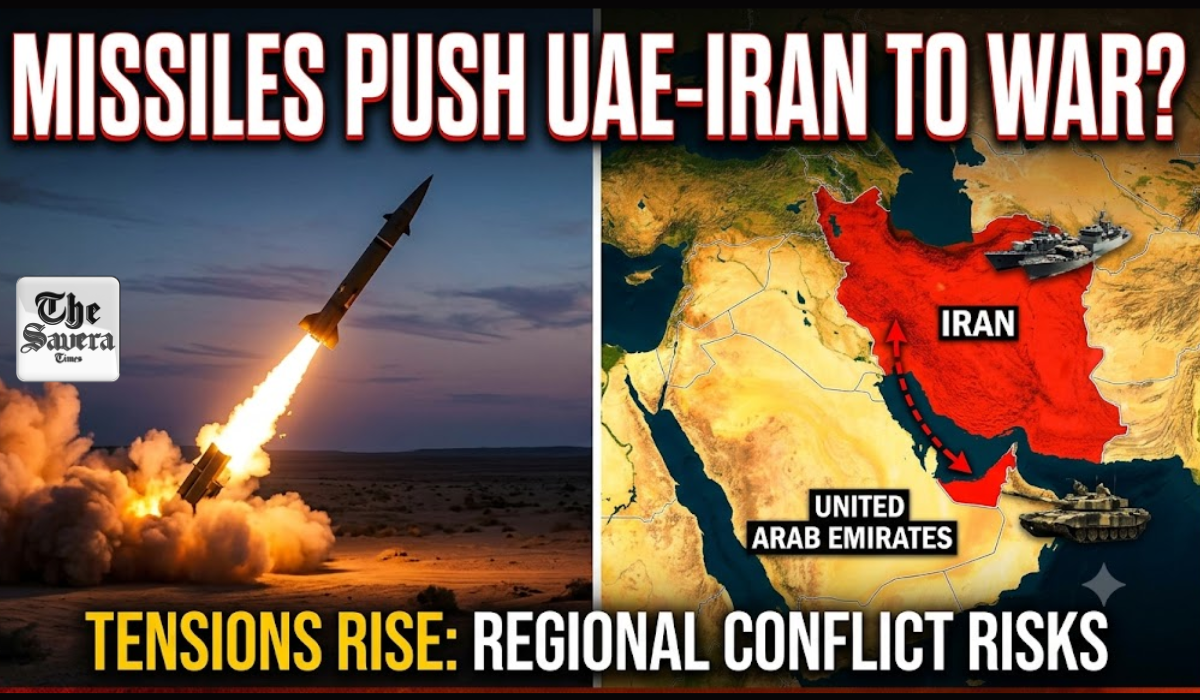
A fresh missile row has pushed already tense UAE-Iran relations into dangerous territory. Abu Dhabi has now halted all trade, commercial exchanges and financial transactions with Tehran until further notice after accusing Iran of firing two ballistic missiles towards the UAE. Iran has denied the allegation. So, could this economic rupture be the beginning of a direct UAE-Iran war?
What Exactly Happened?
The UAE said its air-defence systems detected two ballistic missiles launched from Iran towards its territory. According to reports, one fell into the sea and another landed in UAE waters. No casualties were reported.
The UAE responded by suspending trade, commercial exchanges and financial transactions with Iran, calling the move necessary amid serious regional escalation. Iran, however, has denied launching the missiles. This makes the incident even more sensitive, as both sides now differ sharply over what actually happened.
Why Is This More Than Just a Missile Row?
This crisis did not begin with Tuesday’s alleged missile launch. UAE-Iran ties have faced growing pressure during the wider Iran-US-Israel conflict and the prolonged crisis around the Strait of Hormuz.
The UAE has repeatedly accused Iran of attacks on its commercial shipping. In July, Abu Dhabi said Iranian cruise missiles targeted two UAE national oil tankers in the Strait of Hormuz, killing one Indian national and injuring eight others. The UAE called the attacks a serious threat to freedom of navigation and regional security. Iran’s relationship with the UAE, therefore, is now being tested by repeated security incidents at sea and, according to Abu Dhabi, now by a direct missile threat.
What Does the Trade Freeze Mean?
The UAE’s decision could affect trade, banking, payments and commercial activity between the two countries. This is significant because the UAE has historically been one of Iran’s most important commercial links with the wider world. Dubai, in particular, has long served as a major trading and business hub for Iranian companies and traders.
The full impact will depend on how long the suspension continues and exactly how authorities implement restrictions. But a prolonged freeze could disrupt businesses, shipping arrangements, payments and supply chains.
Will This Lead to a Direct UAE-Iran War?
Not necessarily. A trade freeze is a major escalation, but it is not a declaration of war. A direct conflict would become more likely if there are further confirmed missile or drone attacks, casualties inside UAE territory, attacks on critical infrastructure, or a wider military confrontation involving Gulf states.
For now, the biggest risk is a cycle of escalation: attack, retaliation, economic pressure and then another military incident. At the same time, diplomacy could still prevent a wider conflict, especially since Iran denies responsibility for the latest missile launch.
The Strait of Hormuz Factor
The Strait of Hormuz remains at the centre of the crisis. Before the conflict, around one-fifth of global crude oil and liquefied natural gas shipments passed through this narrow waterway.
Shipping traffic has slowed sharply amid security concerns. Reuters reported that only six commodity vessels passed through on August 18, below recent daily averages. Uncertainty over the waterway has already disrupted oil flows and forced companies to reconsider routes.
Could the Crisis Hit India?
Yes. India is closely connected to the Gulf through energy imports, trade and shipping. Disruption in Hormuz can raise freight and insurance costs and increase concerns over oil supplies. India has also had to focus on the safety of its seafarers amid attacks in the region. Earlier this month, the government said 60 merchant vessels had been safely moved through the Strait during the crisis.
What Happens Next?
There are three broad possibilities: diplomacy could reduce tensions; economic and maritime pressure could continue without direct war; or another major missile or shipping attack could trigger a much wider Gulf conflict.
For now, the UAE-Iran trade freeze marks a serious new low. Whether it becomes a step towards war will depend on what happens after the missiles—and whether diplomacy can move faster than escalation.
Imagine a foreign national standing among Indian citizens at a political protest, raising questions about the government or...

For thousands of Indian tech workers in the United States, a job offer is only the beginning of...

Three years ago, on October 7, 2023, Israel woke up to one of the deadliest attacks in its...

Imagine being seriously injured inside a flying aircraft, with blood on your clothes, passengers in panic and the...

Imagine the world’s biggest diesel exporter turning off its export taps. That is the concern after US President...
For India’s pharmaceutical industry, the latest US tariff decision brings relief — but not across the entire medicines...
Aries: The day will be auspicious...