Last Updated: October 21, 2026
Last Updated: October 21, 2026





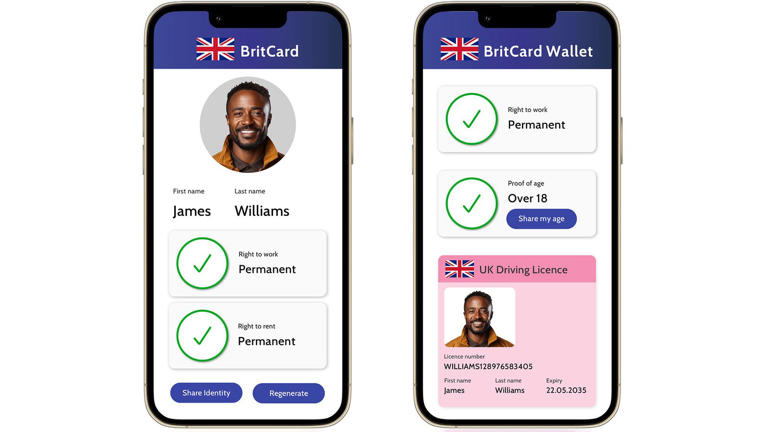
Britain is preparing to introduce a government – issued digital ID for citizens seeking employment, part of the Labour government’s broader strategy to tackle illegal immigration. The initiative, announced by Prime Minister Keir Starmer, aims to ensure that only those legally entitled to work in the UK can access jobs, with officials describing the move as a way to strengthen borders and curb unauthorised employment.
The digital ID, informally referred to as the ‘Brit Card,’ will allow citizens to prove their right to live and work in the country. The system will operate through a smartphone app, which can be crosschecked against a central government database. Reports indicate that landlords, employers, and government agencies will have the ability to verify details.
The government has suggested that the ID could also streamline access to public services such as driving licences, childcare, and welfare. Officials are yet to determine the specifics of the programme, including who will be required to register, what personal information the ID will contain, and whether physical forms will be issued.
Provisions are expected for those unable to use smartphones, including the elderly and homeless, drawing comparisons with the recently announced digital driving licence. Labour’s plans draw on international examples, including Estonia, where citizens are assigned a unique ID at birth, and India, where digital identification has reportedly saved $10 billion annually by reducing fraud and administrative waste. Former Prime Minister Tony Blair, through The Tony Blair Institute, has supported the initiative, arguing that digital IDs can prevent exploitation by trafficking gangs and illegal employers, while restoring greater control over borders.
Financial estimates for the programme vary. The Blair Institute has projected a setup cost of $1.34 billion, with annual maintenance of $134 million, while the Labour Together campaign group estimates the cost between $187 million and $536 million, with recurring expenses of about $13.4 million.
Historical precedent exists in the UK: mandatory ID cards were in place during World War II but were abolished in 1952. The proposal represents a shift in Labour’s position. Initially, Home Secretary Yvette Cooper had rejected digital ID as a policy option, noting it was not part of the party manifesto. Rising concerns over illegal immigration, however, have prompted a reconsideration. Channel crossings from France have reached record levels, with over 30,000 arrivals this year and more than 50,000 since Labour assumed office last year.
Surveys suggest that controlling illegal migration remains a top concern for many British citizens. Starmer has acknowledged changing attitudes toward digital ID, stating that increased familiarity with digital identification in daily life has shifted public perception. The UK and France have also signed a ‘one in, one out’ agreement to detain and return some migrants, while discussions continue on measures to deter small boat crossings.
Critics have raised privacy and rights concerns, warning that mandatory digital ID could shift power disproportionately toward the state. A coalition of privacy groups argued that such a system is unlikely to curb unauthorised immigration and could push undocumented migrants further into unsafe work and housing conditions. The groups warned that it may fail to target criminal networks effectively, while potentially undermining civil liberties.
The Labour Together think tank has countered that a digital ID system could become an integral part of civic infrastructure, supporting lawful enforcement while safeguarding citizens’ rights. The government has indicated that costs will be controlled, and that the initiative aims to improve administration while addressing the challenges posed by unauthorised immigration. With the ‘Brit Card,’ the UK seeks to balance tighter border enforcement with the modernization of citizen services, navigating both technological possibilities and legal and ethical considerations as it addresses a longstanding domestic and political challenge.
Protests in Jakarta, Yogyakarta and Bandung brought students onto the streets over rising costs, forest fires and civil...

Organisations linked to Neville Roy Singham are under US congressional scrutiny over funding. Their coverage of protests in...

US President Donald Trump says Washington and New Delhi are close to a trade agreement that will differ...

Iran has ruled out transferring its enriched uranium stockpile outside the country, with security official Mohsen Rezaei reiterating...

Donald Trump has urged Volodymyr Zelensky to pursue a peace deal with Russia, warning that Ukraine could face...

Pakistan, battling insurgencies at home and tensions along multiple borders, is too overstretched to offer meaningful military support...

Aries: The day will be auspicious...