Last Updated: October 21, 2026
Last Updated: October 21, 2026





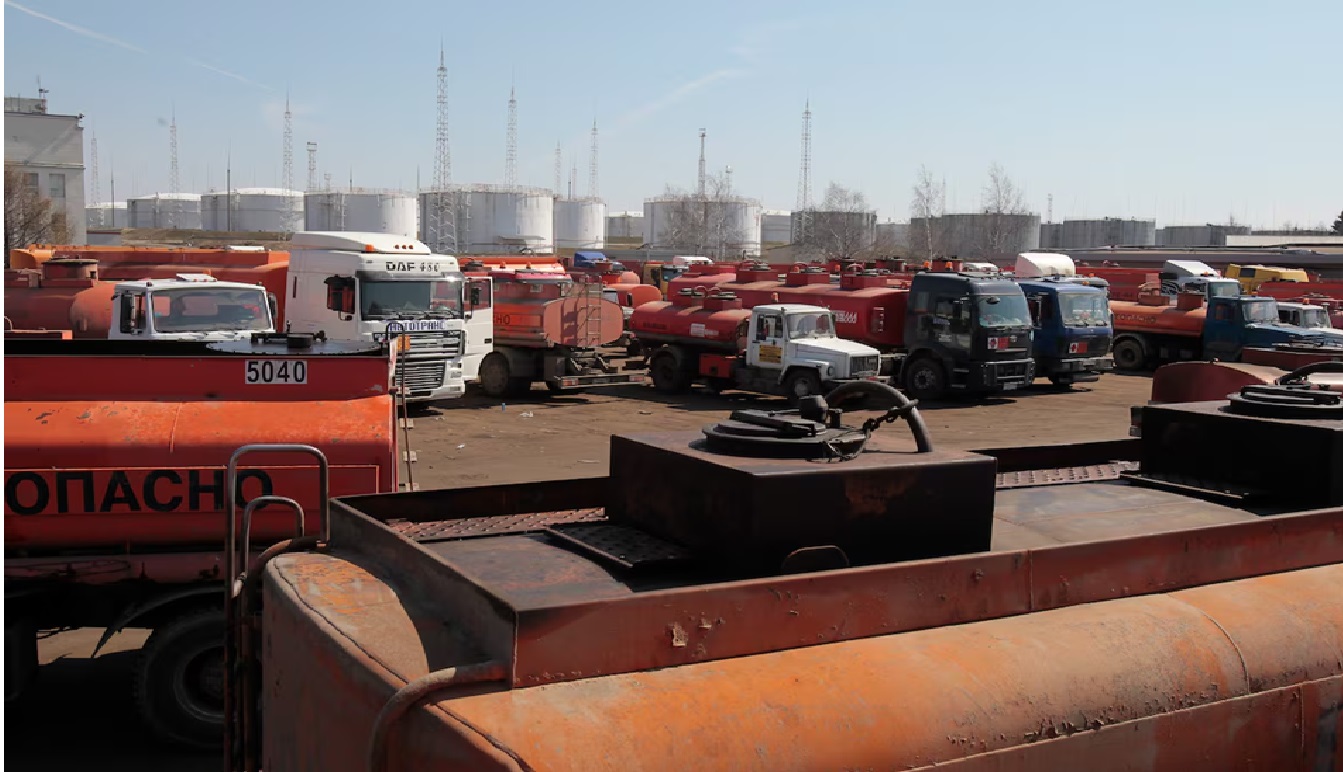
Russia is facing one of its most severe fuel shortages in recent years as sustained Ukrainian drone strikes batter its oil refineries and energy infrastructure. The campaign, which has intensified through the summer, has disrupted gasoline and diesel supplies, leaving gas stations empty, triggering rationing, and forcing the Kremlin to impose sweeping export bans to protect its domestic market. The shortages are spreading across multiple regions, with Crimea emerging as the hardest hit.
Reports from the annexed peninsula point to widespread closures of filling stations, skyrocketing prices, and frustrated residents queuing for hours to secure limited fuel. Expanding Ukrainian Strikes Since early August, Ukraine has stepped up its long-range drone operations, striking deeper inside Russian territory than at any previous stage of the war.
According to figures cited by the Financial Times, at least 16 of Russia’s 38 refineries have been attacked, several on multiple occasions. Some of the country’s most important facilities have been targeted. Among them is the 340,000-barrel-per-day refinery in Ryazan near Moscow, one of Russia’s largest.
Other plants in Saratov, Novokuibyshevsk, Volgograd, and Bashkortostan have also been struck. On September 18, Ukrainian drones reached the Gazprom Neftekhim Salavat oil refinery in Bashkortostan, about 1,400 kilometres from the Ukrainian border. The attack triggered a large fire, according to Ukraine’s SBU security service.
That same day, another strike hit the Volgograd refinery, while additional attacks in the days that followed damaged facilities in Saratov and Novokuibyshevsk. This expansion marks a turning point in Ukraine’s campaign, with several refineries more than 1,000 kilometres from Ukrainian-controlled areas now within reach. President Volodymyr Zelenskyy has presented these strikes as a central part of Kyiv’s strategy to undermine Russia’s war machine. Earlier this month, he described the operations as the “most effective sanctions” against Moscow, adding that Ukraine was rapidly increasing its production of long-range drones.
Disrupting Refining Capacity and Exports The cumulative effect has been a sharp disruption in Russia’s refining capacity. Research group Energy Aspects estimates that over 1 million barrels per day have been taken offline. This scale of disruption, unprecedented since the early stages of the war, is now visible in export figures. Tracking firms OilX and Vortexa project that diesel exports for September will fall to their lowest monthly levels since 2020. Diesel is particularly vital to Russia’s economy, underpinning agriculture, transport, and sections of the military. Gasoline, meanwhile, is in increasingly short supply domestically, with shortages hitting civilian services, including ambulances and transport vehicles.
Russia is the world’s secondlargest exporter of diesel, with about half traditionally destined for Turkey. Other major markets include West Africa, North Africa, and Brazil. With exports falling, Turkey has turned to India and Saudi Arabia, pushing up global diesel prices. Premiums have risen to $25–$30 per barrel above Brent crude, their highest since the summer. Kremlin’s Response Moscow has been forced into drastic measures to stabilise the situation. Restrictions on gasoline exports were first introduced in March and widened in July, but shortages continued to mount. On Thursday, Deputy Prime Minister Alexander Novak announced a full extension of the gasoline export ban until year-end, along with new limits on diesel exports by non-producers. Novak admitted there was a “slight shortage” of petroleum products but claimed reserves were being used to ease the pressure. He also warned that balancing supplies in September and October would be “difficult.” The bans are Russia’s most sweeping attempt yet to redirect supplies to its domestic market, particularly with the winter heating season approaching. However, curbing diesel exports will hit state revenues hard at a time when Moscow is already straining under sanctions and war spending. Crimea at the Epicentre Nowhere are the shortages felt more acutely than in Crimea. Monitoring data suggests that half of gas stations in Crimea and Sevastopol have suspended sales. Between late July and late September, the number of operational fuel stations across Russia fell by 2.6 per cent, but the decline reached 14 per cent in some areas, including Rostov Oblast and the Mari El Republic. In Crimea, Kremlin-backed leader Sergei Aksyonov acknowledged the severity of the crisis, blaming refineries that were “physically not functioning.”
He urged residents to remain patient and promised new deliveries of AI-95 gasoline within days and AI-92 within two weeks. Yet reports from the ground suggest the situation remains volatile. On one recent day in Sevastopol, the city ran out of gasoline entirely. When two tankers eventually arrived, supplies were exhausted within hours as long lines of cars formed. Wholesale prices are also climbing steeply. On Thursday, the cost of AI-92 gasoline rose to 79,788 rubles per tonne, about $952, marking a 40 percent increase since January
Pakistan, battling insurgencies at home and tensions along multiple borders, is too overstretched to offer meaningful military support...
The World Bank Group has launched its first comprehensive digital strategy, placing artificial intelligence, affordable internet access and...

Fifty-four organisations and movements associated with France's October protests, along with their wider networks of supporters and international...

In the aftermath of the Indian agencies cracking down heavily on Indian influencers who were promoting pro-Pakistan content,...

Nearly 100 new cases of dengue have been reported in Pakistan's Khyber Pakhtunkhwa province in the last 24...
Following violent protests and looting in France, the government has decided to impose new curfews in different areas...

Aries: The day will be auspicious...