Last Updated: October 16, 2026
Last Updated: October 16, 2026





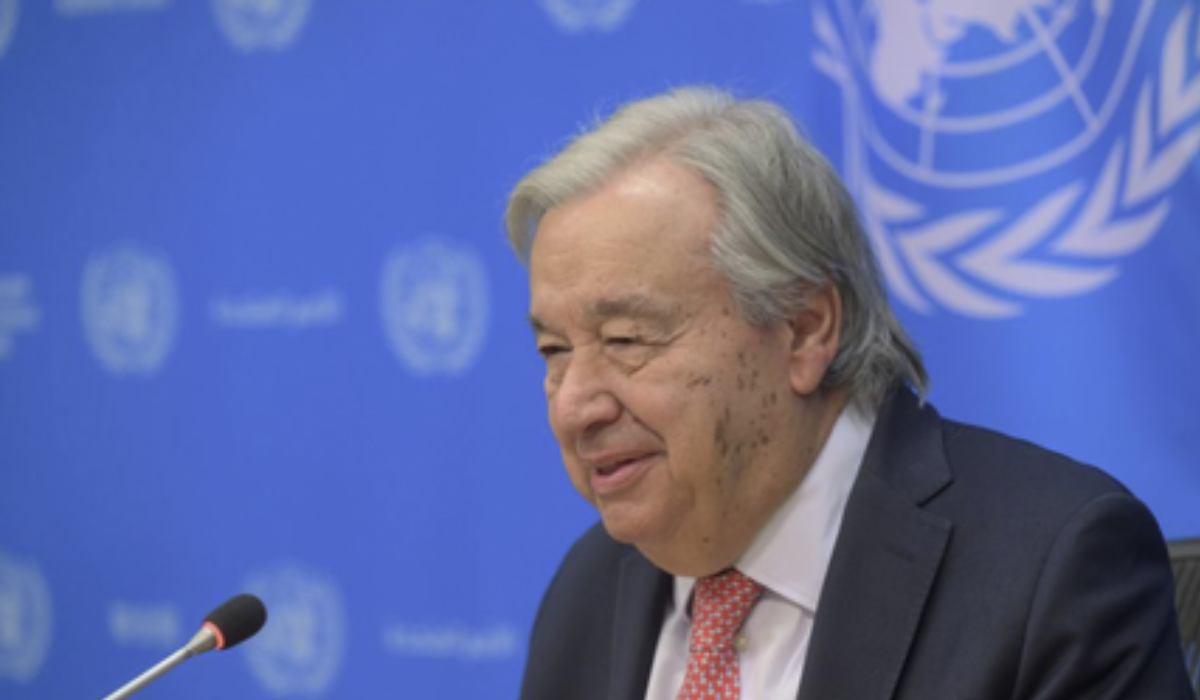
United Nations: UN Secretary-General Antonio Guterres launched a support mechanism to help mineral-rich developing countries turn demand for clean energy resources into jobs and industrial growth, with six countries selected for initial assistance.
Guinea, Indonesia, Madagascar, Nigeria, Zambia and Zimbabwe will be the first beneficiaries of the Country Support Mechanism on Critical Energy Transition Minerals, the United Nations announced in New York on Wednesday (local time).
The initiative will provide technical assistance and help countries strengthen governance, process more minerals locally and protect communities and the environment.
“The countries that hold the critical minerals powering the energy transition must be the first to benefit from them,” Guterres said.
The announcement addresses a central challenge for resource-rich economies: how to secure a larger share of the gains from minerals used in clean energy technologies instead of remaining suppliers of raw materials.
Copper, lithium, nickel, cobalt and rare earth elements are used across technologies including wind turbines, solar panels, electric vehicles and battery storage, the UN said.
It projected that demand for critical minerals would almost triple by 2030 as the world shifts towards renewable energy.
The UN Development Programme and the UN Development Coordination Office will lead the mechanism, bringing together expertise from across the UN system.
Teams working through UN resident offices will identify each country’s needs and coordinate tailored assistance. Priorities include governance, local processing, industrial development and environmental and human safeguards.
The work will follow principles and recommendations developed by the Secretary-General’s Panel on Critical Energy Transition Minerals.
Zambia’s Foreign Minister Mulambo Haimbe said his country wanted to move beyond increasing copper output to generating greater economic value at home.
“We want Zambians to be full participants in, not simply suppliers to, the global clean energy and technology transition,” he said.
Haimbe said that ambition required stronger governance, investment and partnerships to help resource-rich countries expand their role in mineral supply chains.
UN Development Programme Administrator Alexander de Croo said mineral wealth could help transform economies, provided value creation, environmental protection and good governance advanced together.
UN Environment Programme Executive Director Inger Andersen said her agency would contribute expertise on responsible sourcing, environmental protection and more circular use of resources.
The mechanism forms part of a broader UN task force on critical energy transition minerals. The task force is co-led by the UN Development Programme, the UN Conference on Trade and Development and the UN Environment Programme.
The announcement outlined technical and institutional support but did not specify a funding amount for the new mechanism.
New Delhi: The Union Ministry of Home Affairs (MHA) has sought detailed reports from the Punjab government on...
New Delhi: All India Students’ Association (AISA) National President Neha Bora was detained by the Delhi Police on...

New Delhi: The Directorate of Enforcement (ED) has provisionally attached assets and proceeds of crime worth Rs 136.44...
Mumbai: Jindal Saw on Friday reported a steep decline in its earnings for the second quarter of FY27,...
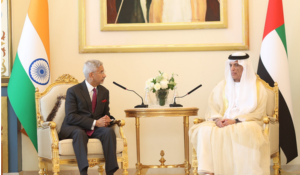
Abu Dhabi: External Affairs Minister (EAM) S Jaishankar held a meeting with Ras Al Khaimah Ruler Sheikh Saud...
New Delhi: In a fresh development in the former model and actress Twisha Sharma death case, the Supreme...

Aries: The day will be auspicious...