Last Updated: October 12, 2026
Last Updated: October 12, 2026





~Himanshu Nitnaware
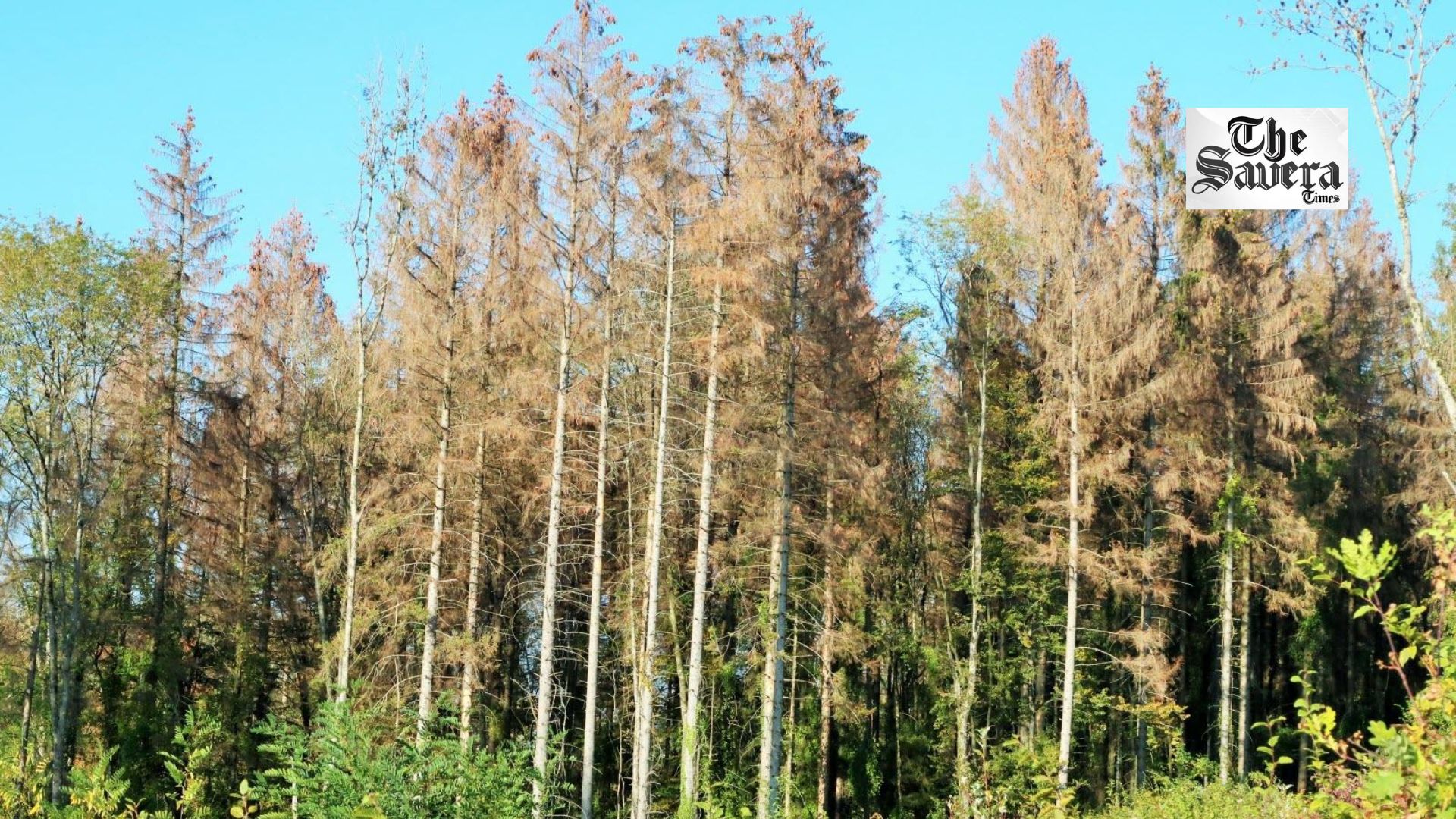
Trees across French forests have been dying prematurely over the past decade, signalling widespread climate-driven forest decline. , According to a new study by the Swiss Federal Institute for Forest, Snow and Landscape Research (WSL), published in Nature Communications, said there was a 1.5- to 4-fold increase in mortality rates among the nine most common tree species, including European beech, pedunculate oak, and Norway spruce.
The researchers reached these conclusions after analysing data of over 500,000 individual trees across 52 different species for the period 20152023 from the French National Forest Inventory (NFI).
Ecologically and economically important species such as Fagus sylvatica, Quercus robur, and Picea abies show steep increases. Many species showed a pronounced surge after 2018, highlighting the vulnerability of European forests to extreme drought events, while spatial patterns pointed to the compounding role of long-term regional warming and drying, the authors said.
Across all 52 species analysed by the scientists, nearly half (48 per cent) showed significant increase in mortality.
“These trends span size classes and coincide with reduced growth, indicating they do not reflect demographic turnover but widespread climate-driven declines in forest health. Similar reports across Europe reinforce that these processes are continent-wide, consistent with evidence that ongoing warming and drying are eroding forest health,” the study said.
The hotspots for this dieback were concentrated in northeastern France, particularly in the Jura, Vosges, and Grand Est regions. The study notes that these losses are not being offset by new growth or recruitment, indicating a widespread decline in forest health rather than a typical demographic shift.
Among the nine most common species, the temperature feature in almost 93 per cent of all models associated higher mortality risk with warmer anomalies during these seven years, the study stated.
While in 63 per cent of the models, the climatic water balance (CWB) feature associated higher mortality risk with drier anomalies, and in 34 per cent of models with wetter anomalies. When combining the temperature and CWB feature responses within each model, 62 per cent of models associated higher mortality risk with warmer-drier conditions and 31 per cent with warmer-wetter conditions.
“Such a strong association with warmer-drier conditions was expected, as these conditions are known to increase tree mortality, whereas the warmerwetter response was surprising and suggests that even seemingly favourable anomalies may elevate mortality risk,” the study said.
The scientists in a statement said that across Europe, there have been signs for about 20 years that more and more trees are dying prematurely. In some regions of the continent, the state of the forests is now even worse than it was in the 1980s, when air pollution caused serious damage to trees in selected regions.
Even positive growing conditions, such as warm, wet springs, can increase the risk of trees dying.
“On-average warmer winters and warmer spring minimum temperatures stood out as particularly frequent and influential drivers of increased mortality risk. Although these anomalies occur in different seasons, they point to related physiological and biotic stress pathways. Warmer winters shorten or disrupt dormancy, leading to insufficient chilling, desynchronised spring leaf-out, and reduced investment in frost protection, which increases vulnerability to sudden cold spells,” it said.
The Royal Swedish Academy of Sciences on Monday announced the 2026 Nobel Prize in Economics to American economists...

A Sudanese rights group says at least 72 gold miners were killed in an air strike near the...

US President Donald Trump is scheduled to attend the ASEAN summit in Manila on November 16 before travelling...

An Indian national injured in the October 10 attack on Riyadh’s King Khalid International Airport has died, taking...

Ukrainian President Volodymyr Zelenskyy says he was unaware of Donald Trump’s announcement of an immediate energy ceasefire between...

Colombian businessman Alvaro Pulido Vargas has been arrested in Florida over two US federal cases involving alleged bribery...

Aries: The day will be auspicious...